 Save
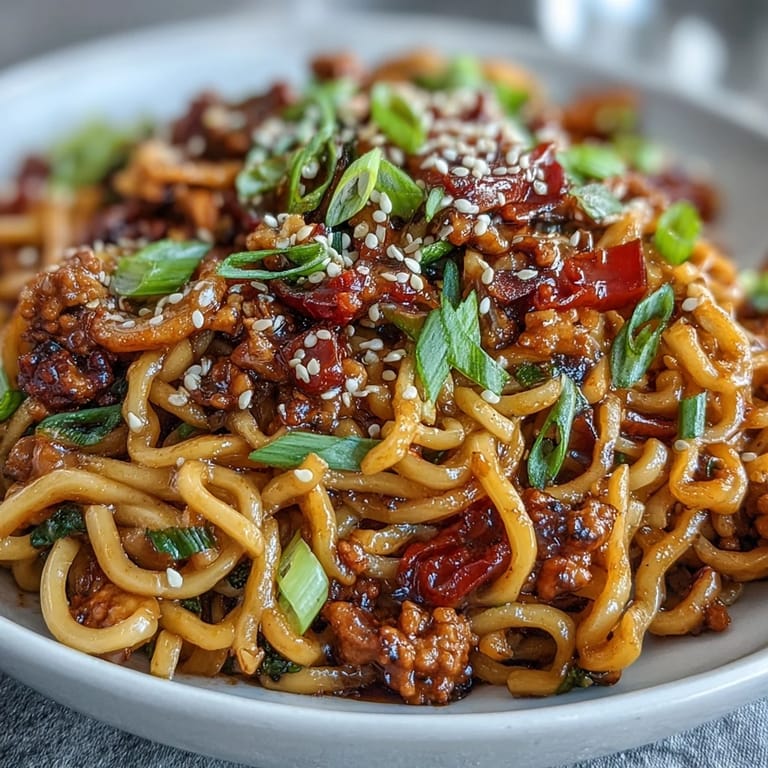
Save My neighbor's kitchen smelled incredible one Tuesday evening, and when I peeked over the fence, she was tossing noodles in a wok with this vibrant sauce that made my mouth water from across the yard. She called it her weeknight salvation, a dish that came together faster than it takes to order takeout but tasted like she'd been cooking all day. That one whiff changed everything, and I had to recreate it in my own kitchen that very week. Now it's become my go-to when I need something that feels both comforting and exciting without the stress.
I made this for my partner after a long day when we both needed something that didn't require thinking, and watching them twirl the noodles on their fork with that satisfied smile reminded me why simple, honest food matters. There's something about the way the sauce clings to each strand of noodle that turns an everyday meal into a small celebration.
Ingredients
- Fresh or dried wheat noodles (300 g): Udon or ramen work beautifully here, and fresh noodles cook faster if you're really pressed for time.
- Soy sauce (3 tbsp): The backbone of umami, so don't skimp on quality.
- Gochujang (2 tbsp): This Korean chili paste brings depth and heat that regular chili flakes can't match, though you can adjust the amount based on your heat tolerance.
- Brown sugar (1 tbsp): It balances the spice with just enough sweetness to keep things from tasting one-dimensional.
- Rice vinegar (1 tbsp): A splash of brightness that prevents the sauce from feeling heavy.
- Sesame oil (1 tbsp): Toasted sesame oil specifically; the regular kind won't give you that nutty flavor that ties everything together.
- Ground turkey (400 g): If you prefer, ground chicken or even beef works, though turkey keeps things leaner.
- Vegetable oil (2 tbsp): Split between browning the turkey and sautéing vegetables for even heat distribution.
- Garlic and ginger (3 cloves minced, 1 tbsp minced): These two are non-negotiable; they're the aromatic foundation that makes your kitchen smell like a restaurant.
- Yellow onion (1 medium, thinly sliced): The sweetness mellows as it cooks, creating a subtle background note.
- Carrot (1 medium, julienned): Cut into matchsticks so they cook quickly and add a pop of color.
- Red bell pepper (1 medium, thinly sliced): It softens just enough during cooking while keeping some bite and visual appeal.
- Shiitake mushrooms (100 g, sliced): Their earthiness complements the Korean flavors in a way that feels naturally meant to be.
- Spring onions (2, sliced): Use one batch stirred in at the end for freshness and reserve the other for garnish.
- Toasted sesame seeds (1 tbsp): Toast them yourself if you can; the difference is remarkable and worth the extra 30 seconds.
Tired of Takeout? 🥡
Get 10 meals you can make faster than delivery arrives. Seriously.
One email. No spam. Unsubscribe anytime.
Instructions
- Cook your noodles until just tender:
- Boil them according to package timing, then drain and rinse under cold water to stop the cooking process and prevent clumping. This step is easier than it sounds but makes a real difference in the final texture.
- Mix the sauce in a quiet moment:
- Whisk soy sauce, gochujang, brown sugar, rice vinegar, and sesame oil together in a small bowl and set it nearby so you're not fumbling for it later. The sauce will look slightly thick and glossy, which is exactly what you want.
- Brown the turkey with some intention:
- Heat 1 tablespoon of oil in your wok or large skillet over medium-high heat until it shimmers, then add the ground turkey and break it apart with a wooden spoon as it cooks. This takes about 5 minutes and you'll know it's ready when there's no pink remaining and it smells deeply savory.
- Build flavor with aromatics:
- Add the remaining oil, then immediately add minced garlic and ginger, stirring constantly for about 30 seconds until the kitchen fills with that intoxicating fragrance. Don't let them burn; the moment you smell them clearly, you're ready to move on.
- Stir-fry the vegetables until they're almost there:
- Toss in your onion, carrot, bell pepper, and mushrooms, keeping everything moving in the pan for 3 to 4 minutes. You want them tender but with just a hint of resistance when you bite down, not completely soft.
- Bring it all together:
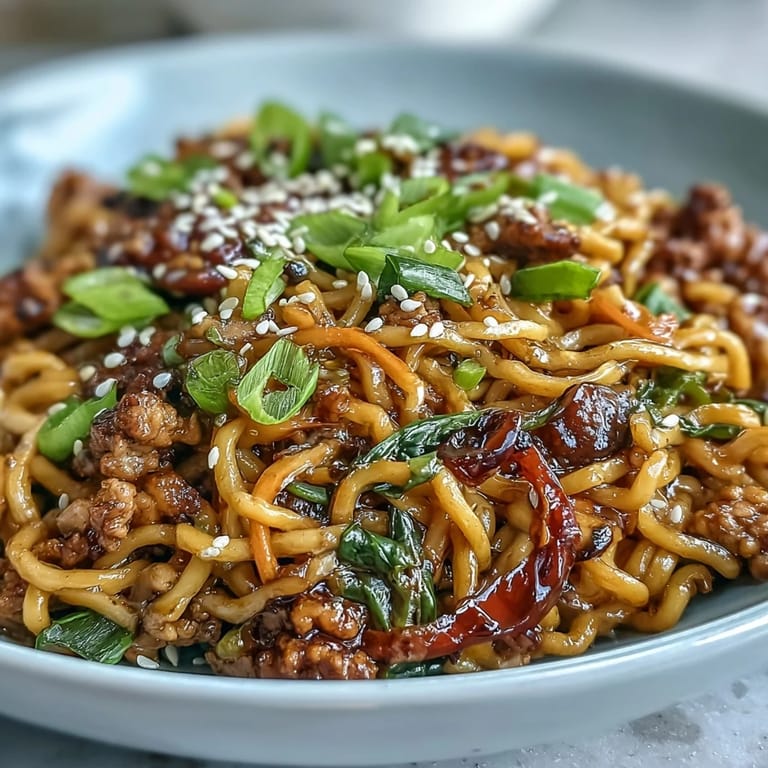
- Return the turkey to the pan, add your cooked noodles and the sauce you prepared earlier, then toss everything over high heat for 2 to 3 minutes until it's hot and evenly coated. The sauce should cling to the noodles and vegetables like it's meant to be together.
- Finish with spring onion freshness:
- Stir in the first batch of sliced spring onions, which will slightly soften from the residual heat while keeping their bright flavor.
- Plate and celebrate:
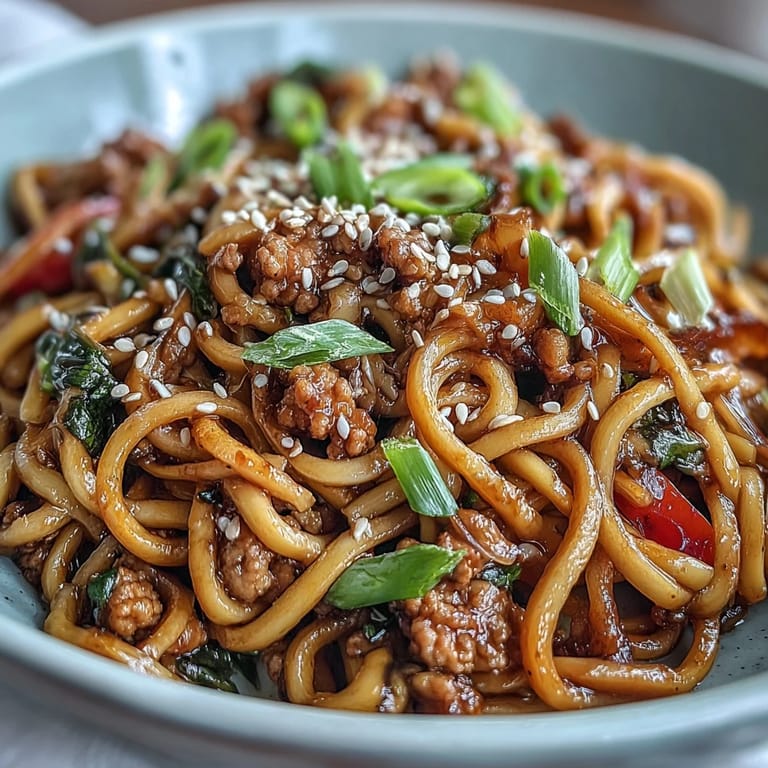
- Divide among bowls and top with toasted sesame seeds and extra spring onions for crunch and color. Serve immediately while everything is still hot.
 Save
Save I served this to a friend who swears she hates spicy food, and she came back for seconds before I could even offer them, asking what made it taste so good when it was clearly spicy. That's when I realized the magic of gochujang isn't just heat; it's this complex warmth that doesn't feel aggressive or one-note.
Why Gochujang Changes Everything
Most people think of Korean chili paste as purely hot, but it's so much more textured than that. It brings fermented depth, a subtle sweetness, and an umami richness that regular chili flakes simply can't offer. The first time I used it in something other than bibimbap, I understood why it's become such a staple in fusion cooking; it plays well with ingredients from different cuisines while staying true to its own identity.
Making This Dish Your Own
The beauty of this recipe is how much room it gives you to experiment without losing its essential character. I've thrown in spinach when I had it on hand, swapped bell peppers for snap peas, and even added a handful of cashews once just to see what would happen. Each version felt like a different conversation with the same familiar friend.
Serving and Storage Wisdom
This dish is best eaten fresh and hot, straight from the wok while the noodles still have some bounce and the vegetables maintain their texture. Leftovers keep for about three days in the fridge, though they're best reheated gently in a pan with a splash of water rather than in the microwave. You can also meal-prep the components separately and assemble them fresh each time, which takes the pressure off weeknight cooking.
- Serve alongside a simple kimchi side or a crisp salad to balance the richness.
- A cold beer or chilled soju pairs beautifully and cuts through the sauce's depth.
- Double the batch if you're feeding a crowd; it scales up effortlessly and tastes just as good as the original.
 Save
Save This recipe has become my answer to the question of what to cook when I want something that feels special without being complicated. It's the kind of dish that reminds you why cooking at home matters.
Recipe Questions & Answers
- → Can I use different proteins?
Ground chicken or beef work beautifully as substitutes for turkey. Maintain the same cooking technique and seasoning ratios for consistent results.
- → What type of noodles work best?
Fresh or dried wheat noodles like udon, ramen, or even lo mein noodles provide the perfect texture. Their bouncy chewiness holds up well in the stir-fry.
- → How can I adjust the spice level?
Reduce the gochujang for milder heat, or increase it along with fresh sliced chilies or chili flakes. The sweetness helps balance the spice, so adjust both elements together.
- → Can I make this ahead?
Prepare the sauce and vegetables in advance for faster assembly. However, cook the noodles and stir-fry everything just before serving for the best texture and flavor.
- → What sides pair well?
Serve with kimchi for authentic Korean flavors, or pair with steamed dumplings and a light lager or chilled soju for a complete meal experience.
- → Is this dish gluten-free?
Traditional ingredients contain gluten. Use gluten-free noodles, tamari instead of soy sauce, and verify your gochujang is certified gluten-free.