 Save
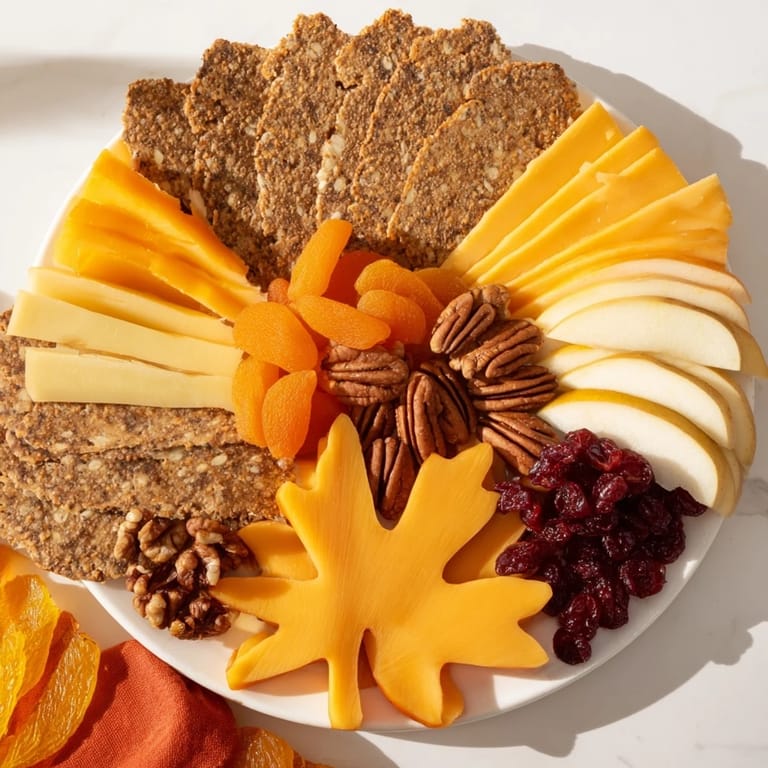
Save I'll never forget the year I decided to transform our Thanksgiving appetizer table entirely. Instead of the usual boring cheese board, I had this vision while walking through my neighborhood one crisp October afternoon—leaves swirling everywhere, those perfect gradients of amber, russet, and deep orange. That evening, I sat at my kitchen table with cookie cutters and a block of sharp cheddar, and something magical happened. What started as a simple experiment became the dish that made my guests actually pause and take photos before eating. Now, every Thanksgiving, someone asks, 'Are you doing those leaf-shaped cheeses again?' and I know I've created something they genuinely anticipate.
I made this board for my mother-in-law's first Thanksgiving with our family, and I watched her face when she saw it—that moment when someone realizes you put real thought into the little things. She actually sat down beside me while I was arranging it and asked a hundred questions about which cheese was which, and suddenly we were bonding over something as simple as leaf shapes and color combinations. That's when I understood this wasn't just about food; it was about creating a moment of connection.
Ingredients
- Sharp cheddar cheese (200 g): The bold, slightly tangy foundation that anchors every bite—this is where you want quality, not the pre-sliced stuff. It holds its shape beautifully when cut with those little leaf cutters and keeps a satisfying firmness even as it softens slightly from room temperature.
- Gouda cheese (150 g): This cheese is your secret weapon for depth. It's nutty and slightly sweet, creating a beautiful contrast to the sharpness of the cheddar, and the color is that gorgeous golden amber that screams autumn.
- Brie cheese (150 g): The elegant touch—it's creamy, buttery, and when you bite into a brie leaf, it almost melts on your tongue. Cut it cold, straight from the fridge, and work quickly so it doesn't get too soft to shape.
- Whole wheat crackers (200 g): Choose ones with texture and flavor, not bland rounds. They should taste good enough to eat on their own because they absolutely will be.
- Multigrain crackers (150 g): These add visual variety and that wonderful nutty undertone that makes people wonder what you did differently this year.
- Dried apricots (80 g): Sweet and chewy, these are perhaps the most pliable of the dried fruits for cutting, though you'll need a sharp knife and a gentle hand. They're worth the effort for that jewel-like orange color.
- Dried mango (80 g): The tropical note nobody expects—it creates this beautiful textural contrast between the savory cheeses and the sunny sweetness of fruit.
- Dried cranberries (60 g): Deep red garnish that fills gaps and adds pops of color without needing any cutting. They're also naturally tart, balancing the richer elements.
- Dried figs (60 g): These are harder to cut into perfect leaves, but they're worth attempting because their deep purple-brown color is spectacular and adds sophistication to your palette.
- Pecan halves (60 g): Buttery and rich, they're the bridge between sweet and savory. Toast them lightly if you want to amplify their flavor, though fresh is fine too.
- Walnuts (60 g): Earthier than pecans, they add complexity and help round out the nut selection without being redundant.
- Apple (1 small): Slice paper-thin just before serving to prevent browning—the tartness cuts through all the richness beautifully, and those thin slices catch the light in lovely ways.
- Pear (1 small): More delicate than apple, it adds a sophisticated sweetness. Toss these slices in a tiny bit of lemon juice if you're making them more than 30 minutes ahead.
- Fresh rosemary sprigs (optional, but truly): These aren't just garnish—they're aromatic memory, adding a whisper of woodsy freshness that somehow makes all the flavors taste more autumn-like.
Tired of Takeout? 🥡
Get 10 meals you can make faster than delivery arrives. Seriously.
One email. No spam. Unsubscribe anytime.
Instructions
- Prepare your canvas:
- Start by laying out your large wooden board or platter in front of you. Take a moment to visualize where warm colors will cluster and where you want cool whites from the brie to peek through. This isn't a rigid plan—it's more like daydreaming with ingredients, but having that sense of color distribution makes the actual arranging flow so much more naturally.
- Cut your cheeses into leaf shapes:
- Remove your cheeses from the refrigerator and let them sit for just two minutes so they're cold but not rock-hard. Using your small and medium leaf-shaped cookie cutters, gently press down and wiggle side to side with steady, even pressure. The cheddar and gouda should pop right out, but the brie needs extra gentleness—work slowly and if it sticks, run a thin knife around the edges first. Collect these beautiful golden and ivory leaves on a small plate as you go.
- Cut dried fruits into matching leaves:
- This is where patience becomes your friend. Working with one piece at a time, place your dried apricots, mango, and figs on a cutting board and use the same leaf cutters. You'll feel resistance—dried fruit is denser than cheese—so press firmly but deliberately, almost as if you're giving the cutter a gentle massage into the fruit. Some pieces will break at the edges, which is actually fine; those become delicious snacking rewards for your effort.
- Press leaf shapes into crackers:
- Take your crackers and gently press the leaf cutters into them. You're not trying to cut all the way through; you're creating an impression and texture. Some crackers will cooperate beautifully, others will crumble slightly—this is completely normal and doesn't affect the final look. The impressed lines actually add visual interest.
- Arrange your falling leaves:
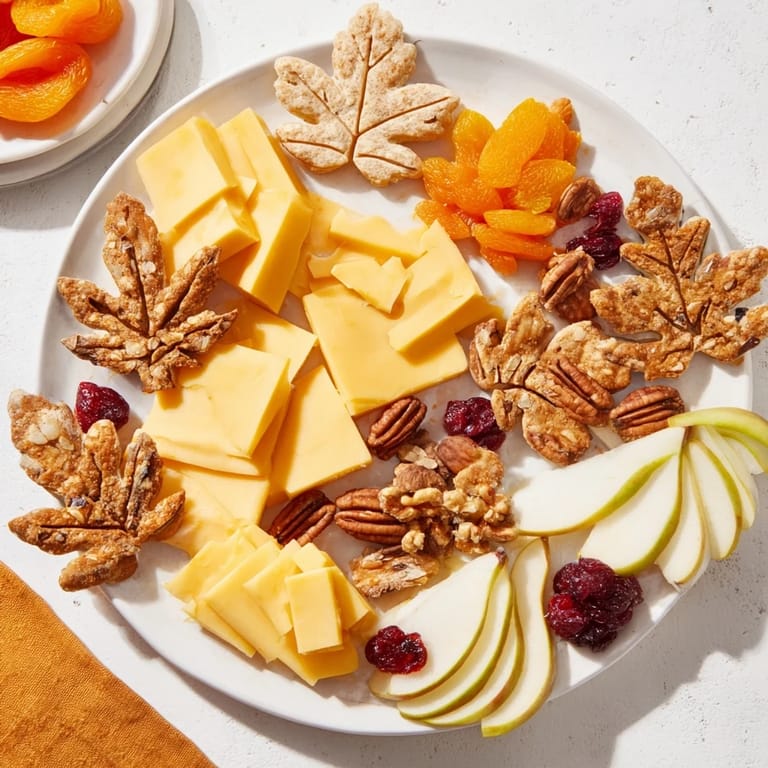
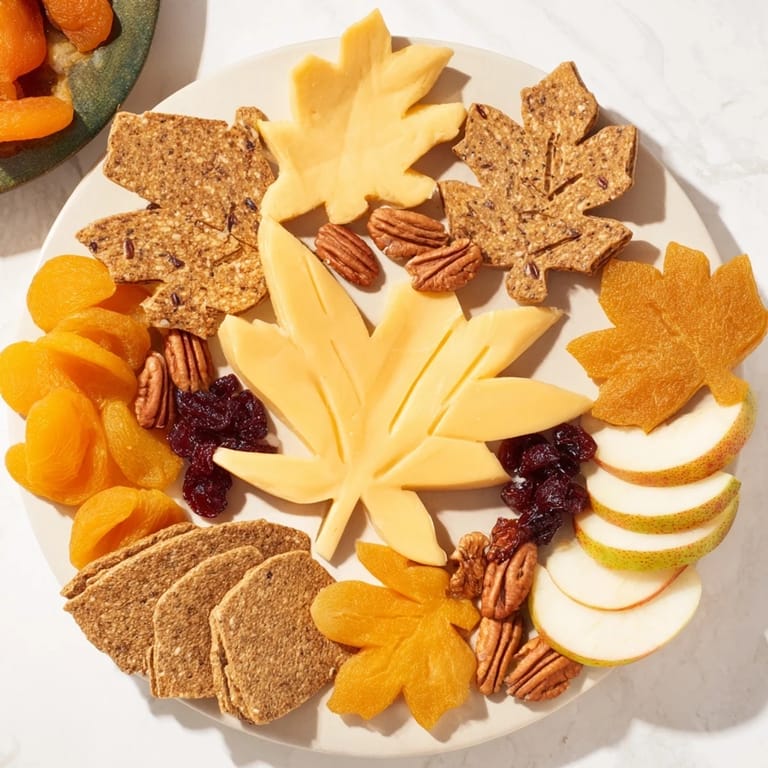
- Now comes the creative part. Starting from the upper-left corner of your board, begin placing cheese leaves, fruit leaves, and impressed crackers in a scattered, organic pattern that suggests leaves tumbling down and across the surface. Don't think about balance in the geometric sense; think about color flow. Let warm tones create movement, cluster similar colors but always break them up with something unexpected—a white brie leaf next to burnt orange mango, golden cheese beside deep purple figs.
- Fill the gaps with intention:
- Using whole nuts, cranberries, and fresh fruit slices, fill the empty spaces. Fan your apple and pear slices so they look graceful and organic. Scatter pecans and walnuts so they look like they've naturally nestled into the board. This is the stage where your board transforms from interesting to absolutely stunning—it's the difference between a sketch and a finished painting.
- Add the finishing touch:
- Tuck fresh rosemary sprigs throughout the board, especially in spots where you want a bit of height variation or where the colors feel like they need a bit of green contrast. Step back and look at the whole thing. If something doesn't feel quite right, move a few pieces—there's no wrong way to do this once you understand the idea.
- Serve and enjoy the moment:
- Bring your board to the table with pride. Let people admire it before eating. Serve immediately if possible, as fresh fruit will hold its appearance best, or cover loosely with plastic wrap and refrigerate. When you're ready, the cold cheeses and fruits will taste even more refreshing.
 Save
Save I'll never forget my friend Sarah's comment when she saw this board for the first time: 'This looks like autumn decided to become a snack.' That sentence stuck with me because it captures exactly what makes this dish special—it's not just delicious, it's poetic. Food should make people feel something before they even taste it, and this board does that every single time.
Making This Ahead: Your Timing Friend
Here's my tested timeline for stress-free holiday hosting. You can prepare this board up to eight hours before serving, which means you could spend your morning on other dishes while this beauty sits in the refrigerator, looking perfect and tasting fresher than if you made it last-minute. Cut your cheeses and dried fruit leaves the morning of and arrange them on your board. Cover the board loosely with plastic wrap—not too tight, as you don't want to flatten anything—and refrigerate. The only thing you'll add at serving time is the fresh apple and pear slices, which takes about three minutes. This way, you're never rushed, and everything tastes its absolute best.
Customizing Your Board for Dietary Needs
The beautiful thing about this board is its flexibility. If you're serving guests with nut allergies, simply omit the pecans and walnuts and double up on something else—extra dried cranberries, more fresh fruit, or substitute with pumpkin seeds and sunflower seeds, which have a similar textural role. For a vegan version, swap the cheeses for quality plant-based alternatives (cashew-based brie is surprisingly convincing, and so many good dairy-free aged cheeses exist now), and you'll barely notice the difference. The board's magic isn't in specific ingredients—it's in the color story and the care with which you've assembled it. Make it yours, and it will be perfect.
Pairings and Serving Suggestions
This board is designed to be the opener to your Thanksgiving feast, but honestly, it can hold its own as the entire appetizer situation. Pair it with a crisp white wine—a Pinot Grigio or Sauvignon Blanc cuts through the richness beautifully—or reach for apple cider, hot or cold, which feels almost ceremonial at Thanksgiving. Sparkling cider is lovely too if you're serving family members who don't drink alcohol. I've also served this with a dry rosé on warm autumn days, and the combination of cold cheese, sweet fruit, and that wine is genuinely transcendent. Set it out about 20 minutes before dinner so the cheeses soften just slightly and become even more inviting. People will graze on this while you're handling last-minute cooking, which is the whole point—it keeps everyone happy and occupied.
- A crisp Sauvignon Blanc or Pinot Grigio is always a safe, sophisticated choice
- Spiced apple cider creates a warm, seasonal pairing that feels authentically Thanksgiving
- If you want something unexpected, try a dry prosecco, which adds celebration without competition
 Save
Save This board has become more than just a Thanksgiving tradition in my kitchen—it's become a reminder that the most memorable food is often the food we've thoughtfully prepared with our own hands. Every leaf-shaped cheese is a small act of care, and people taste that.
Recipe Questions & Answers
- → What cheeses work best for shaping into leaves?
Semi-firm cheeses like cheddar, gouda, and brie hold leaf shapes well and provide a nice variety of flavors and textures.
- → Can I substitute dried fruits in the board?
Yes, dried apricots, mango, cranberries, and figs can be swapped for alternatives like dried apples, cherries, or dates for different flavor profiles.
- → How do you cut crackers into leaf shapes without breaking them?
Use small, sharp leaf-shaped cookie cutters and press gently to avoid cracking; thicker crackers tend to hold shapes better.
- → What are good nut substitutions for allergies?
Consider pumpkin seeds or sunflower seeds as crunchy, nut-free alternatives to pecans and walnuts.
- → How can I keep the board fresh before serving?
Cover the arranged board tightly with plastic wrap and refrigerate until ready to serve to maintain freshness and texture.