 Save
Save Last fall, I was standing in my kitchen on a Tuesday evening when my sister texted asking what I was making for dinner. I'd just pulled a sheet of roasted vegetables from the oven, and the sweet potato smell hit me at the exact moment I realized I had all these beautiful ingredients scattered across my counter—but no real plan. That's when the Harvest Bowl came together, almost by accident. What started as me throwing things into bowls became something I couldn't stop making, something that felt like autumn in every bite.
I made this for my coworkers one day when we were all tired of sad desk lunches, and something shifted. One of them took a bite and actually paused mid-chew, then asked for the recipe. That's when I realized this wasn't just dinner—it was the kind of food that made people sit down and actually taste what they were eating, even if it was just in the break room.
Ingredients
- Boneless, skinless chicken breasts: Two medium pieces are the foundation here, and roasting them on the same pan as vegetables means less cleanup and better flavor from the mingled oils.
- Olive oil: You'll need it twice—once for the sweet potatoes and chicken, once for the dressing—so don't skimp on quality.
- Kosher salt and black pepper: Seasoning at multiple stages builds depth; don't just salt at the end.
- Wild rice: This is the nutty, chewy heart of the bowl; rinsing it first prevents a starchy, gummy texture.
- Water or chicken broth: Broth adds subtle flavor if you have it on hand, but water works beautifully too.
- Sweet potato: Dice it into roughly half-inch cubes so it caramelizes at the edges but stays creamy inside.
- Smoked paprika: This single spice elevates the sweet potato from simple to memorable with its warmth and gentle smoke.
- Chopped kale: Remove those tough stems—your jaw will thank you—and massage it gently with dressing to soften the leaves without bruising them.
- Apple: Honeycrisp or Fuji varieties stay crisp longer and balance the earthiness of everything else; slice just before assembling so it doesn't brown.
- Sliced almonds: Toast them lightly in a dry pan if you have five minutes; the flavor deepens and they stay crunchier longer.
- Crumbled goat cheese: This tangy, creamy element ties the whole bowl together and provides a cool contrast to the warm roasted components.
- Balsamic vinegar: The anchor of your dressing; a good one makes all the difference.
- Extra virgin olive oil: Save this for the dressing where its flavor shines; use regular olive oil for roasting.
- Dijon mustard: A teaspoon acts as an emulsifier, helping the vinegar and oil marry into a cohesive dressing.
- Honey: Just a touch rounds out the sharpness of the vinegar with gentle sweetness.
- Garlic clove: Mince it finely so it distributes evenly without overpowering the delicate greens.
Tired of Takeout? 🥡
Get 10 meals you can make faster than delivery arrives. Seriously.
One email. No spam. Unsubscribe anytime.
Instructions
- Heat your oven and prep the pan:
- Preheat to 400°F and line a baking sheet with parchment paper so nothing sticks and cleanup is effortless. The parchment matters more than you'd think when you're juggling multiple components.
- Season and arrange the sweet potatoes:
- Toss your diced sweet potato with olive oil, smoked paprika, and salt, then spread them on one half of the baking sheet. They'll roast better if they're in a single layer with some breathing room.
- Season and place the chicken:
- Rub the chicken breasts with olive oil, salt, and pepper, then place them on the other half of the baking sheet. This setup means everything finishes around the same time, which is the real magic here.
- Roast until everything is golden:
- Slide the sheet into the oven for 25-30 minutes, flipping the sweet potatoes halfway through. The chicken is done when an instant-read thermometer hits 165°F; let it rest for five minutes before slicing so the juices stay inside where they belong.
- Cook the wild rice simultaneously:
- Rinse your rice under cold water to remove excess starch, then combine it with water or broth in a saucepan. Bring to a boil, lower the heat, cover, and let it bubble gently for 35-40 minutes until the grains are tender and have that characteristic slightly chewy texture.
- Whisk together the dressing:
- While everything roasts, combine balsamic vinegar, olive oil, Dijon mustard, honey, minced garlic, salt, and pepper in a bowl and whisk until it looks emulsified and glossy. Taste and adjust the seasoning—it should be tangy but balanced.
- Soften the kale with intention:
- Place your chopped kale in a large bowl, drizzle with a little dressing and a pinch of salt, then massage it gently with your hands for 1-2 minutes. You'll feel the leaves relax and turn a deeper green, becoming tender enough to enjoy without that tough, raw bite.
- Assemble each bowl like you're building something special:
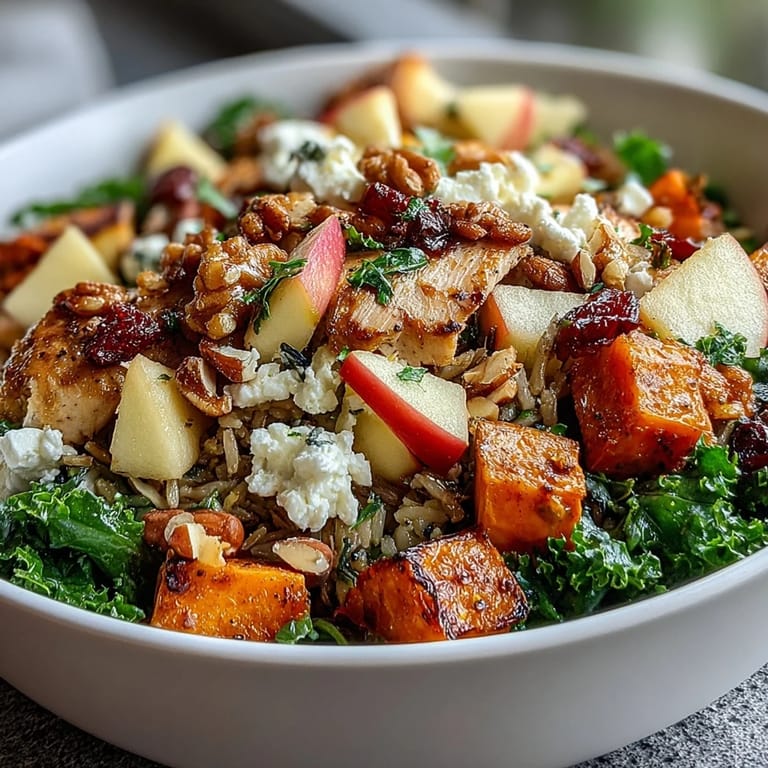
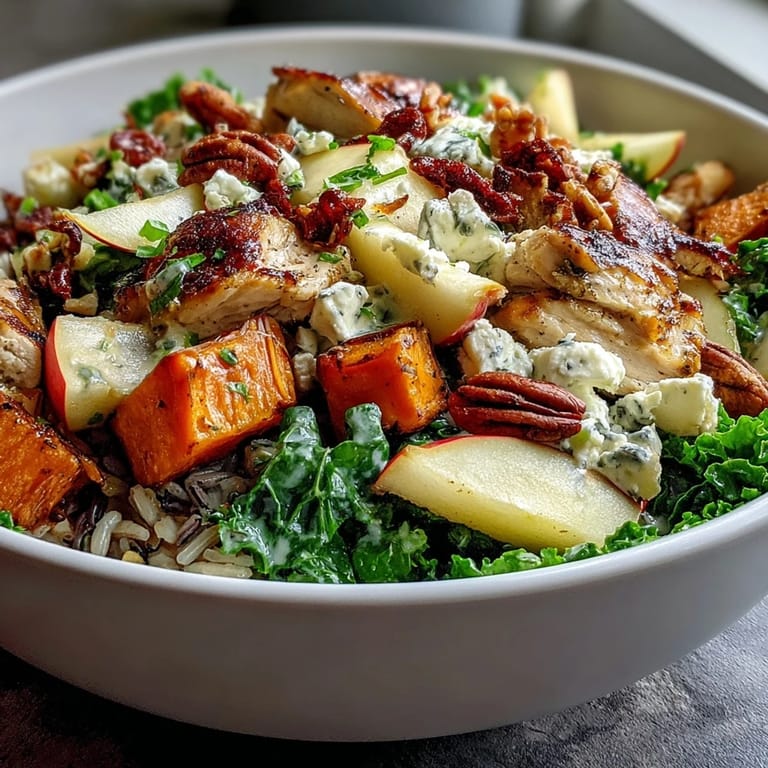
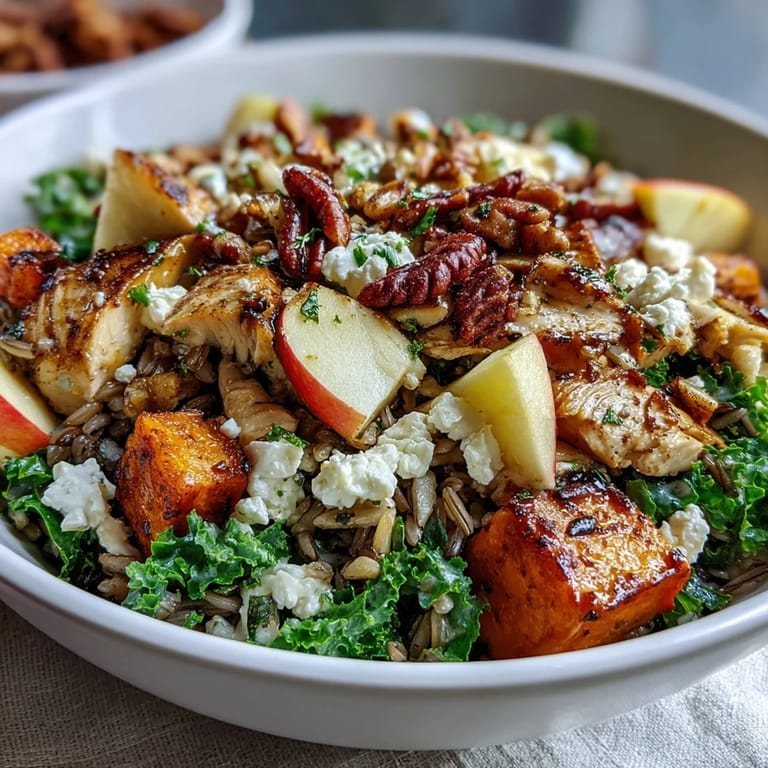
- Start with a bed of massaged kale, then layer on the wild rice, roasted sweet potatoes, sliced chicken, diced apple, almonds, and goat cheese. Drizzle generously with the balsamic dressing right before serving so everything stays bright and fresh.
- Serve and savor:
- Bring the bowls to the table right away while the roasted elements are still warm and the apple is still crisp. This is the moment when all those components really sing together.
 Save
Save There's something about a bowl that makes people slow down. A friend came over on a quiet Sunday afternoon, and we ate these at my kitchen counter while talking about nothing important. Halfway through, she set her fork down and just looked at her bowl for a moment, like she was taking inventory of all the colors and flavors. That's when I knew this recipe was about more than nourishment—it was about presence.
The Magic of Roasting Two Things at Once
One baking sheet, two different proteins and vegetables, finishing within minutes of each other—this is the kind of efficiency that doesn't sacrifice flavor. The heat that crisps the sweet potato edges also renders the chicken skin-side-up golden and juicy. I used to roast things separately and thought I was being thorough, but I was just making extra work. Once I realized I could orchestrate this timing, weeknight dinners stopped feeling like a chore.
Why Wild Rice Over Regular
Wild rice has this nutty, almost earthy flavor that feels more intentional than white or brown rice. It holds its texture better in a bowl where it sits alongside dressing and other components, and honestly, it just looks more interesting—those dark grains scattered across the kale feel like you put thought into this. The slight chew is also more satisfying, giving your mouth something to work with instead of just swallowing softness.
Building Bowls That Actually Stay Together
The order of assembly matters more than people realize. I learned this the hard way when I put the cheese down first and it got buried and cold by the time I finished layering. Starting with kale as your base keeps everything else from sliding around, and layering the warm components first means they hold their temperature better. The cold elements—apple, cheese, almonds—go on top where they stay crisp and visible. It's the kind of small architecture that makes the difference between a bowl that feels intentional and one that looks like you got impatient.
- Kale first as your structural base, massaged and ready to cradle everything.
- Warm components next—rice, chicken, sweet potatoes—while they're still slightly steaming.
- Cold and crispy elements last so they don't soften or get buried before you eat.
 Save
Save This bowl has become my go-to when I want to feel nourished without feeling like I'm following someone else's rules. It's simple enough that you can make it on a random Tuesday, but special enough that you'd serve it to people you want to impress.
Recipe Questions & Answers
- → Can I make this bowl vegetarian?
Yes, simply omit the chicken and add roasted chickpeas or marinated tofu for protein. The bowl remains satisfying and nutritious with plant-based alternatives.
- → What type of apple works best?
Honeycrisp or Fuji apples are ideal for their crisp texture and balanced sweetness. They hold their shape well when diced and provide a refreshing contrast to the hearty grains and roasted vegetables.
- → Why massage the kale?
Massaging kale with dressing and salt breaks down tough fibers, making it tender and more palatable. This technique transforms raw kale from bitter and tough to silky and sweet.
- → Can I prepare components ahead?
Absolutely. Cook wild rice, roast vegetables and chicken, and prepare dressing up to 3 days in advance. Store components separately and assemble bowls when ready to serve for optimal texture.
- → What nut alternatives can I use?
Walnuts or pecans make excellent substitutes for almonds, adding their own distinct flavor profiles. For nut-free versions, try pumpkin seeds or sunflower seeds for similar crunch.
- → How do I store leftovers?
Store components separately in airtight containers for up to 4 days. Keep dressing on the side to maintain freshness. Reheat chicken and vegetables gently before assembling.