 Save
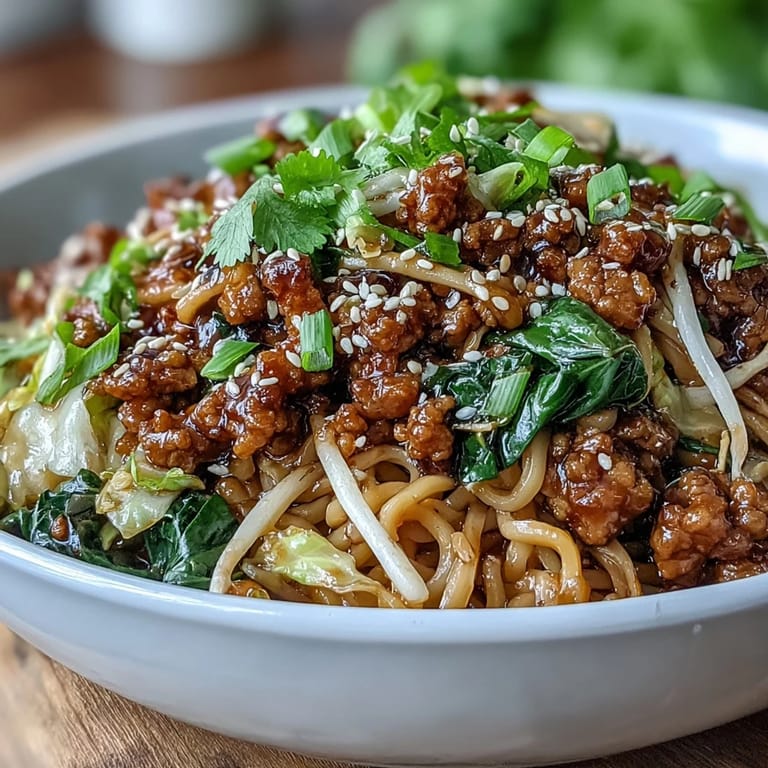
Save My kitchen smelled like a dumpling house one rainy Tuesday, and I hadn't even made dumplings. I was stir-frying pork with ginger and garlic, tossing it with noodles and a glossy soy-sesame sauce, when it hit me: this was everything I loved about potstickers, minus the folding. No pleating, no steaming trays, just a skillet and a bowl. It became my weeknight shortcut to that same crispy-edged, savory satisfaction.
The first time I made this for friends, I served it straight from the wok, garnished with cilantro and sesame seeds. Everyone went quiet for a moment, then started asking for seconds before they'd finished their first bowl. One friend said it tasted like the inside of her favorite dumplings, but better because there was more of it. That night, this recipe earned a permanent spot in my rotation.
Ingredients
- Rice noodles: They soak up the sauce beautifully and stay tender without getting mushy; rinse them after cooking to stop the starch from clumping.
- Ground pork: Browning it undisturbed creates those crispy, caramelized bits that mimic the crispy bottom of a potsticker.
- Soy sauce, sesame oil, and white pepper: This trio seasons the meat just like dumpling filling, giving it that unmistakable savory depth.
- Garlic and ginger: Freshly minced, they perfume the entire dish and wake up every other flavor in the pan.
- Cabbage and carrots: Shredded thin, they add crunch and sweetness, balancing the rich, salty sauce.
- Chili-garlic sauce: A spoonful brings heat and tang, turning the bowl from mild to memorable.
- Toasted sesame seeds: They add a nutty finish and a little textural surprise in every bite.
Tired of Takeout? 🥡
Get 10 meals you can make faster than delivery arrives. Seriously.
One email. No spam. Unsubscribe anytime.
Instructions
- Prepare the noodles:
- Boil the noodles until just tender, then drain and rinse them under cold water to stop the cooking. Toss with a few drops of oil so they don't stick together while you prep everything else.
- Season the meat:
- Whisk together soy sauce, sesame oil, cornstarch, white pepper, sugar, and salt, then mix it gently into the ground pork until it feels slightly sticky. If you have napa cabbage, fold in a tablespoon of finely minced, squeezed-dry leaves for extra moisture and sweetness.
- Make the sauce:
- Combine soy sauce, rice vinegar, oyster sauce, chili-garlic sauce, sesame oil, brown sugar, and broth in a bowl, whisking until the sugar dissolves. Taste it now and adjust the heat or sweetness to your liking.
- Prepare the vegetables:
- Shred the cabbage and carrots, slice the mushrooms thin, and separate the white and green parts of the scallions. Rinse the bean sprouts if using, and chop the cilantro for garnish.
- Brown the meat:
- Heat oil in a large skillet or wok over medium-high heat, then spread the seasoned pork in an even layer and let it sizzle undisturbed for 2 to 3 minutes. Break it up and continue cooking until golden and cooked through, spooning off excess fat if needed.
- Add aromatics:
- Push the meat to one side, add a bit more oil to the empty space, then toss in garlic, ginger, and the white parts of the scallions. Stir for about a minute until fragrant, then mix everything together.
- Cook vegetables:
- Add mushrooms and sauté until they soften, then toss in the cabbage and carrots and stir-fry until the cabbage wilts but still has some bite. If the pan looks dry, splash in a little water.
- Combine with sauce:
- Pour the prepared sauce over the meat and vegetables, tossing everything to coat evenly. Let it simmer for a minute or two until the sauce thickens slightly and clings to everything.
- Add noodles:
- Add the cooked noodles to the skillet and toss gently but thoroughly, adding a splash of water or broth if it seems too dry. Toss in the bean sprouts during the last minute if you're using them.
- Finish and serve:
- Taste and adjust with extra soy sauce, chili-garlic sauce, or a squeeze of lime, then stir in half the green onion tops. Divide between bowls and garnish with the remaining scallions, cilantro, and toasted sesame seeds.
 Save
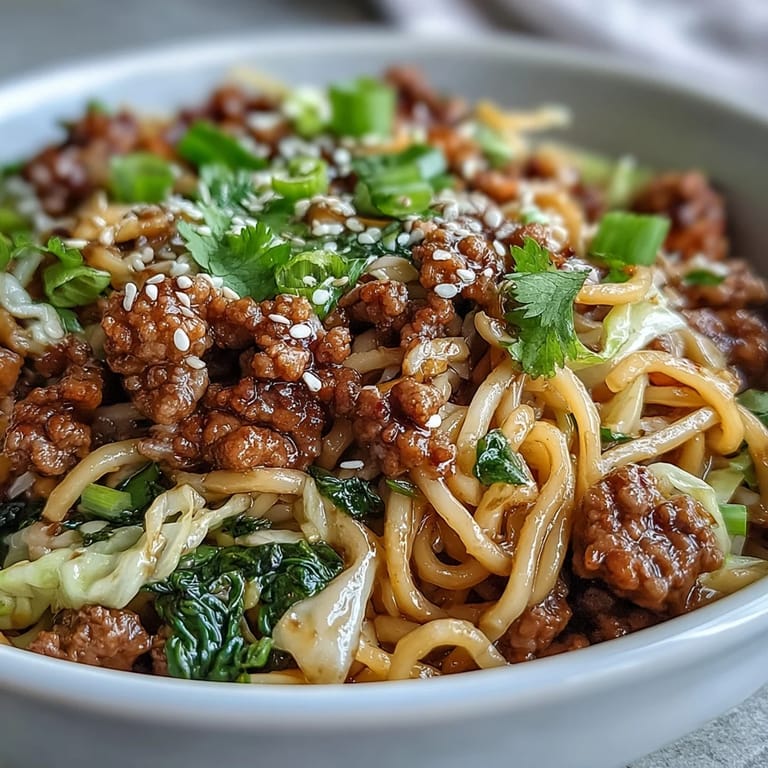
Save One evening, I made this for my sister after a long day, and she ate it curled up on the couch, chopsticks in one hand and her phone in the other. She didn't say much, just hummed between bites and asked if there was more. Sometimes the best compliment is watching someone forget to talk because they're too busy eating.
Choosing Your Protein
Ground pork is traditional and gives you that classic dumpling flavor, but ground chicken works beautifully if you want something lighter. I've also used ground turkey when that's what I had on hand, and it absorbed the seasonings just as well. For a vegetarian version, crumbled firm tofu or plant-based ground meat can be seasoned the same way, though you may want to add a pinch of mushroom powder for extra umami.
Noodle Swaps and Texture
Rice noodles are my go-to because they stay silky and soak up the sauce without getting heavy, but lo mein or even ramen noodles work if that's what you have. I've tried this with soba noodles once, and while the flavor was great, the buckwheat made the dish feel a little too earthy. Whatever you choose, rinse them after cooking to keep them from clumping, and toss them with a little oil while you prep the rest.
Storing and Reheating
Leftovers keep well in the fridge for up to three days, though the noodles will absorb more sauce as they sit. When reheating, add a splash of water or broth to the pan or microwave-safe bowl to loosen everything up and bring back that glossy, saucy texture. I like to top reheated bowls with fresh herbs and a drizzle of chili oil to make them feel freshly made.
- Store in an airtight container to keep the noodles from drying out.
- Reheat gently over medium heat, stirring often, or microwave in 30-second intervals.
- Add a fried or soft-boiled egg on top when reheating for extra richness and protein.
 Save
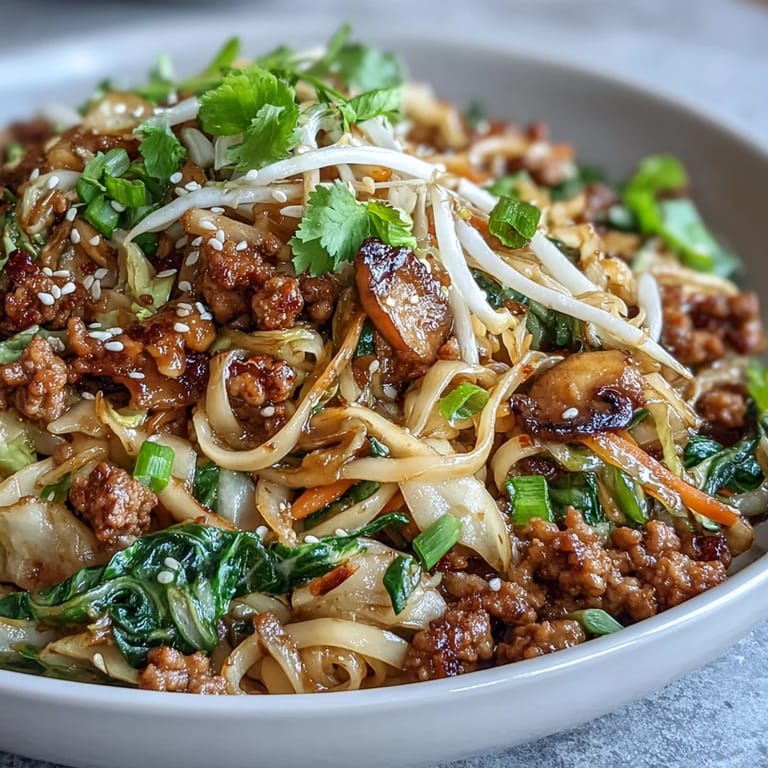
Save This bowl has become my answer to dumpling cravings when I don't have the time or patience to fold. It's fast, it's forgiving, and it tastes like comfort in a way that feels both familiar and new every time I make it.
Recipe Questions & Answers
- → Can I use chicken instead of pork?
Yes, ground chicken works perfectly. You can also substitute ground turkey or beef, or use plant-based meat for a vegetarian option.
- → What noodles work best for this dish?
Rice noodles are ideal for a gluten-free option, but lo mein or wheat noodles also work well. Cook according to package directions until just tender.
- → How can I make this gluten-free?
Use rice noodles, gluten-free tamari instead of soy sauce, and check that your oyster sauce is gluten-free. Many brands offer gluten-free versions.
- → Can I adjust the spice level?
Absolutely. Start with less chili-garlic sauce or sambal oelek and add more to taste. You can also serve extra on the side for individual preferences.
- → How do I store leftovers?
Store in an airtight container in the refrigerator for up to 3 days. Reheat gently with a splash of water or broth to refresh the noodles and prevent drying.
- → What vegetables can I substitute?
Napa cabbage, baby bok choy, snap peas, or finely chopped kale all work well. Use what you have on hand or prefer for texture and flavor.
- → Can I add an egg to this dish?
Yes, a soft-boiled or fried egg makes an excellent topping, adding richness and extra protein to each bowl.