 Save
Save My neighbor Marco stopped by one evening with homemade pesto and a bag of jumbo pasta shells, insisting we make something special together. We stood in my kitchen, the basil scent hitting us the moment he opened the container, and he casually mentioned his nonna used to stuff shells with ricotta and layer them with whatever sauce she had on hand. That night, watching the cheese bubble in the oven while we shared a glass of wine, I realized comfort food doesn't need to be complicated—just genuine ingredients and someone to cook with.
I made this for a small dinner party last fall, and my skeptical brother-in-law—the one who claims everything is better the traditional way—asked for seconds without prompting. His wife nudged me and whispered that he'd been quiet, which in his world means impressed. That moment taught me that tradition and creativity don't fight; sometimes they just need the right introduction.
Ingredients
- Jumbo pasta shells (20): These are your edible boats, sturdy enough to hold generous filling without tearing but tender when cooked just right—don't overcook them before stuffing or they'll fall apart.
- Ricotta cheese (1½ cups): The soul of the filling, creamy and mild enough to let other flavors shine; buying fresh from your dairy case makes a noticeable difference over shelf-stable tubs.
- Parmesan cheese (¾ cup grated): Brings nutty depth and saltiness; always grate it fresh if you can because pre-grated versions are coated with anti-caking agents that feel grainy.
- Large egg (1): Acts as a binder to keep the ricotta mixture from being watery, and it helps the filling set up properly during baking.
- Mozzarella cheese (1 cup plus ½ cup for topping): Melts into creamy pockets throughout and creates that golden, bubbly top everyone reaches for first.
- Salt (½ teaspoon) and black pepper (¼ teaspoon): Season the filling subtly since Parmesan adds saltiness; taste as you mix and adjust to your preference.
- Dried Italian herbs (½ teaspoon optional): A gentle addition if your pesto feels one-note or if you're using a milder version.
- Cooked chicken breast (2 cups shredded or diced): Rotisserie chicken saves precious time and honestly tastes better than home-cooked here because of how it's roasted; just pull the meat off and shred it with two forks.
- Basil pesto (⅓ cup): This is your flavor anchor, so choose or make one you genuinely love—store-bought is perfectly fine, but homemade pesto has a brighter, fresher bite.
- Marinara sauce (2 cups): The binding layer that keeps everything moist and cohesive; a quality jar makes this dish shine, so don't default to the cheapest option.
- Fresh basil leaves (for garnish): A finish that looks intentional and tastes impossibly good, even if it's just a handful torn by hand.
Tired of Takeout? 🥡
Get 10 meals you can make faster than delivery arrives. Seriously.
One email. No spam. Unsubscribe anytime.
Instructions
- Set your stage:
- Preheat the oven to 375°F and lightly grease your baking dish with butter or oil—this takes two minutes but saves you from frustrated scraping later. Have all your components prepped and within arm's reach because once you start stuffing, you'll want momentum.
- Cook the shells:
- Bring salted water to a rolling boil, add the shells, and cook until they're just shy of tender—they should bend slightly without splitting, which usually takes about a minute less than the package suggests. Drain them, spread them on a clean kitchen towel, and let them cool enough to handle comfortably.
- Build the ricotta mixture:
- Combine ricotta, Parmesan, egg, one cup mozzarella, salt, pepper, and the optional Italian herbs in a bowl, stirring until everything is smooth and evenly combined. The texture should feel creamy and spreadable, not grainy or wet.
- Coat the chicken:
- Toss your cooked chicken with the basil pesto in a separate bowl until every piece is lightly covered—the pesto should look distributed, not pooled in one spot. This is where the dish gets its green-flecked character.
- Create the sauce base:
- Spread one cup of marinara sauce across the bottom of your prepared baking dish in an even layer, using the back of a spoon to cover the surface smoothly. This acts as an insulating cushion that prevents sticking and ensures the bottom shells stay saucy.
- Stuff and arrange:
- Spoon about one tablespoon of ricotta mixture into each cooled shell, then top with a small spoonful of pesto chicken—don't overstuff or they'll burst during baking. Nestle them open-side-up into the sauce in neat rows, and they'll feel like little treasures waiting to transform.
- Final assembly:
- Spoon the remaining marinara sauce over all the shells, ensuring each one gets coverage, then scatter the final half cup of mozzarella across the top in an even blanket. You want the sauce visible between shells to keep everything moist, not buried under cheese.
- Bake covered and uncovered:
- Cover the dish tightly with foil and slide it into the oven for 25 minutes—this gentle heat melts the fillings without drying them out. Remove the foil, crank the temperature slightly higher in your mind's eye, and bake another 10 minutes until the cheese on top turns golden and bubbly at the edges.
- Rest and serve:
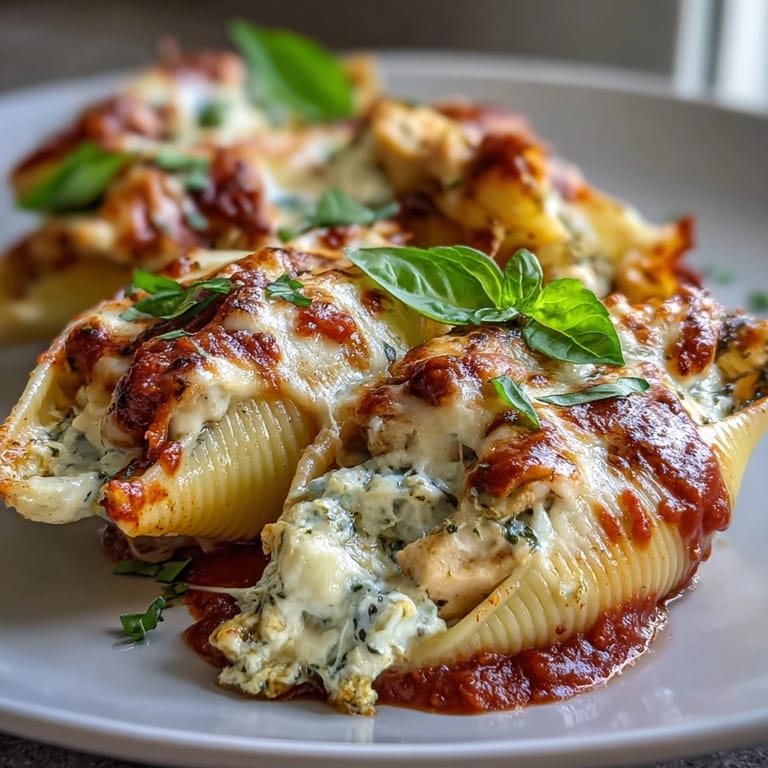
- Pull the dish from the oven and let it sit for five minutes so everything sets and the heat distributes evenly—this patience prevents the filling from running all over your plate. Scatter fresh basil on top, and you're ready to serve something that looks far more complicated than it actually was.
 Save
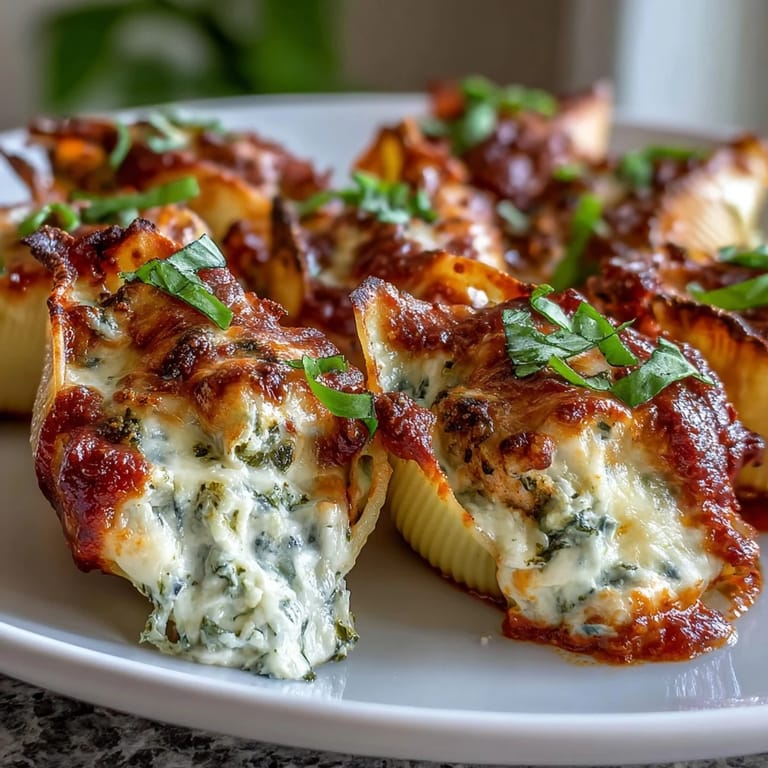
Save There's something quietly satisfying about watching these shells transform from pale and intimidating to golden and bubbling, knowing that inside each one is a deliberate combination of flavors you assembled with your own hands. My daughter once asked why they were called shells, and as she peeked into the oven and saw them nestled together, her face lit up—suddenly they weren't just food, they were little vessels of something she'd helped create.
Make-Ahead Magic
You can prepare the entire dish up to 24 hours before baking: stuff the shells, cover them with sauce and mozzarella, wrap the dish tightly in plastic wrap, and refrigerate. When you're ready to cook, add about 10 minutes to the covered baking time since the dish starts cold, and everything will taste exactly as it should—this is my secret for weeknight entertaining that feels effortless.
Flavor Swaps and Variations
While this recipe is built on pesto and marinara, the beauty is how forgiving it is to slight adjustments. Try sun-dried tomato pesto instead of basil, or mix sautéed spinach into the ricotta if you're going vegetarian—I once added roasted garlic cloves to the filling and loved the subtle sweetness they brought. The architecture stays the same; only the flavors dance differently.
Perfect Pairings and Storage
Serve these with a crisp green salad dressed in bright vinaigrette and a glass of Pinot Grigio or a light Chianti if you're feeling Italian that evening. Leftovers keep beautifully in the refrigerator for three days and reheat gently in a 350°F oven covered with foil, though honestly I find myself eating them cold straight from the container at midnight sometimes.
- A squeeze of fresh lemon juice on top brightens the richness just before eating.
- Pair with garlic bread or crusty bread for soaking up any extra sauce at the bottom of the dish.
- Make a double batch and freeze one for a future evening when you need dinner without the thinking.
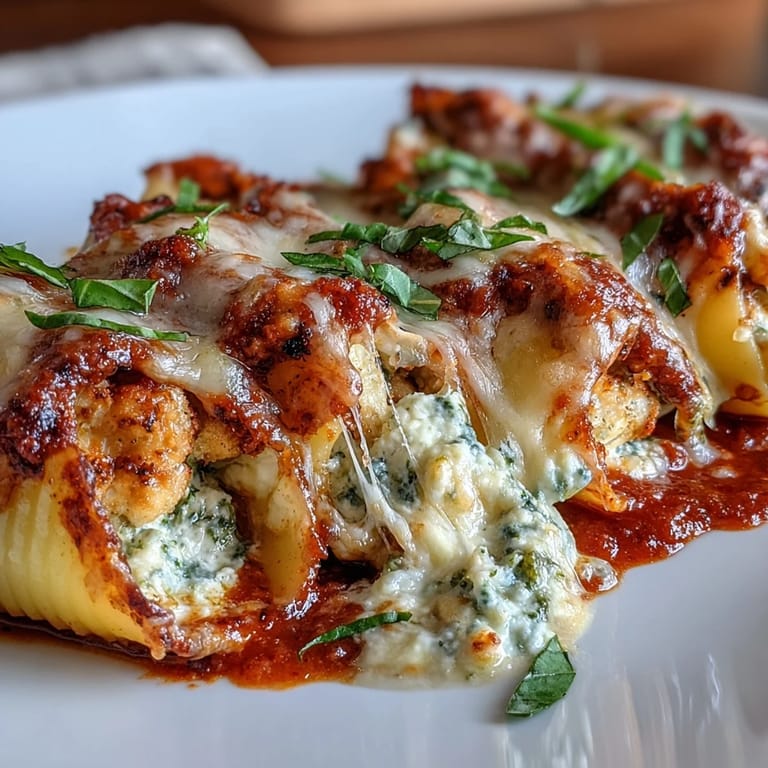 Save
Save These shells sit on my table now as proof that sometimes the best dishes are the ones born from a friend stopping by with an ingredient and a memory. You're going to make this again and again.
Recipe Questions & Answers
- → Can I make these stuffed shells ahead of time?
Yes, assemble the shells completely and refrigerate for up to 24 hours before baking. Add 5-10 minutes to the baking time if baking cold from the refrigerator.
- → What can I use instead of ricotta cheese?
Cottage cheese blended until smooth works well as a substitute. You can also use a mixture of cream cheese and Parmesan for a different flavor profile.
- → How do I store leftover stuffed shells?
Store in an airtight container in the refrigerator for 3-4 days. Reheat in the microwave with a splash of water or in a 350°F oven covered with foil until heated through.
- → Can I freeze these pesto chicken stuffed shells?
Absolutely! Freeze assembled but unbaked shells for up to 3 months. Thaw overnight in the refrigerator before baking as directed, or bake from frozen adding 15-20 minutes to the cooking time.
- → How do I make this vegetarian?
Simply omit the chicken and add sautéed spinach, mushrooms, or sun-dried tomatoes to the pesto mixture. You can also add extra vegetables like zucchini or bell peppers to the filling.
- → What type of pesto works best?
Basil pesto is traditional, but you can also use sun-dried tomato pesto or spinach pesto for variety. Homemade pesto will have the freshest flavor, but high-quality store-bought works perfectly.