 Save
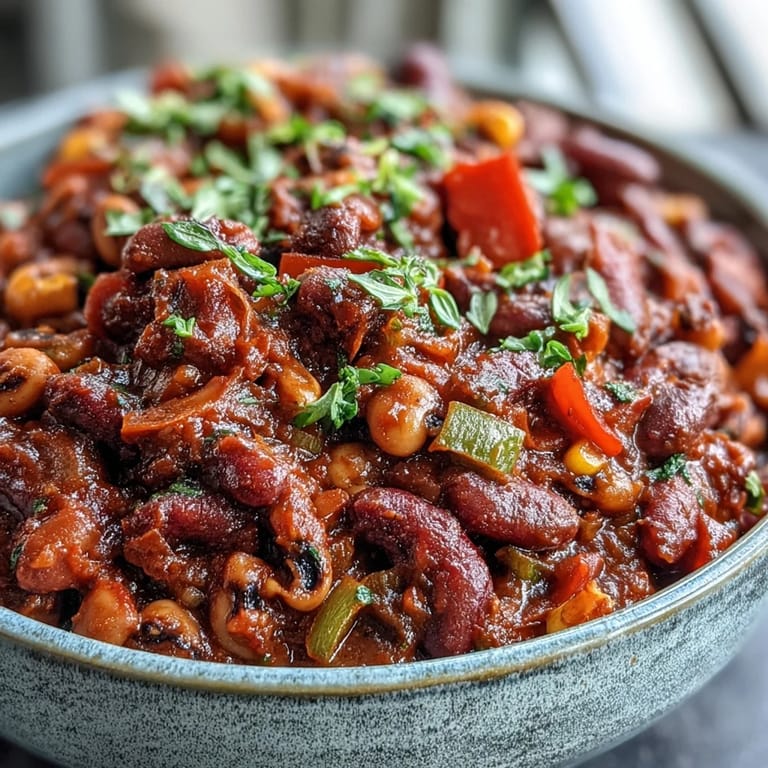
Save My sister called me on a Tuesday afternoon asking if I could bring something warm to her place, something that didn't require meat but still felt substantial. I'd been experimenting with black-eyed peas that week, mostly out of curiosity, and somehow landed on this chili that turned out to be exactly what we both needed. The moment I lifted the lid and that cumin-forward steam hit my face, I knew I'd stumbled onto something special.
That Tuesday dinner turned into a standing monthly thing, and I've learned that there's something about chili that makes people linger at the table longer than usual. Someone always asks for the recipe, and I love watching their faces when they realize how straightforward it actually is.
Ingredients
- Black-eyed peas: Use canned if you're short on time, but rinse them well to cut down on the sodium and any tinny flavor.
- Kidney beans: These add another layer of earthiness and help thicken the chili naturally as it simmers.
- Onion and garlic: The foundation of almost everything, and there's a reason we start here every single time.
- Bell peppers: Both red and green give you sweetness and brightness that balances the heat from the spices.
- Carrot and celery: They cook down to nothing but add a subtle sweetness and depth that makes people ask what your secret ingredient is.
- Canned diced tomatoes: The acidity here is crucial for keeping everything from feeling flat and one-note.
- Corn kernels: Frozen works just as well as fresh, and adds a pop of sweetness in every spoonful.
- Vegetable broth: This is your base, so use something you'd actually taste on its own, not the most generic option.
- Tomato paste: Concentrate it in the pan for a minute and it transforms into something rich and almost caramelized.
- Olive oil: Enough to coat the pan and build flavor, but you're not deep frying anything here.
- Ground cumin: This is the spine of the whole chili, so don't skimp on it or use stale stuff from the back of the cabinet.
- Chili powder: Check your blend because some brands are spicier than others, adjust accordingly.
- Smoked paprika: This gives you a warmth and depth that regular paprika just can't deliver.
- Dried oregano: A smaller amount, but it adds an herbal note that keeps things interesting.
- Cayenne pepper: Optional but recommended if you like heat that builds slowly rather than hits you upfront.
- Salt and black pepper: Taste as you go and season at the end when you can really feel the difference.
Tired of Takeout? 🥡
Get 10 meals you can make faster than delivery arrives. Seriously.
One email. No spam. Unsubscribe anytime.
Instructions
- Build your base:
- Heat the olive oil in a large pot over medium heat and add your diced onion, garlic, carrot, celery, and both bell peppers. You're looking for them to soften and start releasing their moisture, which takes about 5 to 7 minutes and should smell so good you can barely wait for the next step.
- Bloom your spices:
- Stir in the cumin, chili powder, smoked paprika, oregano, and cayenne and let everything sit for about a minute. You'll smell the difference immediately as the spices wake up in the warm oil.
- Deepen the flavor:
- Add the tomato paste and stir it around for another minute so it caramelizes slightly and loses any tinny quality. This is a small step that makes an outsized difference in the final taste.
- Bring it together:
- Add your diced tomatoes, vegetable broth, black-eyed peas, kidney beans, and corn, stirring until everything is combined. Let it come to a gentle boil so you know it's heating through evenly.
- Let it simmer:
- Reduce the heat to low, cover the pot, and let it bubble away gently for 25 to 30 minutes, stirring every so often. The longer you let it sit, the more the flavors meld together into something cohesive and warm.
- Taste and adjust:
- Once the vegetables are tender and the chili has thickened slightly, taste it and season with salt and black pepper until it tastes right to you. This is the part where you make it yours.
- Serve it up:
- Ladle it into bowls and let people choose their own toppings so everyone gets exactly what they want.
 Save
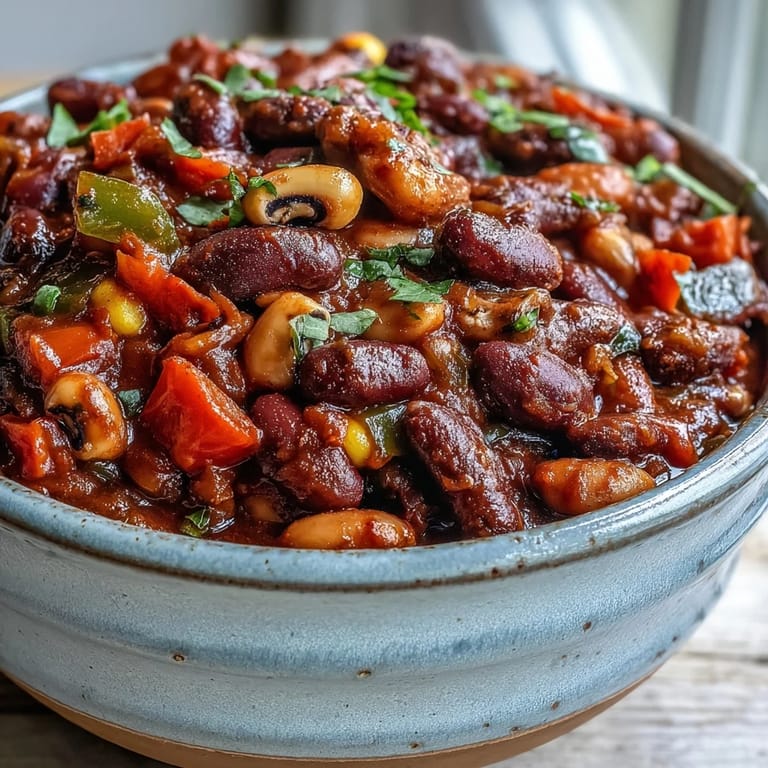
Save There's a moment when everything is simmering quietly and your kitchen smells like comfort itself. That's when you know this recipe is working.
Making It Thicker or Thinner
Some people like their chili almost soup-like and others want it thick enough to stand a spoon in. If you're in the thicker camp, mash some of the beans and peas right in the pot with the back of your wooden spoon during the last few minutes of cooking. If it's too thick, just add more broth a splash at a time until you reach the consistency you want.
Swaps and Substitutions
Black-eyed peas are special but not irreplaceable, so if you can't find them use pinto beans or regular black beans instead. The vegetables are also pretty flexible, so if you have zucchini or sweet potato hanging around your kitchen, dice them and throw them in. You can also use chicken broth instead of vegetable broth if you want a slightly different flavor direction.
Toppings and Serving
The toppings are where everyone gets to express themselves, so set out a few options and let people build their own bowl. Fresh cilantro adds brightness, a dollop of sour cream or yogurt cools things down, jalapeños bring more heat, and cheese makes it feel indulgent.
- Cornbread on the side is non-negotiable if you ask me, but rice or tortilla chips work too.
- Make this recipe ahead and reheat it gently because it actually tastes better the next day when the flavors have had time to really get to know each other.
- Freeze leftovers in portions so you have a bowl of comfort ready whenever you need it.
 Save
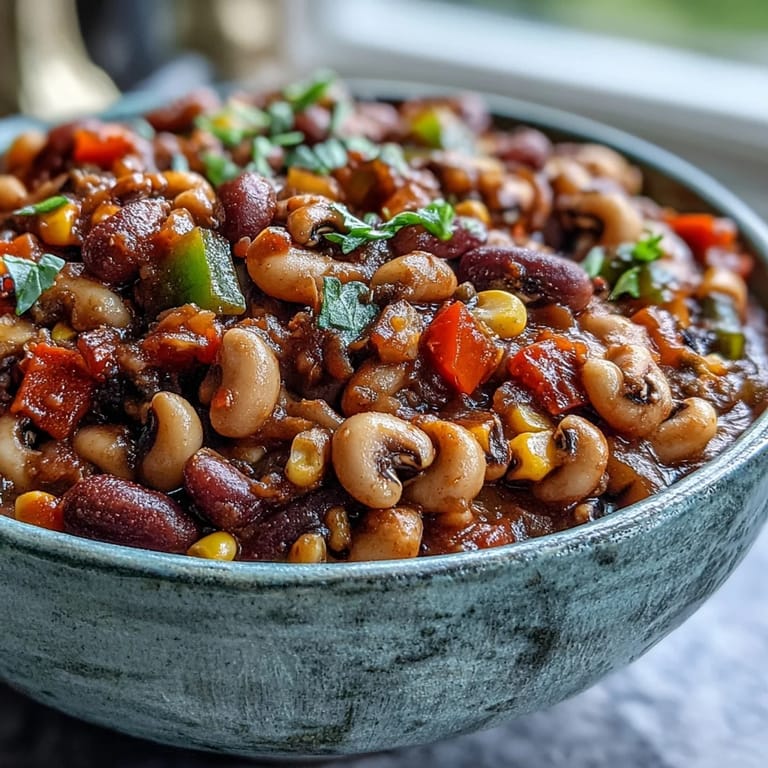
Save This chili is honest food that doesn't pretend to be complicated, and somehow that's what makes people come back for more. It's become the dish I turn to when I want to feed people something that feels like home.
Recipe Questions & Answers
- → What makes black-eyed peas special in chili?
Black-eyed peas bring an earthy, nutty flavor and creamy texture that sets them apart from traditional beans. They hold their shape well during simmering while becoming tender enough to offer a satisfying bite. Their subtle flavor pairs beautifully with bold spices like cumin and smoked paprika.
- → Can I use dried black-eyed peas instead of canned?
Absolutely. Soak 1 cup dried black-eyed peas overnight, then cook them in simmering water for about 45 minutes to 1 hour until tender. You'll need approximately 2 cups cooked peas, which equals about one 15-ounce can when drained. Freshly cooked peas often have a slightly better texture than canned.
- → How can I make this chili thicker?
For a heartier consistency, use a potato masher or the back of a spoon to crush about one cup of the cooked peas and beans against the side of the pot. This releases starch and naturally thickens the liquid. You can also let it simmer uncovered for the last 10 minutes to reduce excess liquid.
- → What vegetables work best in this chili?
The classic combination of onion, garlic, bell peppers, carrot, and celery provides a flavorful foundation. You can easily add diced sweet potatoes for sweetness, zucchini for extra vegetables, or butternut squash for seasonal variation. Each vegetable contributes both nutrition and texture to the final dish.
- → How long does this chili keep in the refrigerator?
This chili stores beautifully and often tastes better the next day as flavors continue to develop. Keep it in an airtight container in the refrigerator for up to 5 days. Reheat gently on the stovetop, adding a splash of broth or water if it has thickened too much. It also freezes well for up to 3 months.
- → What toppings complement this black-eyed pea chili?
Fresh cilantro adds brightness and color, while sour cream or plant-based yogurt provides a cool contrast to the warming spices. Shredded cheese, sliced jalapeños, diced avocado, or crushed tortilla chips all add wonderful texture and flavor. A squeeze of fresh lime juice right before serving brightens the entire dish.