 Save
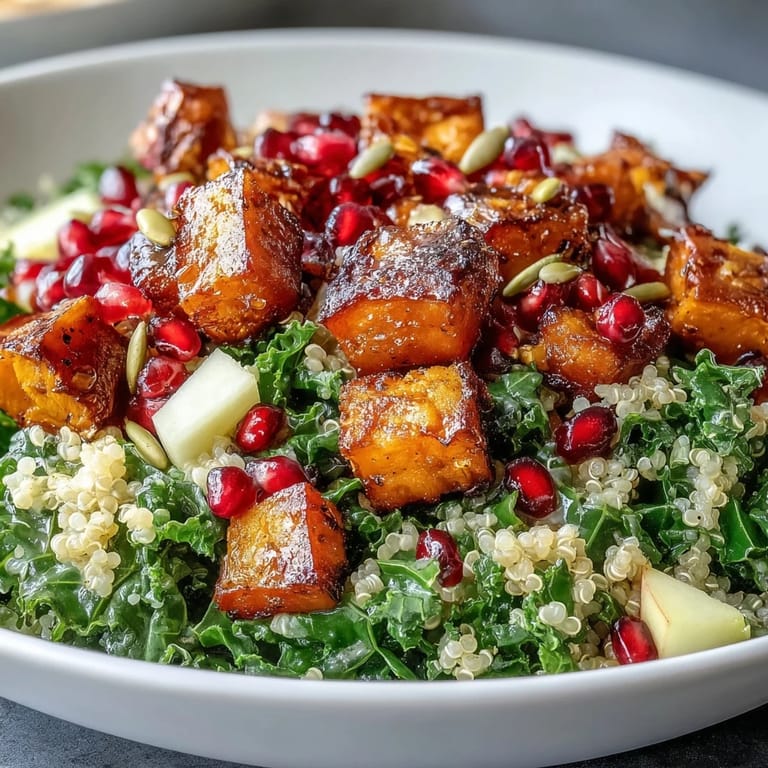
Save There's something about November that makes me crave bowls like this one. I was standing in the farmers market on a crisp Saturday morning when the vendor handed me a bunch of kale so vibrant it practically glowed, and beside it sat these impossibly orange sweet potatoes. Something clicked, and I started layering ideas right there at the counter—quinoa, pomegranate, apple, pepitas—until I had sketched out what would become my favorite way to eat vegetables without feeling like I'm on a diet.
I made this for my sister after she mentioned she'd been eating the same sad desk salad every day for a week. When she took that first bite, she literally paused mid-chew and looked at me like I'd performed magic. Now she texts me photos of the versions she's made at home, each one slightly different, each one proof that this bowl works because it adapts to whatever you've got on hand.
Ingredients
- Quinoa (1 cup, rinsed): This grain is a complete protein, which means your bowl actually sticks with you; rinsing removes the bitter coating nobody talks about but everyone tastes.
- Kale (1 large bunch, about 6 cups): Massage it gently and it transforms from tough and bitter to silky and sweet—this one step changes everything about how it tastes.
- Sweet potatoes (2 medium, peeled and diced): The sweetness balances the earthiness of the kale and creates a natural sauce when they soften in the oven.
- Olive oil (5 tablespoons total): Split between roasting the potatoes and making the dressing; good olive oil here actually matters because you taste it.
- Sea salt & black pepper: Use them generously in layers—on the potatoes while roasting, on the kale while massaging, in the dressing.
- Apple (1 medium, cored and diced): The tartness cuts through the richness and adds a crisp textural contrast; Granny Smith works best if you have a choice.
- Pomegranate seeds (1/2 cup): These little bursts of tart juice are non-negotiable for me; they make the bowl feel celebratory instead of virtuous.
- Pepitas (1/4 cup): Toasted pumpkin seeds add a subtle nuttiness and keep things crunchy; they're also easier to find than you'd think.
- Apple cider vinegar (1 tablespoon): This is the backbone of the dressing—it's brighter and more complex than regular vinegar.
- Maple syrup or honey (1 tablespoon): A touch of sweetness balances the vinegar and mustard into something that tastes almost like you got it from a restaurant.
- Dijon mustard (1 teaspoon): Sounds like a weird ingredient until you taste how it deepens the dressing and adds a subtle sophistication.
Tired of Takeout? 🥡
Get 10 meals you can make faster than delivery arrives. Seriously.
One email. No spam. Unsubscribe anytime.
Instructions
- Heat your oven and prep the sweet potatoes:
- Get your oven to 400°F and toss the diced sweet potatoes with olive oil, salt, and pepper. Spread them out on a baking sheet in a single layer so they can actually caramelize instead of steam themselves into mush.
- Get the quinoa going:
- While the potatoes roast, combine rinsed quinoa with 2 cups water and a pinch of salt in a saucepan. Bring it to a boil, then lower the heat, cover, and let it simmer for 15 minutes until the water is completely absorbed.
- Massage the kale until it surrenders:
- Chop your kale into bite-sized pieces and pile it into a large bowl. Drizzle with just a splash of olive oil and a pinch of salt, then massage it with your hands for a couple of minutes until it darkens and softens—this is the move that transforms it from tough to tender.
- Shake up the dressing:
- Whisk together the olive oil, apple cider vinegar, maple syrup, Dijon mustard, salt, and pepper in a small bowl until everything is emulsified and balanced. Taste it and adjust—it should be tangy and a little bit sweet.
- Check your roasted potatoes:
- Halfway through roasting (around the 12-minute mark), give the sweet potatoes a stir so they cook evenly. They're ready when they're golden at the edges and fork-tender in the middle.
- Build your bowls:
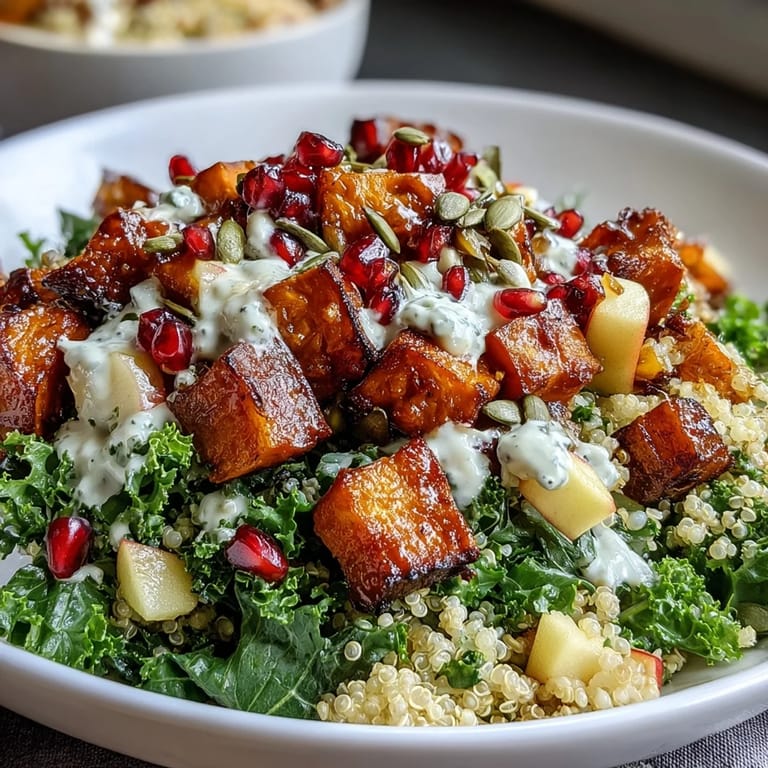
- Divide the massaged kale among four bowls as your base. Top each with a quarter of the fluffy quinoa, the roasted sweet potatoes, diced apple, pomegranate seeds, and pepitas distributed evenly so every bite has a little bit of everything.
- Finish with the dressing:
- Drizzle the dressing over each bowl just before you eat—if you add it too early, the kale will absorb it all and the apple will oxidize.
 Save
Save I served this at a dinner party once where someone was quietly trying to decide if they were vegetarian, and after eating this bowl, they looked up and said, "I don't know if this is why people eat salads, but if it is, I get it now." That's when I realized this wasn't just a healthy recipe—it was something that made people feel good without making them feel deprived.
Why This Bowl Works Year-Round
The beauty of a grain bowl is that it's a template, not a prison. In spring, I swap the sweet potatoes for fresh asparagus and add crumbled feta. Summer calls for grilled corn and fresh mint. Fall is when I make this exact version because the combination of warm roasted vegetables with cool, crisp toppings feels like the season itself. Winter gets a drizzle of tahini dressing instead of the vinaigrette, and everything feels cozy and grounding.
The Dressing Changes Everything
I learned this the hard way when I once showed up to a potluck with this bowl drowning in a bottled ranch dressing someone had suggested. It was like watching a beautiful painting get covered in mud. The homemade dressing is what separates this from feeling like a diet salad—the maple syrup rounds out the sharpness of the vinegar, and the Dijon mustard adds this subtle depth that makes you wonder what the secret ingredient is. It's only five minutes to whisk together, and it makes an enormous difference.
Mix-Ins and Additions That Transform It
Sometimes I add a fried egg on top just before serving, and the warm yolk becomes an extra sauce. Other times I crumble some crispy chickpeas for extra protein and crunch, or add roasted beets for an earthy sweetness. You could absolutely grill some chicken or slice some marinated tofu and turn this into something even more substantial. The point is that this bowl is flexible enough to work with whatever you've got and inspired enough to make people feel special either way.
- Add grilled chicken, crispy tofu, or roasted chickpeas for a heartier protein-packed version.
- Swap pepitas for toasted sunflower seeds, walnuts, or almonds depending on what you have in the pantry.
- Try baby kale or spinach if curly kale feels too intense—the massage technique works on any tender green.
 Save
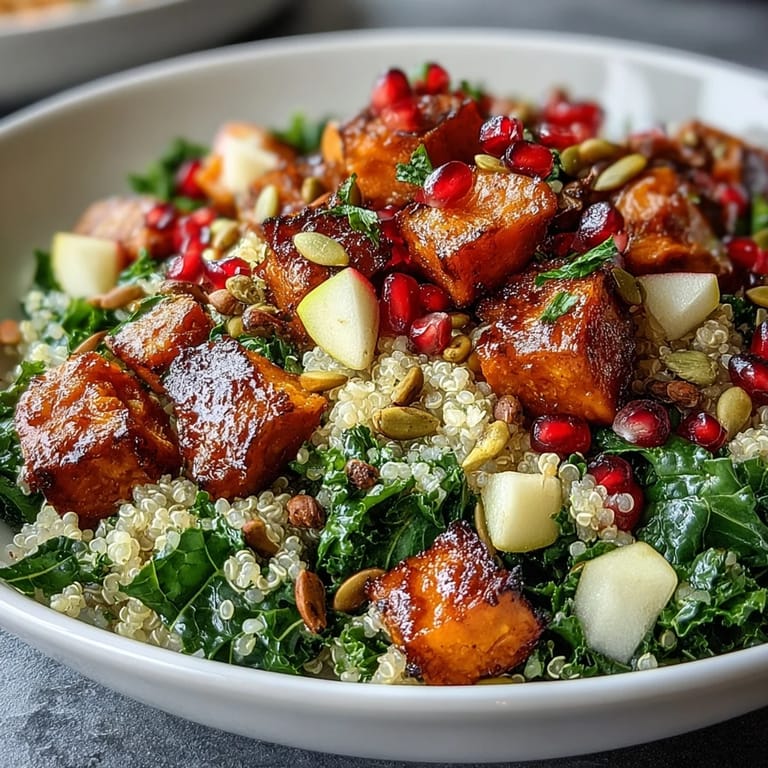
Save This bowl became my answer to the question "What should I cook?" because it feels different every time, tastes restaurant-quality, and somehow manages to be both indulgent and good for you. Make it once, and I promise you'll find yourself coming back to it again and again.
Recipe Questions & Answers
- → How do I massage kale properly?
Place chopped kale in a large bowl and drizzle with a small amount of olive oil and salt. Use your hands to gently rub and squeeze the leaves for 1-2 minutes until they darken in color and become tender. This breaks down tough fibers and makes the kale more enjoyable to eat.
- → Can I make this bowl ahead of time?
Yes, the components store beautifully for 3-4 days. Keep the dressing separate and add it just before serving to maintain the best texture. The quinoa, roasted vegetables, and massaged kale can all be prepared in advance and refrigerated in airtight containers.
- → What protein additions work well?
Grilled chicken breast, baked tofu, roasted chickpeas, or even a fried egg would complement these flavors beautifully. For vegan options, try adding hemp hearts, nutritional yeast, or edamame for extra protein.
- → Can I substitute other grains for quinoa?
Absolutely. Farro, wheat berries, brown rice, or couscous would all work wonderfully. Just adjust cooking time according to package directions. Each grain brings a slightly different texture and flavor profile to the bowl.
- → How do I remove pomegranate seeds efficiently?
Score the pomegranate around the middle and break it open. Hold each half cut-side down over a bowl and whack the back firmly with a wooden spoon. The seeds will fall out while the white pith stays attached to the rind. This method is much faster than picking out individual seeds.
- → What if I don't like maple syrup in the dressing?
Honey works equally well as a natural sweetener. For a refined sugar-free version, you could use date syrup or omit the sweetener entirely—the pomegranate and apple provide plenty of natural sweetness on their own.