 Save
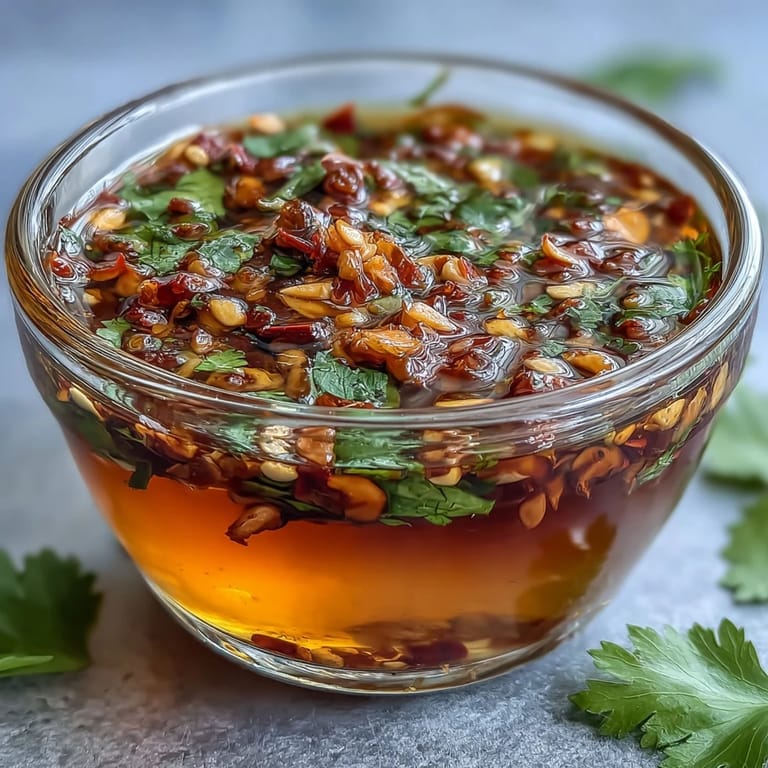
Save My neighbor knocked on my door one evening holding a container of the most golden, fragrant oil I'd ever seen, explaining how she'd discovered this sauce at a tiny dumpling shop and spent weeks reverse-engineering it in her kitchen. Watching her describe the moment the hot oil hit the garlic and how the smell practically knocked her backwards made me realize this wasn't just a condiment—it was a small, intentional act of flavor magic that transforms whatever it touches. She handed me a jar to try, and within days I was making my own batches, experimenting with heat levels and herb combinations until I found my perfect balance.
I brought a jar to a dinner party last month where my friend served homemade potstickers, and watching everyone's faces light up when they dipped them into this sauce felt like I'd just introduced them to something they didn't know they were missing. Someone actually asked for the recipe mid-bite, which has never happened to me before, and suddenly I was writing it down on napkins while people hovered around the kitchen.
Ingredients
- Garlic, 6 large cloves, finely minced: Fresh garlic becomes sweeter and almost caramel-like when infused in hot oil, so don't skip the mincing—bigger pieces won't break down properly and you'll end up with harsh edges.
- Fresh ginger, 2 tablespoons finely grated: The ginger adds warmth and complexity that keeps the sauce from tasting one-dimensional; use a microplane for the finest texture that dissolves seamlessly.
- Crushed red chili flakes, 2 tablespoons: This is where you control the heat, so taste as you go—I've learned that different brands have wildly different spice levels, and what burned my mouth last week might be perfect for you.
- Sichuan peppercorns, 1 teaspoon optional: These aren't actually hot; they create a numbing, tingling sensation that adds dimension and makes your mouth feel alive in the best way.
- Fresh cilantro, 2 tablespoons finely chopped: The brightness here is essential—it cuts through the richness and prevents the sauce from feeling heavy, so don't treat it as optional even if you're not usually a cilantro person.
- Neutral oil, 1 cup: This is your heat conductor, so choose something with a high smoke point like grapeseed or peanut oil; I've made the mistake of using regular olive oil and it muted everything.
- Soy sauce, 1 tablespoon: Use tamari if you need gluten-free, and taste before fully committing to the amount since soy sauces vary wildly in saltiness.
- Rice vinegar, 1 teaspoon: Just enough to brighten without overwhelming; this is one of those ingredients that seems tiny but makes everything taste intentional.
- Sesame oil, 1 teaspoon: A little drizzle at the end brings everything together with its toasted, almost nutty richness.
- Sugar, ½ teaspoon and salt, ½ teaspoon: These aren't there to make it sweet or salty—they're balancers that round out all the competing flavors.
Tired of Takeout? 🥡
Get 10 meals you can make faster than delivery arrives. Seriously.
One email. No spam. Unsubscribe anytime.
Instructions
- Prep your aromatics:
- Gather your minced garlic, grated ginger, chili flakes, Sichuan peppercorns if using, and cilantro in a heatproof bowl—this is your flavor foundation, so take a moment and really breathe in what you're about to create.
- Heat your oil to the perfect point:
- Pour your neutral oil into a small saucepan and watch it carefully over medium heat until it shimmers and moves like liquid gold but before any wisps of smoke appear. The temperature should be around 350°F (180°C), and you can test it by dropping in a tiny piece of garlic—it should sizzle immediately without browning too fast.
- Make the magic happen:
- Carefully pour the hot oil over your aromatics and watch it bubble up with energy, releasing that incredible fragrance that will fill your entire kitchen. Let it cool for 2-3 minutes so the initial shock passes and the flavors can begin infusing gently.
- Season with intention:
- Stir in your soy sauce, rice vinegar, sesame oil, sugar, and salt, tasting as you go to make sure everything is balanced. This is where you can adjust heat, saltiness, or acidity if something feels off.
- Let flavors deepen:
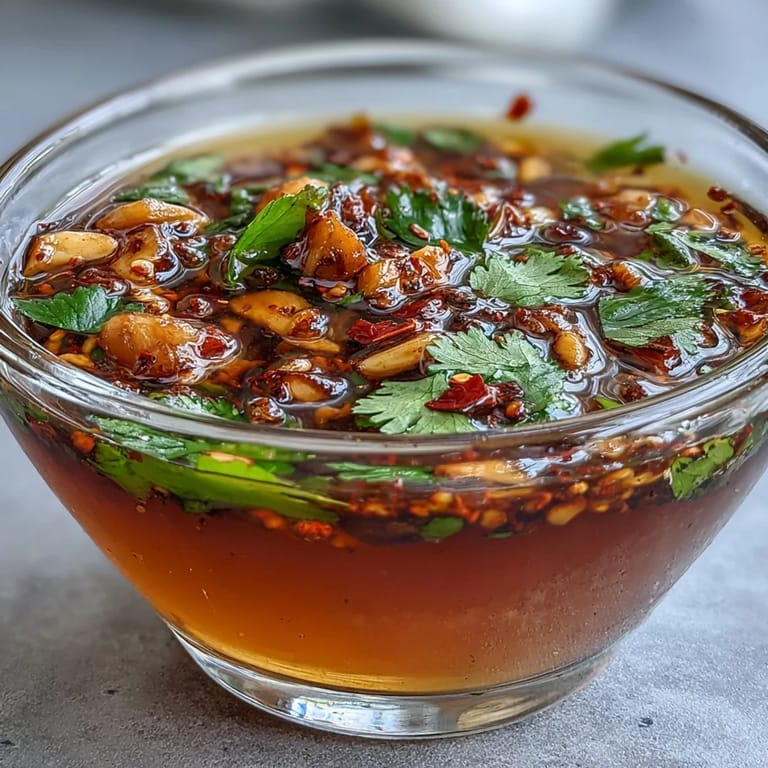
- Transfer everything to a clean jar and let it sit at room temperature for a few hours—the flavors will evolve and become more complex as they mingle.
 Save
Save Last week I made a batch and forgot about it in my fridge for three days, and when I finally used it on some leftover rice, I realized the flavors had actually improved—everything had melded together into something richer and more cohesive than day one. That's when I understood this sauce isn't just something you make and immediately use; it's something that gets better with patience.
Heat Customization That Actually Works
I've made this sauce for people with wildly different spice tolerances, and the beautiful thing is how forgiving it is—you're not locked into anything. Start with 1 tablespoon of chili flakes if you're cautious, taste after the oil cools, and add more if you want that extra kick. Some people swear by a pinch of cayenne for lingering heat that builds, while others prefer the straightforward intensity of extra chili flakes.
Storage and Keeping It Fresh
This sauce keeps beautifully in a sealed jar in the refrigerator for up to two weeks, though honestly I've never had a batch last that long because I keep finding new things to dip into it. If you make several jars, label them with the date—I once grabbed what I thought was my current batch only to discover it was from last month, and while it was still fine, I prefer using it at its peak freshness.
Beyond Dumplings
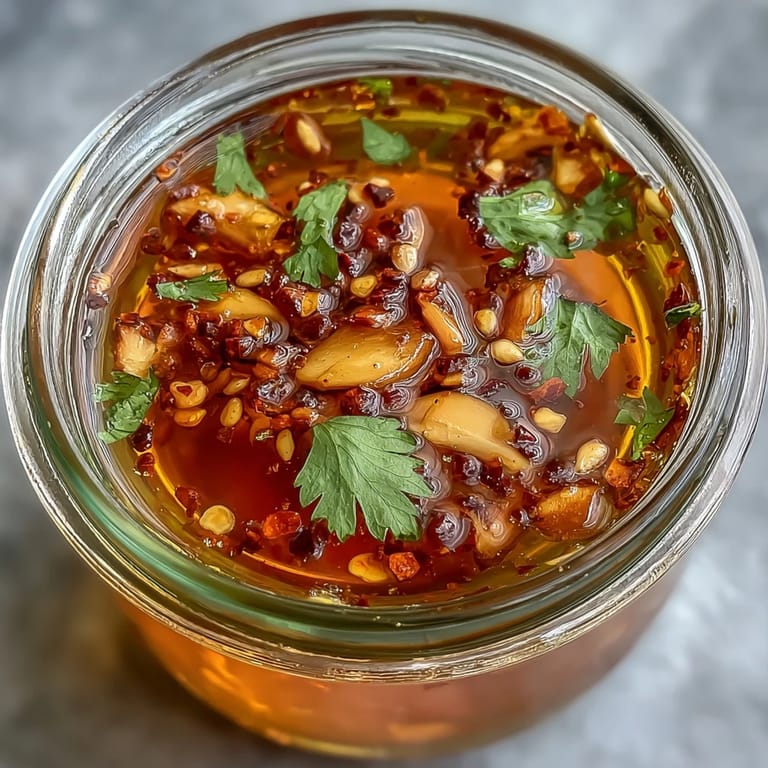
While this sauce is legendary as a dumpling dipping companion, its uses extend into territory you might not expect. I've drizzled it over creamy soups where the oil glistens on top and the aromatics float like little flavor islands, stirred it into mayo for a spicy sandwich spread, and even spooned it over roasted vegetables where it becomes a finishing sauce that transforms something simple into something memorable.
- Drizzle over grilled fish or chicken as a finishing touch that adds aromatic punch without overpowering delicate proteins.
- Stir into cream cheese or whipped feta for an elevated dip that works with absolutely everything from crackers to fresh vegetables.
- Use sparingly on pizza or even ice cream if you're feeling adventurous and want a sweet-savory moment that genuinely works.
 Save
Save This sauce has become one of those recipes I make in batches and gift in small jars, because it feels personal and homemade in a way that store-bought versions never quite capture. Every time someone comes back asking for another jar, I know I've created something that moved beyond just being food.
Recipe Questions & Answers
- → How is the garlic infused into the oil?
Finely minced garlic is combined with fresh ginger and chili flakes, then hot neutral oil is poured over to release aromatic flavors.
- → Can the heat level be adjusted?
Yes, you can increase heat by adding cayenne or using hotter chili flakes, or reduce it by omitting Sichuan peppercorns.
- → What oils work best for this infusion?
Neutral oils like grapeseed, canola, or peanut oil provide a silky base without overpowering the aromatics.
- → How long does the infusion last once made?
Refrigerated in a sealed jar, it keeps well for up to two weeks with flavors deepening over time.
- → Is this suitable for dietary restrictions?
Yes, it's vegan and gluten-free; just substitute tamari for soy sauce if needed due to allergies.