 Save
Save The sharp, tangy scent of kimchi always reminds me of the first time I impulsively threw leftover rice and cabbage into a hot skillet after a long day, not knowing I was about to make something crave-worthy. My kitchen window was cracked open to let out the sizzle, and soon, the aromas drifting into the hallway pulled my roommate from her room asking, What smells so good? It felt a little like a late-night experiment, but the bubbling mixture was irresistible. Sometimes, necessity really is the mother of the best kitchen inventions. This quick kimchi fried rice has been a rescue meal and a go-to treat ever since.
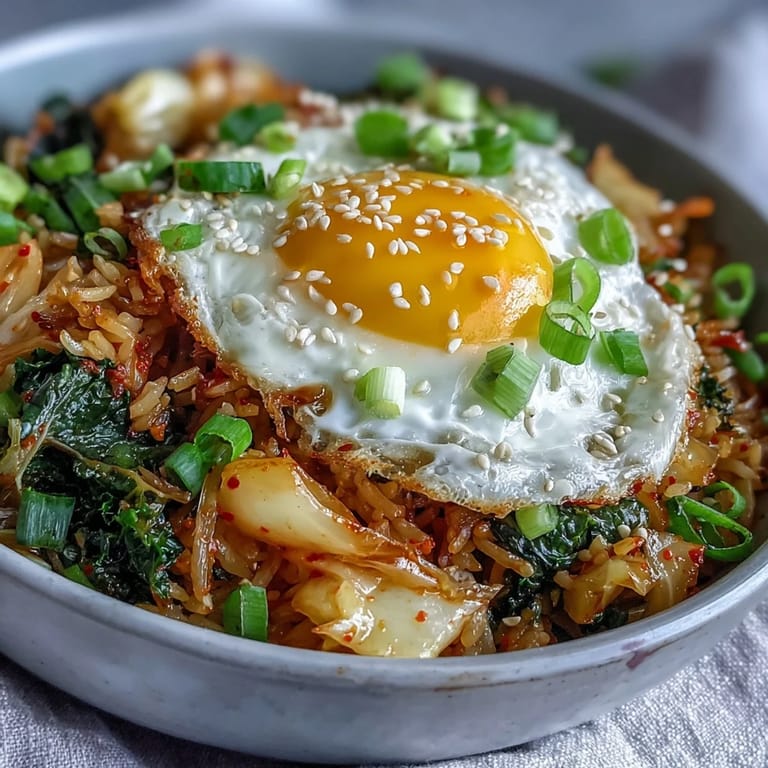
I once made this kimchi cabbage fried rice for a casual Friday night at home with a friend—both of us exhausted and craving comfort food, but with zero patience for anything elaborate. We ended up adding an extra spoonful of gochujang and challenged ourselves to eat our bowls with chopsticks, which was clumsy but hilariously fun. The runny egg yolk oozed into the rice, and we laughed as the heat from the skillet fogged up my glasses. Small disasters aside, it turned into one of those dinners that felt surprisingly celebratory. We promised to make it every time either of us needed a edible pick-me-up.
Ingredients
- Napa cabbage: Adds crunch and light sweetness that balances the kimchi—make sure to slice it thin so it cooks quickly.
- Kimchi: The star of the show for funk and heat; include a splash of its brine to intensify the flavor.
- Green onions: They brighten everything up—reserve some for garnish at the end for fresh pop.
- Carrot (optional): A little bit of carrot provides crunch and bursts of color; I like to cut them into matchsticks for speed.
- Cooked rice (day-old): Every time I used warm fresh rice, it clumped—only chilled, leftover rice gives you that ideal fried rice texture.
- Soy sauce: Salty umami backbone—taste before adding more, as kimchi can be salty.
- Gochujang (optional): For those who love a good punch of heat and smokiness; start with a little, taste, and add more if you're brave.
- Toasted sesame oil: Sprinkled at the end, it perfumes the whole bowl and adds a signature roasted flavor.
- Sugar: A whisper of sweetness rounds out the vinegar bite from the kimchi.
- Black pepper: It nudges everything just a notch spicier and more aromatic.
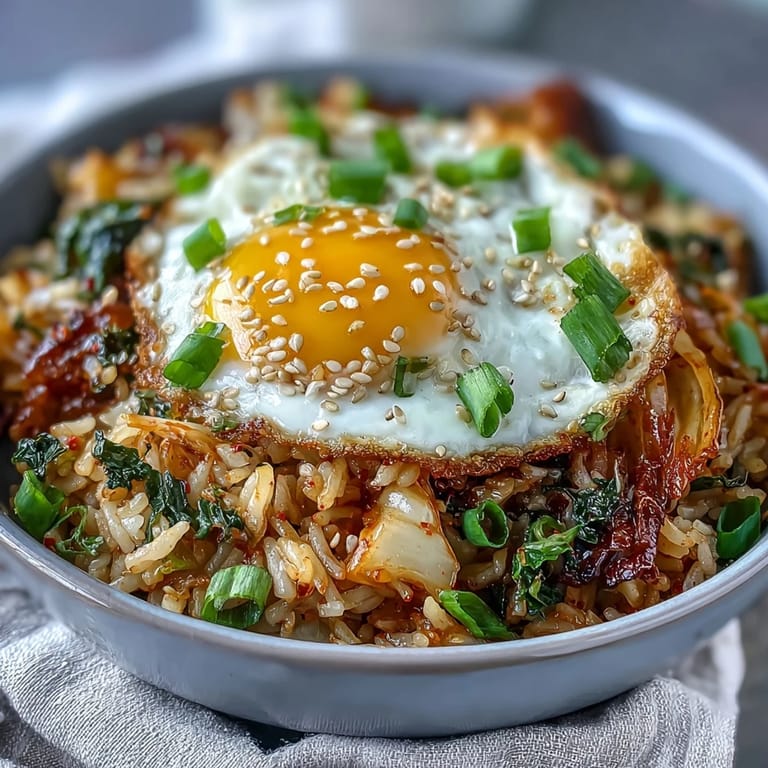
- Eggs: Sunny side up is the goal—let those yolks be runny for the ultimate sauce.
- Neutral oil: Lets the vegetables and eggs cook just right without overpowering them.
- Toasted sesame seeds: A scatter of seeds adds a gentle crunch and visual appeal—don't skip, they matter more than you think.
- Extra green onions: Toss these over the finished dish for color and a last hit of freshness.
Tired of Takeout? 🥡
Get 10 meals you can make faster than delivery arrives. Seriously.
One email. No spam. Unsubscribe anytime.
Instructions
- Get everything ready:
- Gather and prep all your veggies, and be sure your rice is chilled; a little organization makes everything easier when the heat turns up.
- Stir fry the vegetables:
- Heat half the oil in your largest skillet over medium-high and dump in the sliced cabbage and carrots—stir quickly so they soften without losing crunch.
- Fragrance boost:
- Stir in the chopped kimchi and green onions; breathe deep as the kitchen fills with that unmistakable kimchi tang.
- Add rice magic:
- Add the rice, breaking up any clumps as you mix; don't be shy with the spatula—get everything coated and even.
- Sauce and season:
- Drizzle in soy sauce, gochujang, sesame oil, sugar, and pepper; toss well so every grain gets glossy and spiced—taste and adjust as needed.
- Perfect the seasoning:
- Pause and grab a spoon to check for salt and spice—you can tweak now before the eggs go on top.
- Fry the eggs:
- Use a nonstick pan for flawless eggs; heat the rest of the oil and fry eggs sunny side up, aiming for set whites and soft yolks.
- Assemble and serve:
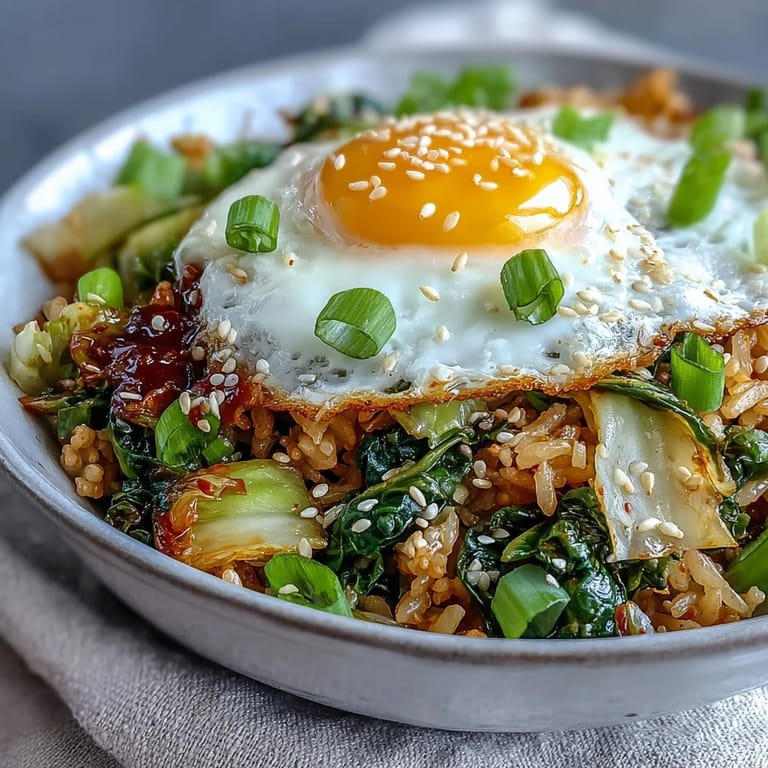
- Spoon the hot rice into bowls, crown each with an egg, a flurry of sesame seeds, and extra green onions—dig in while it steams.
 Save
Save There was a quiet happiness serving this dish to my cousin the night before her big job interview—we barely talked, just enjoyed the spicy rice and runny yolks, and it felt like all the encouragement she needed was right there in the bowl. Even when words fail, a comforting plate like this brings reassurance with every bite.
Letting Kimchi Shine
If your kimchi is super ripe, it will give the rice deeper flavor and extra tang, so don’t hesitate to use that last bit at the bottom of the jar. Waiting until the smell is almost too much before tossing in the rice really brings out everything good in it, and I secretly love that powerful aroma clinging to the kitchen for hours afterwards.
Simple Swaps to Make It Yours
I’ve swapped in diced tofu for the eggs on vegan nights or tossed in a little leftover roasted chicken when the fridge threatened waste. Don’t be afraid to play: add zucchini, use brown rice, or go heavy on the gochujang for a bigger kick—the base recipe is forgiving, and experimenting has only made it more of a staple for me.
Those Little Touches That Matter
I never skip toasting my sesame seeds—it only takes a minute and makes a difference you can taste, and I always use a wide pan so every grain of rice gets a chance to fry. Try a sprinkle of crushed seaweed on top for a subtle ocean taste; it’s become my go-to finishing touch.
- Keep an extra splash of kimchi brine for the end; it brightens the whole bowl.
- If you like heat, a pinch of crushed chili flakes never hurts.
- Leftovers are best eaten the next day, crisped up in a hot pan.
 Save
Save Whether you need a midnight snack or a speedy dinner, this kimchi cabbage fried rice is comfort without the fuss—spicy, quick, and always satisfying. You might even find yourself making extra rice on purpose, just to have an excuse for leftovers tomorrow.
Recipe Questions & Answers
- → Can I use freshly cooked rice?
Fresh rice tends to be softer and can clump. For best texture, use day-old chilled rice or spread freshly cooked rice on a tray to cool and dry slightly before stir-frying.
- → How do I control the spiciness?
Adjust heat by varying the amount of gochujang and the kimchi juice. Use mild kimchi or reduce gochujang for less heat, and add a touch more sugar or sesame oil to balance spice.
- → What are good protein swaps?
Fold in diced tofu, shredded chicken, or cooked shrimp. For a vegan option, use vegan kimchi and sautéed mushrooms or firm tofu instead of the egg.
- → Which rice works best?
Short-grain or jasmine rice give a nice chew and clump control. Chilled, day-old rice prevents mushiness and helps achieve slight caramelization during high-heat stir-frying.
- → How do I get crispy bits on the rice?
Cook over medium-high to high heat without overcrowding the pan. Press the rice into the skillet briefly and let it sit undisturbed to form caramelized edges before stirring.
- → How should leftovers be stored and reheated?
Cool quickly and refrigerate in an airtight container for up to 3–4 days. Reheat in a skillet over medium heat with a splash of water or oil, stirring until warmed through.