 Save
Save My neighbor handed me a container of black-eyed peas one afternoon, fresh from her garden project, and I stood there wondering what to do with them beyond the traditional Southern side dish. That's when I decided to blur the lines between cuisines and make a hummus instead—something creamy, garlicky, and nothing like what either of us expected. The first batch came together in my food processor while my kid asked a hundred questions about why peas were suddenly becoming dip. Twenty minutes later, we were dipping vegetables into something that tasted like it belonged in a Mediterranean kitchen, even though it was born from Southern ingredients and a moment of culinary curiosity.
I brought this to a potluck last spring, nervous because nobody had ever heard of black-eyed pea hummus before, and watched it disappear faster than the conventional dips. Someone asked if it was from a restaurant, and I loved that moment of admitting it came from my kitchen in fifteen minutes flat. That's when I knew this recipe had crossed over from experiment to something I'd make forever.
Ingredients
- Black-eyed peas: Use canned and drained if you're short on time, or cook dried ones if you want that fresher taste that lingers on your tongue differently.
- Tahini: This is your secret weapon for creaminess, so don't skip it or substitute with peanut butter—the nutty depth matters here.
- Extra virgin olive oil: Quality counts because you taste it directly, so use something you'd actually drizzle on bread.
- Fresh lemon juice: Bottled works in a pinch, but fresh lemon brightens everything and makes the whole dip sing.
- Garlic: One clove is assertive enough; don't be tempted to double it unless you're feeding only garlic lovers.
- Ground cumin: This tiny amount of spice ties the whole thing together and whispers rather than shouts.
- Salt: Start with half a teaspoon and taste as you go—tahini can hide saltiness until suddenly it doesn't.
- Water: Keep it nearby because consistency is personal, and you might need less or more depending on your peas and mood.
Tired of Takeout? 🥡
Get 10 meals you can make faster than delivery arrives. Seriously.
One email. No spam. Unsubscribe anytime.
Instructions
- Gather your ingredients:
- Set everything out before you start so there's no scrambling mid-blend, and let yourself taste the tahini on a spoon if you've never had it alone—it's earthy and bitter and essential.
- Combine in the food processor:
- Dump the black-eyed peas, tahini, olive oil, lemon juice, minced garlic, cumin, and salt into the bowl and pulse a few times to break everything down. You'll hear the pitch of the motor change as the mixture goes from chunky to creamy, which is oddly satisfying.
- Blend until smooth:
- Run it steady for about a minute, stopping to scrape down the sides where stubborn bits hide, especially tahini that clings to the walls. This step determines your texture, so don't rush it.
- Adjust consistency with water:
- Add water one tablespoon at a time while the processor runs, watching the mixture loosen until it reaches that perfect dip state where it moves like silk but doesn't run across the plate. Taste between additions so you know when to stop.
- Taste and season:
- Take a clean spoon and try it, letting the flavors sit on your tongue for a moment before you decide if it needs more salt or brightness from lemon juice. This is where instinct takes over formula.
- Transfer and garnish:
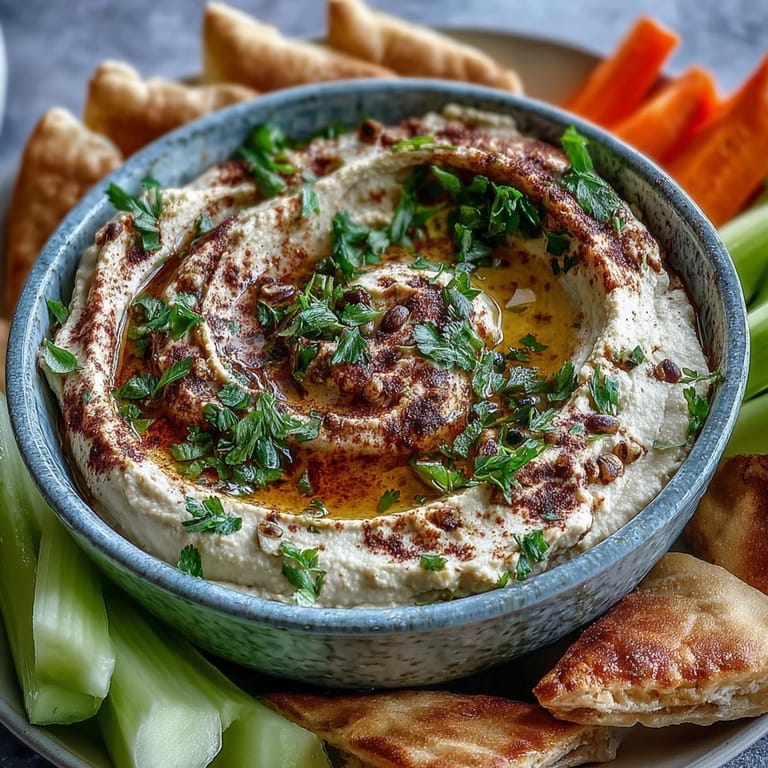
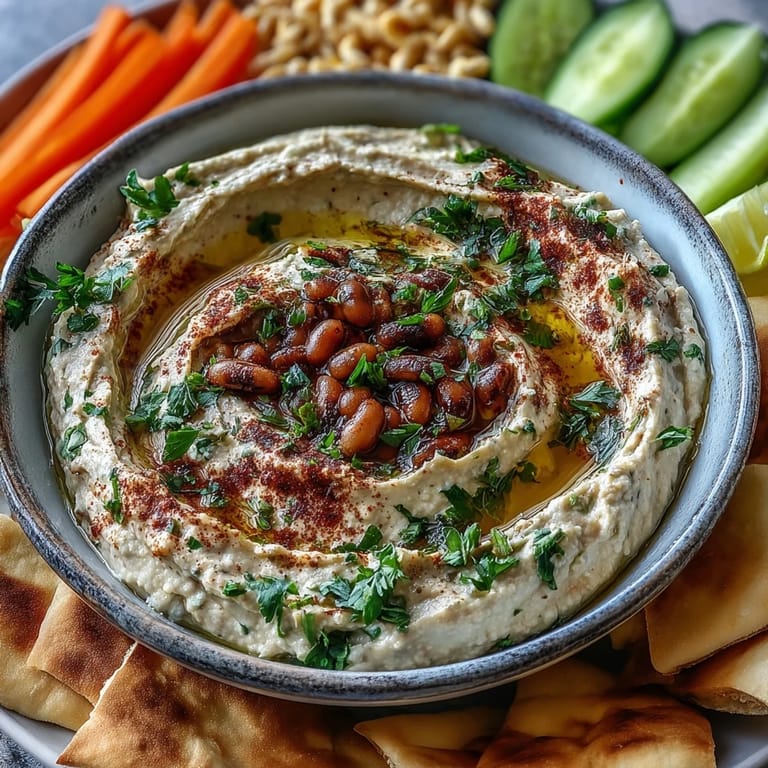
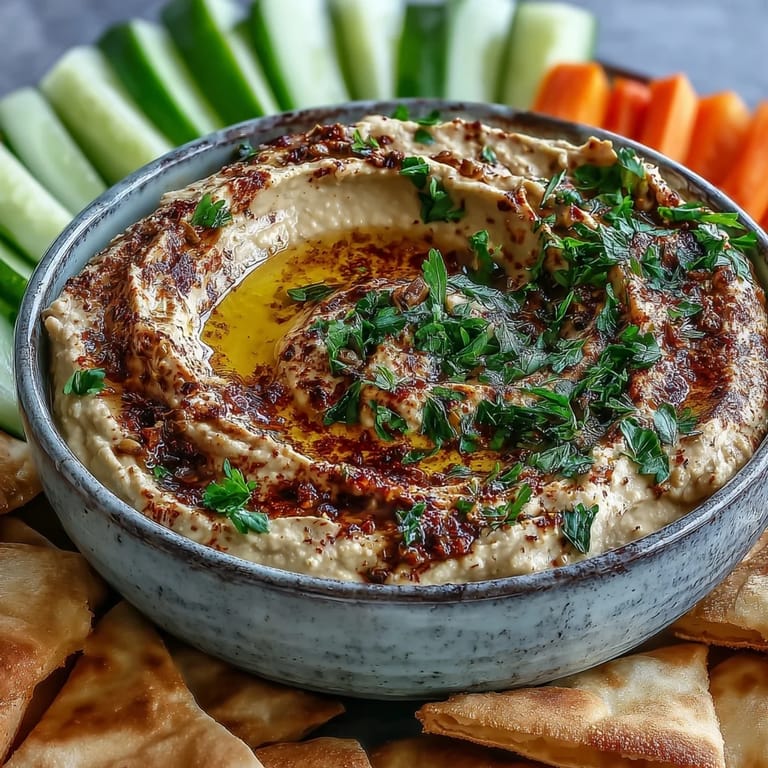
- Scoop the hummus into a serving bowl and make a small well in the center with the back of a spoon, then drizzle olive oil into it and sprinkle with paprika and parsley if you're in the mood for beauty. It's optional, but those touches make people reach for it first.
 Save
Save There was a quiet moment when my teenage daughter came home and immediately made herself a plate of vegetables and this hummus without asking permission or waiting for dinner, and I realized I'd created something she actually wanted to eat. Those small victories in the kitchen matter more than any recipe review ever could.
The Black-Eyed Pea Advantage
Black-eyed peas bring something different to hummus than chickpeas—they're slightly earthier and less sweet, which means they play nicer with bold flavors like garlic and lemon. This dip tastes less familiar in the best way possible, like you've discovered something that was always there but nobody bothered to make yet. They're also cheaper than chickpeas at my grocery store, which feels like a secret I'm sharing with you.
When Things Go Wrong (And They Might)
I once forgot to drain my canned peas properly and ended up with something that resembled pudding more than dip, which taught me that those extra thirty seconds of rinsing matter more than they seem. Another time I grabbed what I thought was tahini and it was tahini mixed with honey, which created this weird sweetness that nobody mentioned because everyone was too polite. The lesson is to taste everything before it goes in, and to read labels like they're love letters.
How to Make It Your Own
Once you nail the basic formula, this dip becomes a canvas for whatever you're craving that week. I've stirred in roasted red peppers, added a pinch of cayenne for heat, swapped lime for lemon, and once even threw in some fresh dill when I had it sitting around. The beauty is that black-eyed peas are forgiving enough to support your experiments without falling apart.
- Try roasting your black-eyed peas with a little oil and paprika before blending them for a deeper, smokier result.
- Add a tablespoon of harissa or sriracha if you want heat that builds slowly rather than hits all at once.
- Keep it in the refrigerator and taste it the next day—flavors meld and intensify, sometimes making yesterday's good batch taste even better today.
 Save
Save This recipe feels like the perfect bridge between wanting something healthy and not wanting to sacrifice flavor, which is maybe the whole point of cooking at home in the first place. Make it once and you'll find yourself making it again, probably at midnight when you suddenly need something to bring somewhere.
Recipe Questions & Answers
- → Can I use canned black-eyed peas?
Yes, canned black-eyed peas work perfectly. Just drain and rinse them thoroughly before blending to remove excess sodium and canning liquids.
- → How long does this keep in the refrigerator?
Store in an airtight container in the refrigerator for up to 4 days. The flavors actually develop and improve after a day or two.
- → What can I serve with black-eyed pea hummus?
Serve with fresh vegetables like carrots, cucumbers, and bell peppers, warm pita bread, crackers, or use as a spread in wraps and sandwiches.
- → Can I make this without a food processor?
A high-powered blender works as an alternative. You may need to add more water and scrape down the sides frequently to achieve the smooth consistency.
- → Is this dish gluten-free?
Yes, the spread itself is naturally gluten-free. Just ensure any accompaniments like bread or crackers are certified gluten-free if needed.
- → Can I freeze this hummus?
Freezing is possible but may affect the creamy texture. If freezing, thaw in the refrigerator and stir well, adding a splash of lemon juice to refresh flavors.