 Save
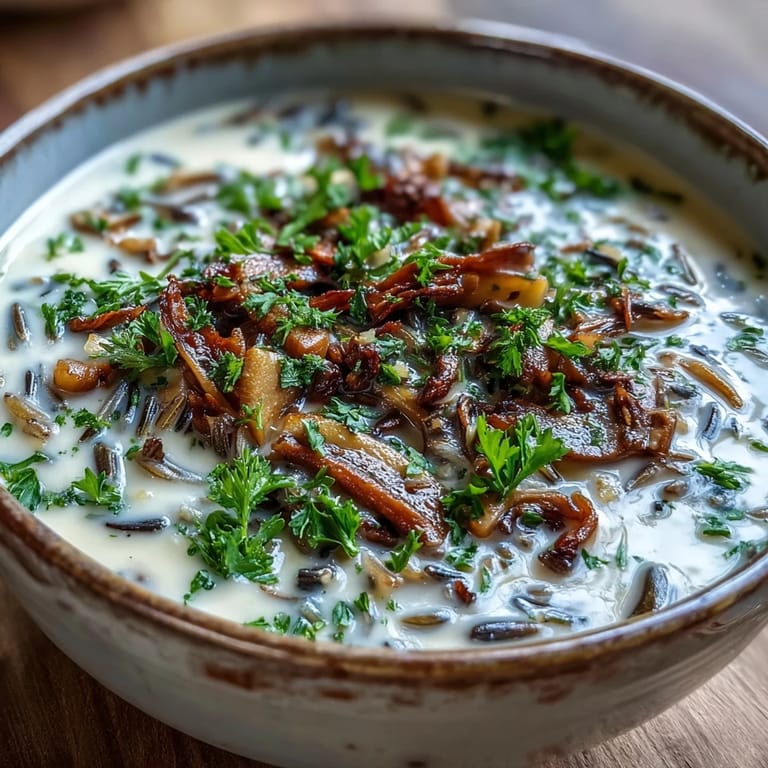
Save There's something about the smell of wild mushrooms hitting hot oil that makes me stop whatever I'm doing and just breathe it in. I stumbled upon this soup on a chilly October afternoon when my farmer's market haul included a punnet of shiitake and oyster mushrooms I couldn't resist. The rice was already in my pantry, and somehow those three things—earthy, nutty, creamy—felt like they were meant to become something warm and deeply satisfying.
I made this for my neighbor one snowy evening when she'd just come home from the hospital, and watching her face as she tasted it—that moment when comfort food does exactly what it's supposed to do—I realized this soup had become something I'd make again and again. She asked for the recipe before finishing her bowl, which felt like the highest compliment.
Ingredients
- Olive oil (2 tbsp): Your foundation for coaxing out sweetness from the aromatics, so don't skimp on quality here.
- Yellow onion, celery, and carrots (1 medium onion, 2 stalks, 2 medium carrots): This holy trinity is the flavor base, and dicing them evenly helps them cook at the same pace.
- Garlic cloves (3, minced): Adds a savory depth that builds the umami backbone of the entire soup.
- Fresh thyme and rosemary (2 tsp thyme, 1 tsp rosemary): These herbs are non-negotiable—they're what separate this from ordinary vegetable soup and give it that forest-floor earthiness.
- Bay leaf (1): It quietly works in the background and should be fished out before serving unless you enjoy a surprise leaf.
- Fresh parsley (2 tbsp plus extra for garnish): Brightens everything at the end and makes the bowl look intentional.
- Mixed wild mushrooms (400 g): Cremini, shiitake, and oyster varieties all bring different personalities—use whatever looks freshest and slice them roughly the same size so they cook evenly.
- Wild rice (1 cup uncooked): Rinse this well before using because there's often debris hiding in it, and the nutty flavor is worth the texture contrast.
- Vegetable broth (1.5 liters): A good broth makes a noticeable difference; homemade is lovely if you have it, but quality store-bought works beautifully.
- Heavy cream (200 ml): This is what transforms the soup from good to silky—plant-based cream works too if you're going that route.
- All-purpose flour (3 tbsp): Acts as a gentle thickener so the soup becomes velvety without needing a blender.
- Soy sauce (1 tbsp): A secret ingredient that amplifies all the savory notes without making anything taste salty.
- Salt and black pepper: Season as you go, not all at the end, so you catch the layers developing.
Tired of Takeout? 🥡
Get 10 meals you can make faster than delivery arrives. Seriously.
One email. No spam. Unsubscribe anytime.
Instructions
- Warm your pot and soften the base:
- Heat olive oil over medium heat and add your onion, celery, and carrots. You'll know they're ready when the edges of the onion turn translucent and they smell sweet—about 6 to 8 minutes of patient stirring.
- Wake up the aromatics:
- Add garlic, thyme, rosemary, and the bay leaf, stirring for just a minute until your kitchen smells like an herb garden. This is the moment everything starts to come alive.
- Sauté the mushrooms until they release their magic:
- Toss in your mushrooms and let them cook undisturbed for a few minutes so they get a little color on them, then stir occasionally for another 6 to 8 minutes until most of their liquid has evaporated. This concentrates their earthy flavor.
- Create a smooth paste with flour:
- Sprinkle the flour over everything and stir constantly for a minute or two—this helps thicken the soup later and prevents lumps from forming when you add the broth.
- Add broth slowly and carefully:
- Pour in your vegetable broth while stirring continuously so the flour doesn't clump and everything stays silky. Listen for the gentle sound of the spoon moving through the thickening liquid.
- Introduce the wild rice and simmer:
- Stir in the rice and soy sauce, bring everything to a boil, then lower the heat and cover. Let it bubble away gently for 40 to 45 minutes—the rice will go from hard little bullets to tender grains that still have a slight chew.
- Finish with cream and fresh herbs:
- Fish out the bay leaf, pour in the cream, and stir in the fresh parsley. Let it heat through for a couple of minutes without boiling so the cream stays silky.
- Taste and adjust:
- This is your moment to season with salt and pepper, and to decide if you want it thicker (add less broth) or brothier (add more). Trust your instincts here.
- Serve with intention:
- Ladle into bowls, scatter extra parsley on top, and watch the steam rise.
 Save
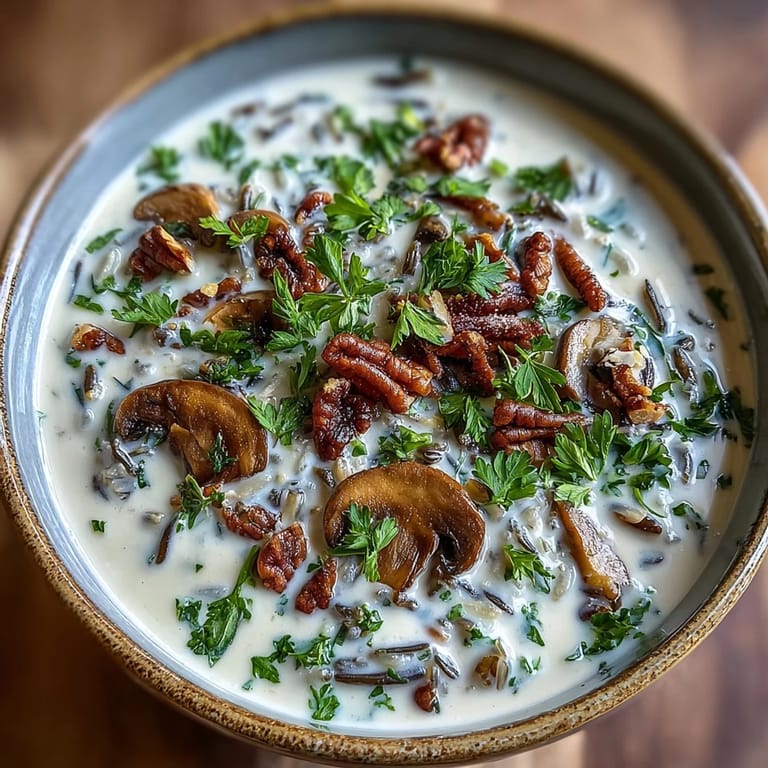
Save There's a particular kind of quiet that settles over a dinner table when everyone's eating a bowl of soup they actually care about. This one creates that silence, the kind where people are too busy savoring to make small talk.
The Magic of Wild Mushrooms
Wild mushrooms are my favorite ingredient to work with because each variety brings its own character to the pot. Shiitake brings an almost meaty depth, oyster mushrooms add a delicate earthiness, and cremini provides a grounding familiarity. The combination of all three means every spoonful feels complex and thoughtful without any single flavor overpowering the others.
Why Wild Rice Makes All the Difference
Regular white or brown rice would make this soup feel ordinary, but wild rice—with its darker color and nutty flavor—elevates everything. It takes longer to cook, which actually works in your favor because it gives you time to let all the other flavors meld while the rice becomes tender. The slight resistance when you bite down on each grain is what makes the texture memorable.
Building Flavor Layers
The secret to soup that tastes like someone's been cooking it all day is layering flavors at different points. The herbs go in early so they infuse the oil and broth, the mushrooms add umami depth midway through, and the fresh parsley at the end brings brightness that prevents the whole thing from feeling heavy. When you eat it, your palate experiences something complex even though the ingredient list is straightforward.
- Always taste as you cook and season gradually—it's easier to add salt than to remove it.
- If the soup sits overnight, the wild rice will absorb more liquid, so thin it with extra broth when you reheat it.
- This freezes beautifully for up to three months, though add the cream after thawing rather than before freezing.
 Save
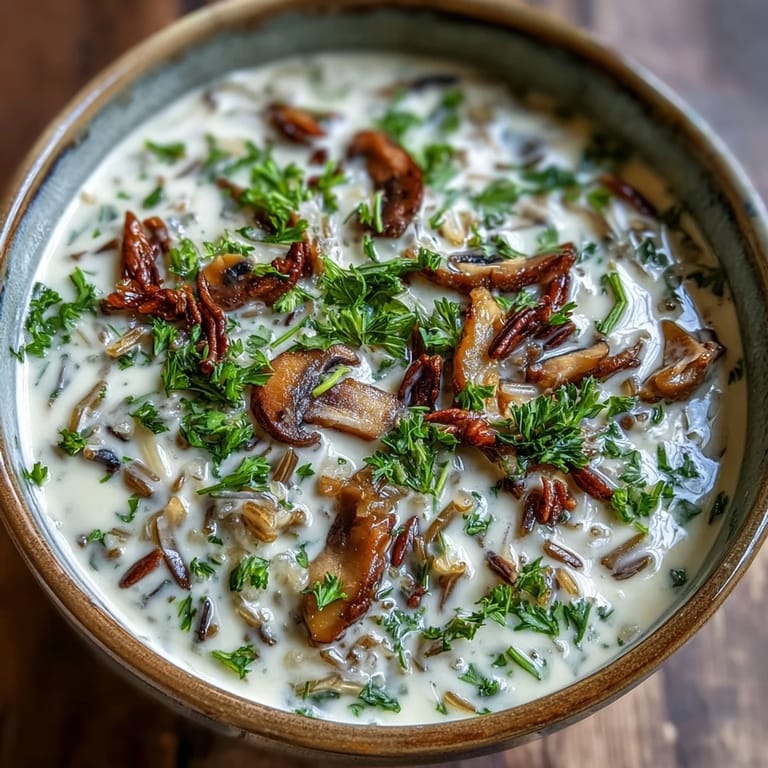
Save This soup has become my answer to almost any occasion—when someone needs comfort, when the weather turns cold, when you want to feel like you've spent hours in the kitchen without actually doing that. Make it once and you'll understand why it keeps calling you back to the stove.
Recipe Questions & Answers
- → Can I make this soup vegan?
Yes, simply substitute the heavy cream with plant-based alternatives like cashew cream or coconut cream. The result remains rich and satisfying.
- → What type of mushrooms work best?
Mixed wild mushrooms such as cremini, shiitake, and oyster provide excellent flavor depth. Button mushrooms can also be used if wild varieties aren't available.
- → How long does wild rice take to cook?
Wild rice typically requires 40-45 minutes of simmering to become tender. It should have a slight chew when done, offering a pleasant texture contrast.
- → Can I freeze this soup?
The soup freezes well for up to 3 months. For best results, freeze before adding cream, then stir in fresh cream when reheating.
- → What can I serve with this soup?
Crusty bread makes an excellent accompaniment for soaking up the creamy broth. A simple green salad also balances the richness nicely.
- → Is wild rice gluten-free?
Yes, wild rice is naturally gluten-free. Just ensure your vegetable broth and other ingredients are certified gluten-free.