 Save
Save My friend texted me a photo of her lunch one Tuesday and I was instantly jealous. This wasn't just any bowl—it was a riot of color with creamy roasted red pepper hummus anchoring crisp vegetables and quinoa. I asked her for the recipe that same afternoon, and what she sent back was simple enough that I made it for dinner that night. Now, whenever I need something that feels both indulgent and nourishing, I come back to this one.
I brought these bowls to a potluck where I didn't know many people, and something about having a colorful, generous plate made the whole event feel less awkward. Three people asked me for the recipe before dessert, which never happens at these things. I realized then that food this vibrant and thoughtful opens conversations in ways a safer dish wouldn't.
Ingredients
- Chickpeas (1 can, 400 g): Drain and rinse them well—this small step keeps your hummus light and prevents it from becoming gluey and dense.
- Roasted red bell pepper: If you roast your own, the flavor is incomparably better, but honestly, buying jarred saves time and tastes nearly as good; just pat them dry before blending.
- Tahini (2 tablespoons): This is what makes the hummus creamy instead of chunky; use a quality brand since you taste it directly.
- Fresh lemon juice (2 tablespoons): Bottled works in a pinch, but fresh lemon brightens everything noticeably.
- Garlic (1 clove, minced): One clove is enough—raw garlic can quickly overpower, and you can always add more but never take it back.
- Extra virgin olive oil (2 tablespoons): This isn't just fat; it's flavor and richness that makes the hummus silky.
- Cumin and smoked paprika (1/2 teaspoon each): These warm spices add depth without being spicy, creating that Mediterranean warmth.
- Salt (1/2 teaspoon): Taste as you go because the chickpeas may already be salted.
- Cold water (2–3 tablespoons): Add it gradually; hummus thickens slightly as it sits, so start with less than you think you need.
- Quinoa or grain of choice (1 cup cooked): Quinoa is protein-rich, but brown rice, millet, or even farro work beautifully here.
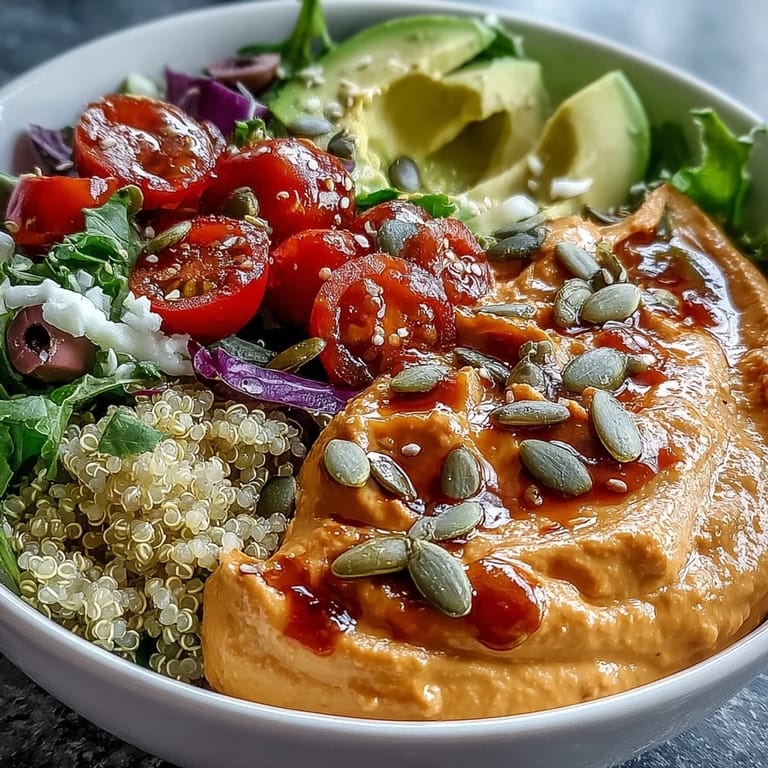
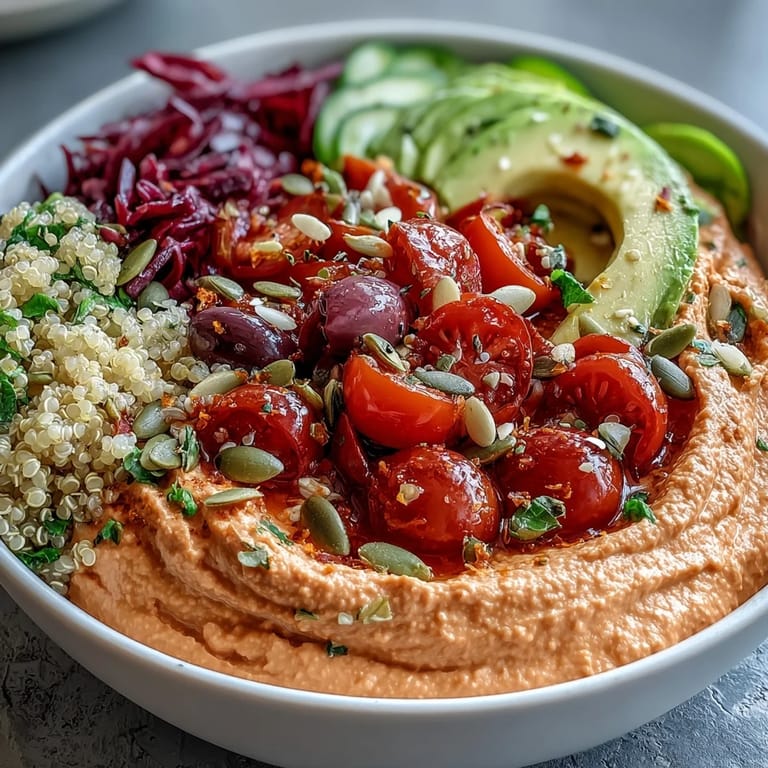
- Cherry tomatoes, cucumber, purple cabbage, spinach, avocado, carrots, olives, and pumpkin seeds: These are your canvas—use what's fresh and what you enjoy eating.
- Fresh parsley or cilantro: The final sprinkle makes it taste alive and intentional.
Tired of Takeout? 🥡
Get 10 meals you can make faster than delivery arrives. Seriously.
One email. No spam. Unsubscribe anytime.
Instructions
- Blend the hummus:
- Combine drained chickpeas, roasted red pepper, tahini, lemon juice, minced garlic, olive oil, cumin, smoked paprika, and salt in your food processor. Blend until completely smooth, then add cold water one tablespoon at a time, pulsing between additions, until it reaches a consistency you love—some people like it thick enough to scoop, others prefer it loose enough to drizzle.
- Taste and adjust:
- This is your moment to make it yours. Need more brightness? Squeeze in extra lemon. Want deeper warmth? Add a pinch more smoked paprika. Salt it to your preference.
- Build your base:
- Divide cooked quinoa evenly among four bowls, leaving a little well in the center where you'll eventually nestle the hummus.
- Arrange your vegetables:
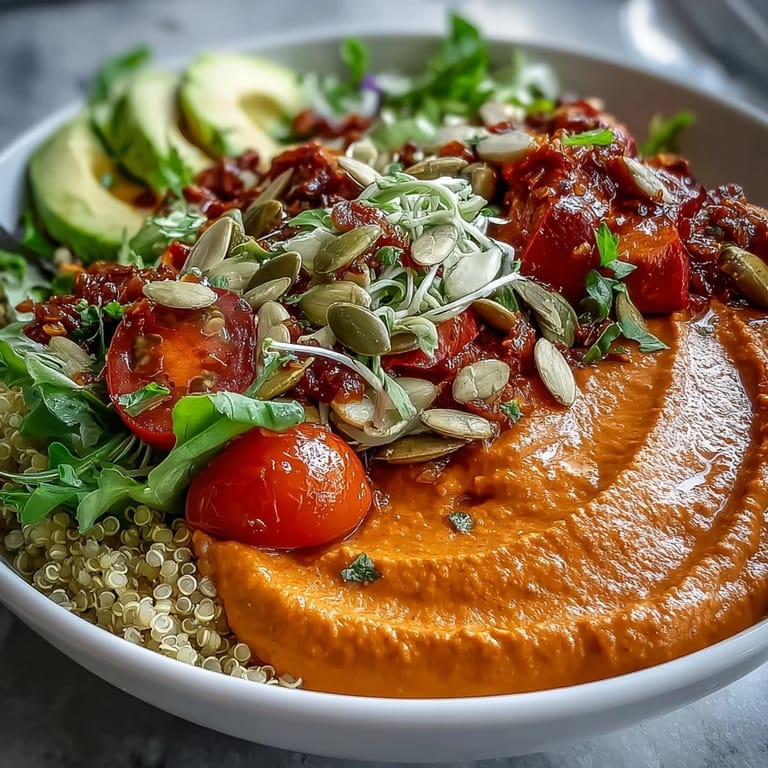
- Place each vegetable in its own section—not because you're being fussy, but because the visual contrast is part of what makes these bowls special. Half your cherry tomatoes, dice your cucumber, shred your cabbage by hand if you have time (it's more satisfying), and pile on the fresh greens.
- Add the avocado:
- Slice it just before serving so it doesn't turn gray and sad sitting in the bowl.
- Top with hummus and garnish:
- Spoon a generous dollop of hummus into the center of each bowl, then scatter pumpkin seeds, olives, shredded carrots, and fresh herbs over the top. If you're making a dressing, whisk lemon juice, olive oil, salt, and pepper together and drizzle it everywhere.
- Serve right away:
- These are best eaten immediately while everything is crisp and the avocado is perfect.
 Save
Save One Saturday morning I made these bowls for my partner without them asking, just because I knew they'd been stressed all week. Watching them genuinely light up when they saw the colors and tasted the hummus reminded me that sometimes the simplest act of feeding someone is the most meaningful.
Making Hummus That Actually Tastes Like Something
Most store-bought hummus tastes like tahini and nothing else, which is why homemade matters here. The roasted red pepper isn't just a color; it adds sweetness and a subtle smokiness that grounds the earthiness of the chickpeas. I used to make hummus that was mealy because I didn't have enough fat or water, and it was a revelation when I realized that tahini and olive oil aren't indulgences—they're what make hummus actually silky. Start your food processor while you gather everything, let it warm up for a few seconds, and the whole blend becomes smoother.
Building a Bowl That Stays Interesting
The secret to bowls that don't get boring halfway through is contrast—color, texture, temperature, and flavor all matter. I learned this the hard way by making monochromatic bowls that looked sad and tasted flat. Soft avocado against crisp cucumber, bitter greens against sweet tomato, creamy hummus against crunchy seeds—this is what makes you want another bite. The olives add a briny pop that most people forget matters, and the pumpkin seeds give you something substantial to chew on. Don't undersell the peppery parsley either; it's not decoration, it's a flavor layer.
Grain Choices and Timing
Quinoa is my go-to because it's fluffy, protein-rich, and has a neutral base that lets everything else shine, but brown rice works just as well if that's what you have. The key is cooking your grain while you make the hummus so everything comes together hot and fresh. If you're cooking for four people and want to save time during the week, cook a big batch of grain on Sunday and portion it out. Just note that warm grain makes the avocado soften faster, so add that last. Cold grain works too if you're eating these at your desk the next day—they're actually refreshing that way.
- Millet has a slightly nuttier flavor and cooks in about 15 minutes if you ever want to try it.
- Farro is chewy and substantial, though it tips these into heartier territory.
- Even pasta shapes work if you're in a bind, though I'd add a little extra lemon dressing to keep it from feeling heavy.
 Save
Save These bowls taught me that plant-based eating doesn't mean sacrificing richness or satisfaction—it just means being intentional about layering flavors and textures. They're now the bowl I make whenever I want to feel grounded and nourished at the same time.
Recipe Questions & Answers
- → Can I use different grains for the bowl?
Yes, quinoa, brown rice, or millet can be used interchangeably depending on preference or dietary needs.
- → How do I roast the red pepper properly?
Roast the red bell pepper over a flame or under a broiler until charred, then peel off the skin for a smoky, sweet flavor.
- → Can the hummus be made in advance?
Absolutely, preparing the roasted red pepper hummus ahead allows flavors to meld and saves time during assembly.
- → What dressing pairs well with this bowl?
A simple drizzle of lemon juice and olive oil with a pinch of salt and pepper enhances freshness without overpowering.
- → Are there suggestions for boosting protein content?
Adding roasted chickpeas or tofu increases protein while keeping the bowl plant-based and balanced.