 Save
Save My kitchen filled with the smell of caramelizing onions on a gray Sunday afternoon, and suddenly I understood why the French had built an entire classic around them. There's something almost meditative about watching those golden layers develop, hour after hour, until what started as sharp white rings transforms into something sweet and deeply savory. A friend had challenged me to master this soup without a recipe, just instinct and patience, and I discovered that French onion soup isn't really about technique—it's about trusting time.
I served this to my sister during her surprise visit last winter, and watching her face when she lifted that first spoonful—bread soaked in broth, cheese stringing from the bowl—reminded me why comfort food matters. She ate it slowly, deliberately, and barely said a word until the bowl was empty. Sometimes the best meals are the ones that make people pause and really taste what's in front of them.
Ingredients
- Yellow onions, 3 large, thinly sliced: Yellow onions caramelize beautifully and develop a natural sweetness that's essential here—don't rush the slicing, as consistent thickness means even cooking.
- Unsalted butter and olive oil, 1 tablespoon each: Butter gives richness while olive oil prevents the butter from burning at higher heat, a combination that's genuinely better than using either alone.
- Garlic, 2 cloves, minced: Added late to keep its flavor bright and present rather than muted by hours of cooking.
- Sugar, 1 teaspoon: This small amount kickstarts the caramelization process and balances the natural saltiness that develops.
- Salt and freshly ground black pepper: Taste as you go; the salt helps draw out moisture from the onions and speeds caramelization, while the pepper is best added at the end so it doesn't turn bitter.
- All-purpose flour, 2 tablespoons: This creates a light thickening without making the soup heavy or starchy-tasting.
- Dry white wine, 1/2 cup: The acidity cuts through richness and dissolves those brown bits stuck to the bottom of the pot—they're liquid gold for flavor.
- Beef or vegetable stock, 1.2 liters (5 cups): Beef stock adds depth, but vegetable stock works beautifully if you're keeping it meatless; either way, use something you'd actually drink.
- Fresh thyme and bay leaf: These herbaceous notes prevent the soup from feeling one-dimensional, adding a whisper of complexity.
- French baguette, 4 slices, about 1 inch thick: Look for a crispy crust and airy crumb; this texture holds up to both the broth and the melted cheese.
- Gruyère cheese, 120 g (about 1 cup), grated: Gruyère melts smoothly and develops nutty flavor when heated; pre-grating saves time and melts faster and more evenly.
Tired of Takeout? 🥡
Get 10 meals you can make faster than delivery arrives. Seriously.
One email. No spam. Unsubscribe anytime.
Instructions
- Melt and coat your onions:
- Heat butter and olive oil in your largest pot over medium heat until the butter foams. Add your sliced onions all at once and stir to coat everything evenly with fat—this coating helps them cook evenly and brown beautifully.
- Caramelize with patience:
- Stir frequently (I usually check every 5 minutes or so) and watch the onions transform from translucent to pale gold to deep amber, about 35–40 minutes total. Halfway through, add the sugar and salt to help the natural sugars caramelize faster and more deeply—this is where the magic happens, and rushing it ruins everything.
- Bloom the garlic:
- Add your minced garlic and cook just until fragrant, about 1 minute, stirring constantly so it doesn't stick to the bottom and burn.
- Dust with flour:
- Sprinkle the flour over everything and stir for about 2 minutes to cook off the raw flour taste and create a light base for your broth. You're building layers of flavor here, not making a thick gravy.
- Deglaze the pot:
- Pour in the white wine and use a wooden spoon to scrape the bottom of the pot, working loose all those caramelized bits that cling to it. They'll dissolve into the wine and give your soup incredible depth and richness.
- Build the broth:
- Pour in your stock, add the thyme sprigs and bay leaf, and bring everything to a simmer. Reduce the heat and let it simmer gently, uncovered, for 20–25 minutes—this time allows the flavors to marry without boiling away the delicate notes.
- Season and finish the soup:
- Remove the thyme and bay leaf (fish them out with a spoon or tongs), taste the soup, and adjust the seasoning with more salt and freshly ground black pepper. This is important—taste before you serve, as different broths have different salt levels.
- Toast your bread:
- While the soup simmers, preheat your broiler and arrange baguette slices on a baking sheet. Brush both sides lightly with olive oil and toast under the broiler for 1–2 minutes per side until golden and crispy but not burnt—watch them carefully as broilers can go from golden to charred in seconds.
- Assemble and broil:
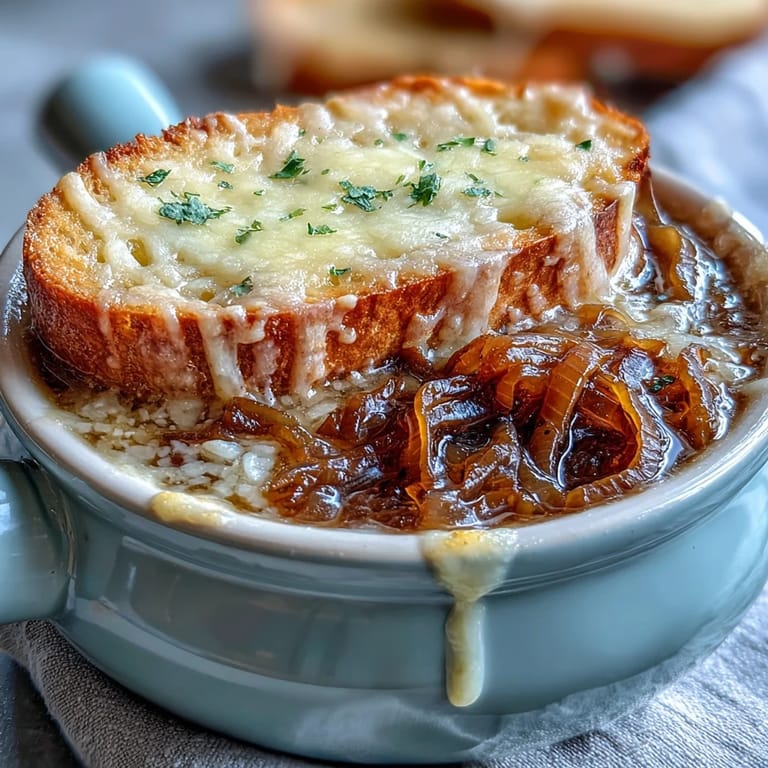
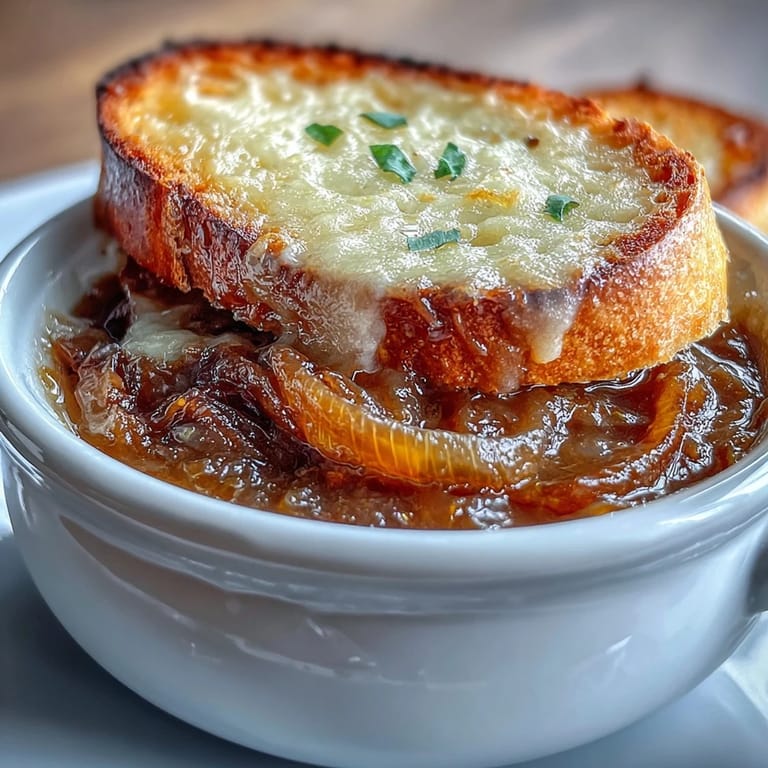
- Ladle hot soup into oven-safe bowls, place one toasted bread slice on top of each bowl, and cover generously with grated Gruyère. Place the bowls on a baking sheet and broil for 2–3 minutes until the cheese is bubbling and golden brown on top, then serve immediately.
 Save
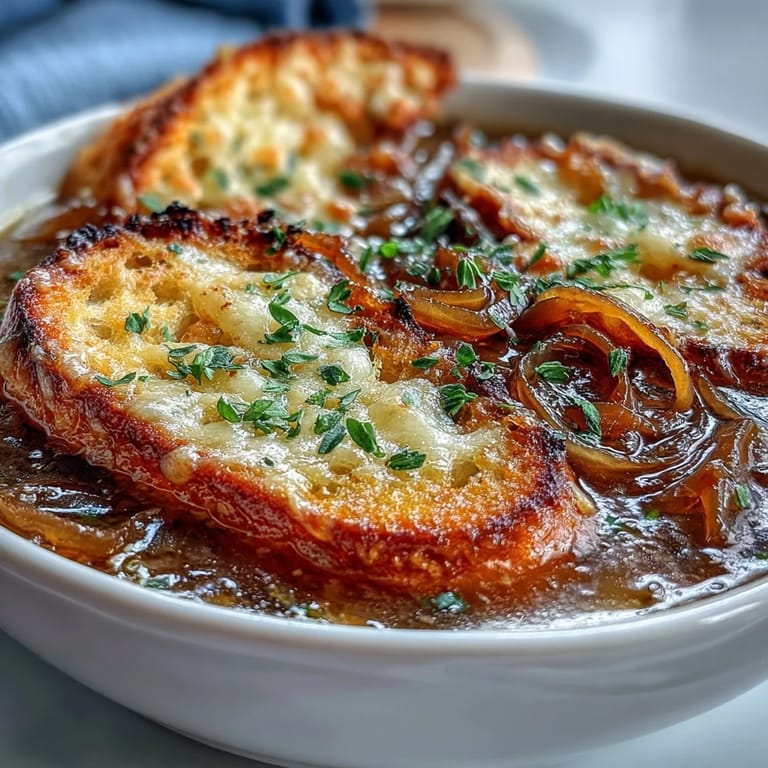
Save There's a moment of genuine magic when you pull those bowls from under the broiler and see the cheese bubbling at the edges, almost caramel-colored on top, and steam rising up with the smell of melted Gruyère and toasted bread. That's when you know you've made something worth the time.
The Caramelization Secret
I used to think caramelizing onions was just about heat, but it's really about moisture and patience. The onions release water as they cook, and this needs to evaporate before they can truly brown—trying to rush this by turning up the heat just causes them to steam instead of caramelize. Once I accepted this and stopped watching the clock, everything changed. The sugar I add halfway through isn't just for sweetness; it helps the onions brown more deeply and evenly by feeding the caramelization reaction.
Stock Makes a Difference
The quality of your broth matters more here than in almost any other recipe I make, because there's nowhere for mediocre stock to hide. A rich, well-made beef or vegetable stock will give you depth and body, while a thin, salty store-bought version will make the whole soup taste thin and one-dimensional. I started keeping homemade stock in the freezer specifically for this soup, and it transformed how good it tastes.
Variations and Personal Touches
Once you master the classic version, you can play with it in ways that feel personal to your kitchen. My neighbor adds a splash of brandy with the wine for warmth and deeper flavor, while my mother switches to Emmental cheese because she finds it a touch less aggressive than Gruyère. I've experimented with mixing different onion varieties—red onions add sweetness, and white onions cook down faster—and each change subtly shifts the final flavor profile.
- Combine beef and chicken stock for a richer, more complex broth than using either one alone.
- A splash of brandy, sherry, or cognac added with the wine adds luxurious depth and warmth.
- If you can't find Gruyère, Emmental and Comté are authentic French alternatives that melt beautifully.
 Save
Save French onion soup teaches patience in a way few dishes can, and once you've made it properly, you'll understand why it's been a favorite in French kitchens for generations. It's proof that the most impressive meals often come from the simplest ingredients and the willingness to spend time with them.
Recipe Questions & Answers
- → How do I get the onions properly caramelized?
Cook onions slowly over medium heat, stirring frequently. The process takes 35-40 minutes. Add sugar and salt halfway through to help browning. Look for deep golden brown color, not just soft onions. Patience is key—don't rush this step as it builds the foundation of flavor.
- → Can I make this ahead of time?
Absolutely. The base actually improves after a day in the refrigerator as flavors meld. Make the soup up to 3 days ahead, but add the bread and cheese topping just before serving. Reheat gently and proceed with broiling the topping for best results.
- → What's the best cheese for the topping?
Gruyère is traditional and ideal for its nutty flavor and excellent melting properties. Emmental or Comté work beautifully as alternatives. For the best results, grate your own cheese rather than buying pre-grated, which melts less smoothly.
- → Can I freeze this soup?
Yes, freeze the soup base without the bread and cheese topping for up to 3 months. Thaw overnight in the refrigerator and reheat gently. The topping should always be added fresh before serving—frozen bread becomes soggy and cheese texture suffers.
- → What wine should I use?
A dry white wine like Sauvignon Blanc, Pinot Grigio, or a dry French white works well. Avoid sweet wines as they'll affect the flavor balance. Use something you'd enjoy drinking, and consider serving the same wine with the finished dish.
- → Why add flour to the soup?
The flour serves as a thickener and helps create a slightly richer body. Cook it for 2 minutes after adding to eliminate raw flour taste. For a lighter version or gluten-free adaptation, you can omit it—the soup will still be delicious, just slightly more brothy.