 Save
Save I discovered this dish on a rainy Tuesday when I was craving something bold but had only half my usual pantry. A can of coconut milk caught my eye, and suddenly I was whisking together green curry paste with linguine instead of rice. The kitchen filled with that haunting, herbaceous aroma—lemongrass, galangal, basil all swirling together—and I realized I'd stumbled onto something that felt both comforting and exotic. It became the dish I make when I want to feel adventurous without leaving my kitchen.
My friend Maya came over during that chaotic week when everything felt heavy, and I threw this together almost without thinking. Watching her eyes light up when she twirled a forkful and tasted that first hit of coconut and curry made me understand why certain dishes stick around. She kept asking if I'd added something secret, and all I could do was smile—it was just the kind of moment that makes cooking feel like a small magic trick.
Ingredients
- Linguine or spaghetti (350g): Long pasta catches the creamy sauce better than short shapes; cook until just tender enough to bite through, because it keeps cooking slightly when you toss it with the warm curry.
- Thai green curry paste (3 tbsp): This is your flavor anchor, so find a brand you love—some are earthier, others spicier, and that changes everything; taste as you go if you're using a new one.
- Coconut milk (400 ml, full fat): Light coconut milk will make the sauce thin and sad; stick with full fat for that silky, luxurious texture that makes people think you spent all day on this.
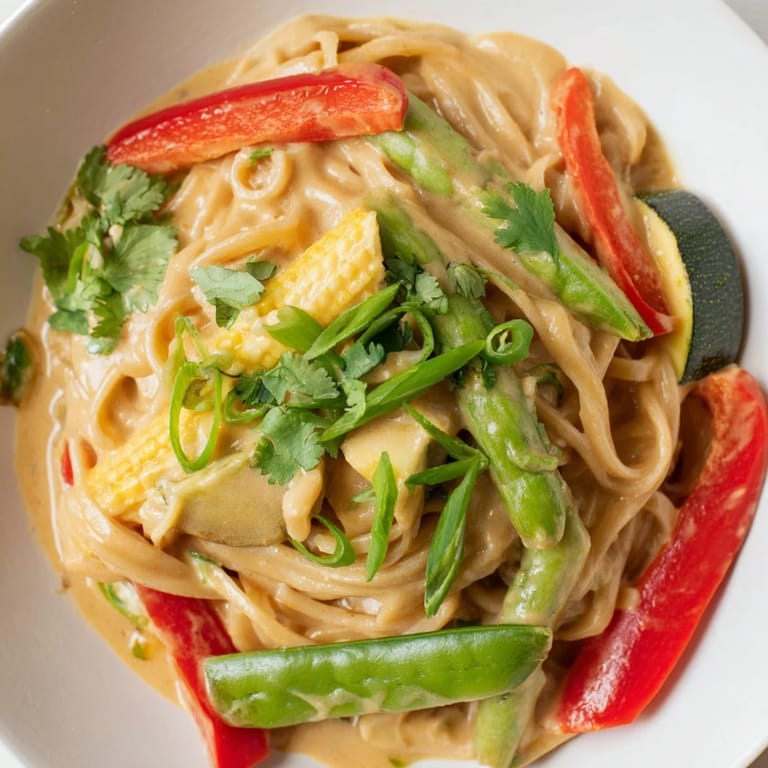
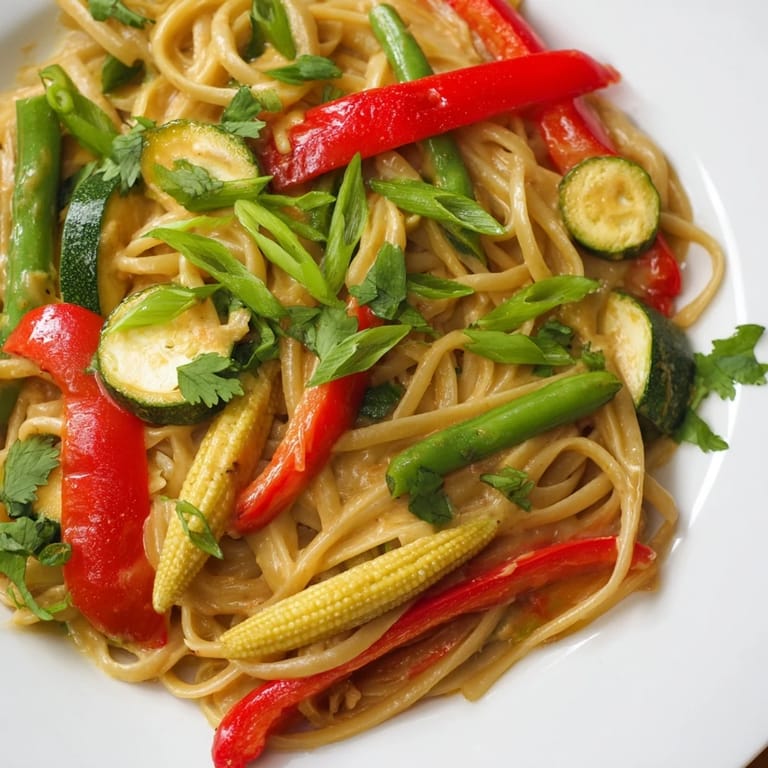
- Red bell pepper, zucchini, snap peas, baby corn: Choose vegetables that still have a bit of snap when you bite them; they should taste fresh and crisp against the creamy sauce, not soft.
- Fresh ginger (1 tsp, grated): This adds a warm zing that ties the pasta and curry together; it's the difference between tasting like a recipe and tasting like something alive.
- Lime juice, soy sauce, brown sugar: Together these three create balance—they're your seasoning trinity that transforms the curry from one-note to complex and interesting.
- Fresh cilantro and spring onions: Add these at the very end so they stay bright and haven't lost their personality to the heat; they're your final flourish that says you care.
Tired of Takeout? 🥡
Get 10 meals you can make faster than delivery arrives. Seriously.
One email. No spam. Unsubscribe anytime.
Instructions
- Get your water boiling:
- Fill a large pot with plenty of water and salt it generously—it should taste like the sea. This is where your pasta learns its first lesson in flavor, so don't skip this step or use just a pinch.
- Cook the pasta:
- Add the pasta and let it cook according to package directions until al dente, which means it still has a tiny bit of resistance when you bite it. Before draining, scoop out about half a cup of that starchy pasta water and set it aside—this liquid gold will help the sauce cling to every strand later.
- Wake up the curry paste:
- While your pasta is cooking, heat oil in a large skillet or wok and add the curry paste with the ginger. Let it sizzle and toast for a minute or two until your kitchen smells like a Thai restaurant, which is the signal that all those spices and herbs are waking up.
- Build the sauce:
- Pour in the coconut milk, then add soy sauce and brown sugar, stirring everything together until smooth and silky. Let it bubble gently for a few minutes while you taste it—this is your moment to adjust, to make it more coconutty or salty or sweet depending on what feels right.
- Add the vegetables:
- Slice and add the bell pepper, zucchini, snap peas, and baby corn, then let them cook for about five or six minutes until they're tender but still have that satisfying crunch. You want them to soften enough to soak up the curry but still taste like themselves.
- Bring it all together:
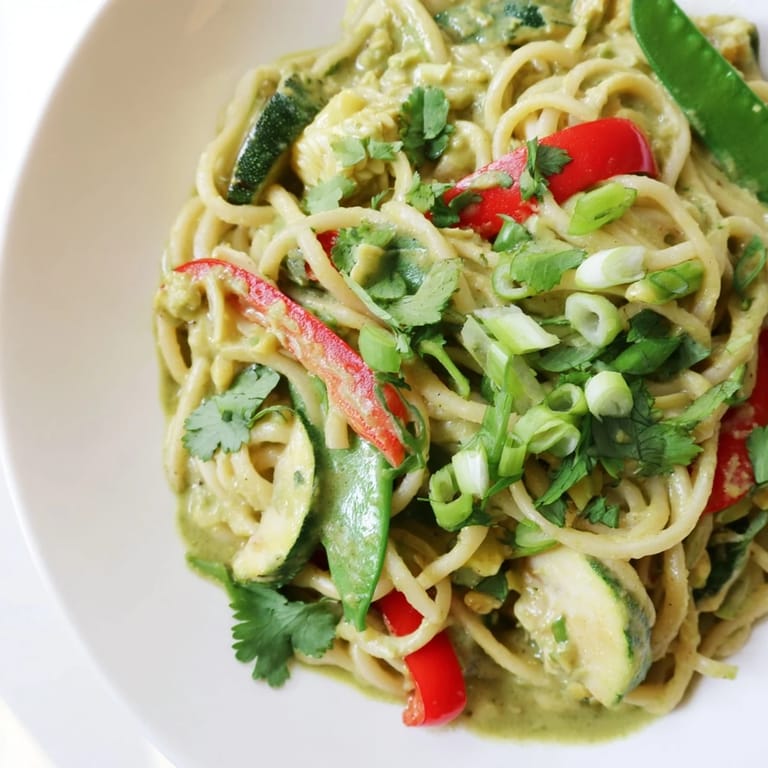
- Add the drained pasta to the skillet along with that reserved pasta water, then toss everything so every strand gets coated in the creamy green sauce. Let it simmer for a couple of minutes so the pasta absorbs all those incredible flavors, and watch how it transforms into something cohesive and complete.
- Finish with brightness:
- Stir in the spring onions, cilantro, and lime juice, tasting as you go and adjusting the seasoning until it feels balanced to you. If it's too thick, add a splash of water; if it tastes flat, squeeze in more lime.
 Save
Save The thing that made this recipe stick around my kitchen was realizing it could be whatever I needed it to be on any given night. Sometimes it's vegetarian and pristine; sometimes it's loaded with shrimp for when I'm feeling more generous with myself. It became the dish I make when I want to feel like I'm nourishing both body and spirit at the same time.
Making It Your Own
I've learned that this curry is a canvas more than a rigid recipe. Broccoli works beautifully if you're out of snap peas, and I've even made it with frozen vegetables on nights when fresh wasn't an option—it still tastes intentional. Swap the pasta shape if you want; I've used penne and bow ties and every one of them works because the sauce is forgiving and generous.
Protein Options
If you want to add protein, slice it thin so it cooks quickly in the residual heat of the curry. Chicken breast, shrimp, and firm tofu are all my go-to moves, and I've found that cooking them gently in the sauce for the last few minutes keeps them tender instead of tough. The curry paste and coconut milk actually make everything taste better, even simple proteins.
Serving and Pairing
Serve this immediately while the sauce is still warm and the vegetables still have their brightness. A crisp white wine like Riesling is perfect alongside because the acidity cuts through the richness and makes each bite feel lighter. If you want garnishes, go generous with them—lime wedges for squeezing, extra cilantro for color, maybe some roasted cashews for crunch and richness.
- Keep garnishes separate so everyone can customize their own bowl.
- Leftovers reheat beautifully; just add a splash of water or milk to loosen the sauce.
- This is a meal that tastes even better the next day when all the flavors have had time to know each other.
 Save
Save This dish lives in that beautiful intersection where comfort meets adventure, where you feel like you've traveled somewhere without ever leaving your kitchen. Make it for someone you want to impress or just for yourself on a night when you deserve something special.
Recipe Questions & Answers
- → What pasta types work best in this dish?
Linguine or spaghetti work well, providing a smooth texture that complements the creamy curry sauce.
- → Can I adjust the spice level?
Yes, adjust the amount of green curry paste to suit your preference for heat and flavor intensity.
- → Is there a vegan option available?
Ensure the green curry paste contains no animal products such as shrimp or fish sauce, and use plant-based ingredients throughout.
- → What vegetables can I substitute?
Broccoli, carrots, or other crisp vegetables can be used to customize texture and flavor.
- → How should leftovers be stored?
Keep leftovers refrigerated in an airtight container for up to 2 days. Reheat gently to avoid overcooking the vegetables.
- → What garnishes enhance this dish?
Lime wedges, fresh cilantro, sliced red chili, and roasted nuts add extra flavor and texture.