 Save
Save I discovered sushi bake casserole on a lazy Sunday when my craving for sushi collided with my impatience to roll it. A friend had mentioned this deconstructed version in passing, and something about the idea stuck with me: all the flavors I loved, stacked in layers, baked warm, ready to eat in minutes instead of hours of meticulous rolling. The first time I made it, my kitchen filled with the smell of toasted sesame and the slight sweetness of rice vinegar, and I realized I'd stumbled onto something special—a dish that tastes indulgent but feels effortless.
I served this for the first time to my partner and his family on a busy weeknight when I wanted something restaurant-quality but had no time to fuss. Watching them take that first bite and immediately reach for more soy sauce felt like a quiet victory—no one suspected I'd made it in under an hour, and honestly, that made it taste even better.
Ingredients
- Sushi rice: The foundation that makes this sing; rinse it well until the water runs clear or you'll end up with a gluey casserole instead of fluffy layers.
- Rice vinegar, sugar, and salt: This seasoning mixture is what transforms plain rice into something with actual soul—don't skip it or rush through it.
- Salmon fillet: Fresh and skinless works best; the quick bake keeps it tender and flakes beautifully into the creamy layer.
- Soy sauce and sesame oil: These two ingredients are the umami whisper that makes people wonder what your secret is.
- Cream cheese and mayonnaise: Kewpie mayo adds a subtle sweetness that regular mayo doesn't; if you find it, use it.
- Sriracha: Optional but worth it if you like a gentle kick that builds as you eat.
- Avocado: Add this after baking or it turns gray and bitter; timing matters more than you'd think.
- Nori sheets: Cut into small squares so every bite gets a hint of that oceanic crunch and flavor.
- Sesame seeds and spring onions: These finishing touches add texture and freshness that make the whole dish feel alive.
Tired of Takeout? 🥡
Get 10 meals you can make faster than delivery arrives. Seriously.
One email. No spam. Unsubscribe anytime.
Instructions
- Prepare the rice foundation:
- Rinse your sushi rice until the water runs nearly clear, then cook it with fresh water. The rice should absorb all the liquid and become tender without being mushy, so set a timer and don't peek too much.
- Season the warm rice:
- Mix your vinegar, sugar, and salt, then fold it into the rice while it's still warm so the seasonings sink in. Spread it gently into your baking dish—this is your canvas.
- Bake the salmon:
- While your oven preheats, brush the salmon with soy sauce and sesame oil, then slide it into the oven. You'll know it's done when it flakes apart easily and the kitchen smells incredible.
- Mix the creamy layer:
- Blend your cream cheese, mayo, and lemon juice until it's silky, then fold in the flaked salmon carefully so the pieces stay intact. This is what makes the casserole feel luxurious.
- Assemble and bake:
- Spread the salmon mixture over your rice layer, then bake again for just 10 minutes to warm everything through and let the flavors meld. You want it warm but not hot enough to cook the toppings.
- Top and serve:
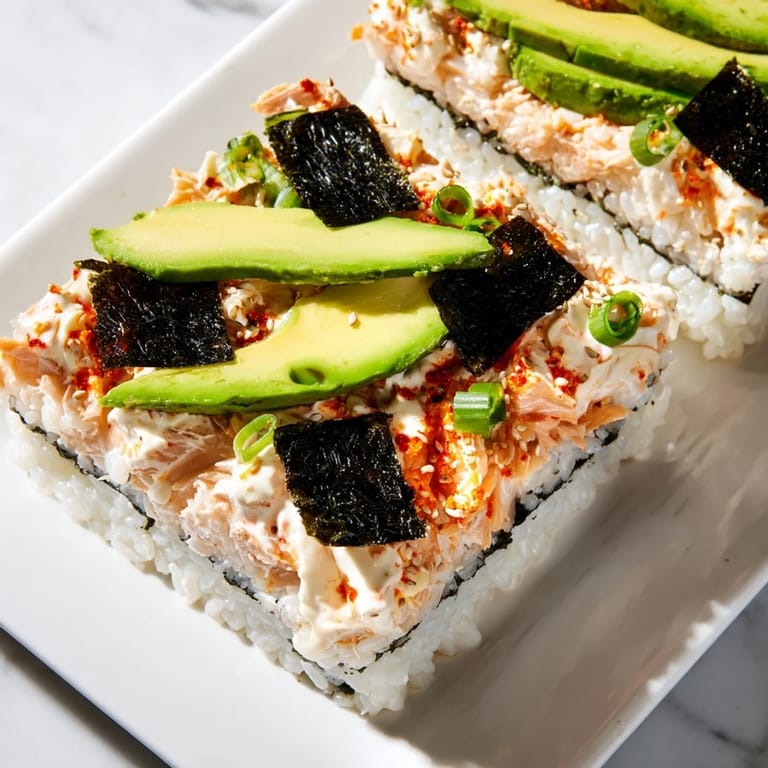
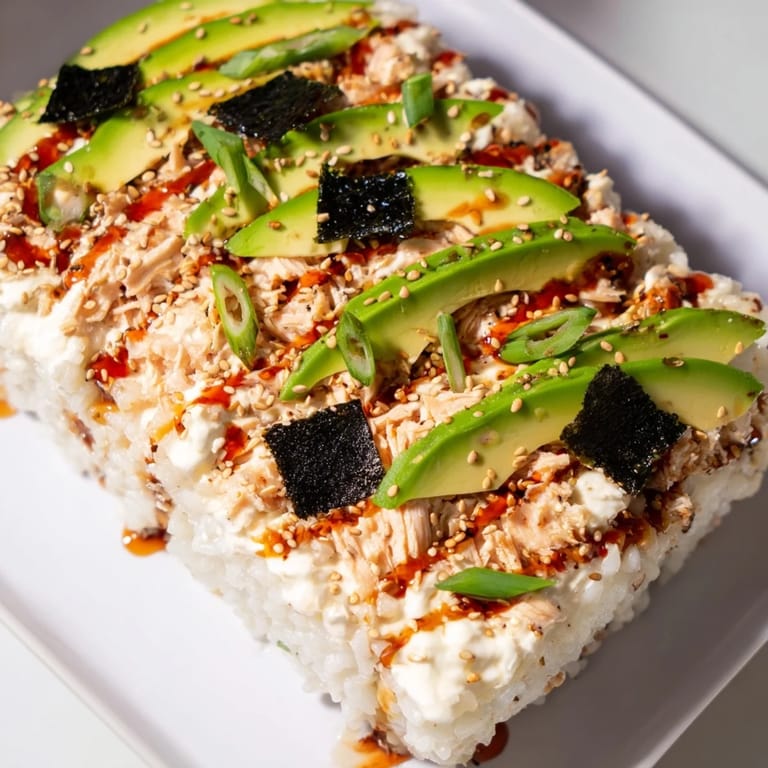
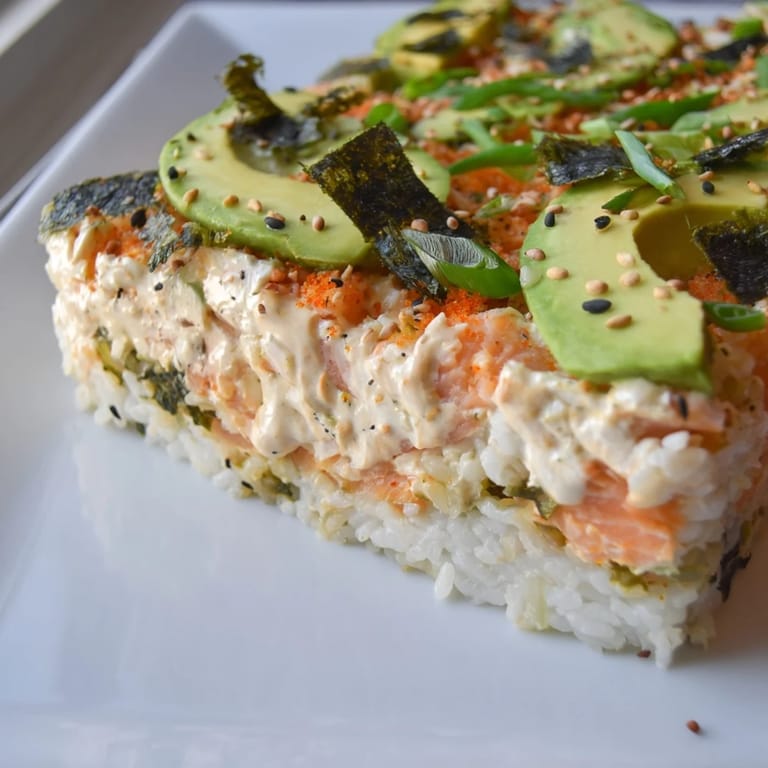
- Let it cool for a minute, then layer your avocado, nori, sesame seeds, and spring onions on top. Slice it like a cake and serve warm with soy sauce for dipping.
 Save
Save The moment I knew this dish had staying power was when someone who claimed they never cooked asked me for the recipe. Watching her text me photos of her homemade sushi bake made me realize this wasn't just easy—it was the kind of recipe that could become someone's signature move.
Why This Casserole Method Works
Baking instead of rolling is pure genius because you get all the flavor and satisfaction of sushi without the technique or the mistakes. The heat gently warms the salmon and softens the cream cheese into a luscious layer, while the rice underneath stays fluffly and absorbs all those subtle flavors. There's no precision required, no special tools, no stress—just layers of good things stacked together.
Flavor Layers and What They Do
Each layer has a job: the rice is your base and carries the seasoning, the salmon and cream cheese create richness and protein, the avocado brings freshness and creaminess, and the nori and sesame seeds at the end add texture and that authentic sushi essence. When you bite into a slice, you get all of it at once—there's nothing disconnected or flat about the experience.
Make It Your Own
This casserole is forgiving enough to bend to what you have on hand or what you're craving that day. You could swap salmon for crab meat if that's what's in your freezer, or top it with cucumber slices for extra crunch. The base is solid enough that it won't fall apart if you improvise.
- Try canned tuna or cooked shrimp if salmon isn't available or budget-friendly.
- Add a teaspoon of sriracha to the cream cheese layer if you want heat that builds slowly.
- Sprinkle panko breadcrumbs before the final bake for texture that stays crispy even with toppings.
 Save
Save This is the kind of dish that reminds you why you cook in the first place: something that looks impressive, tastes authentic, and doesn't demand perfection. Serve it warm with cold soy sauce on the side and watch people's faces light up.
Recipe Questions & Answers
- → What type of rice is best for this dish?
Short-grain sushi rice is ideal as it becomes sticky and holds the layers together nicely.
- → Can I use other fish instead of salmon?
Yes, cooked crab meat, canned tuna, or shrimp work well as alternatives and offer different flavor profiles.
- → How do I achieve a creamy texture in the layers?
Mixing cream cheese with mayonnaise and a touch of sriracha or lemon juice gives a smooth, rich layer that blends with the flaked salmon.
- → What can I use instead of nori as a topping?
Roasted seaweed provides unique flavor, but you can substitute with thinly sliced cucumbers or sesame seeds for crunch.
- → How should I serve this dish?
Serve warm, sliced into portions, with soy sauce for dipping, and optional pickled ginger or wasabi for added zest.
- → Is this dish suitable for a pescatarian diet?
Yes, it contains fish and no meat, fitting well within a pescatarian lifestyle.