 Save
Save There's something about the smell of roasting butternut squash that fills a kitchen with pure comfort. My neighbor stopped by on a chilly October afternoon while I was testing this soup, and she immediately asked what smelled so good—before I could even explain, she was settling onto a stool with a spoon in hand. That's when I knew this recipe had something special: it tastes like autumn feels, with just enough maple sweetness to make you pause between spoonfuls.
I made this for my partner on our first cold evening of the season, and he went back for seconds while barely looking up from his bowl—a good sign that the spice balance was working. There's no pretension here, just warmth in a bowl that somehow makes you feel like you've done something kind for yourself.
Ingredients
- 1 large butternut squash (about 1.2 kg or 2.5 lbs), peeled, seeded, and cubed: The roasting transforms this into liquid gold; don't skip it or use frozen squash for this one.
- 1 medium yellow onion, chopped: The base that sweetens as it cooks, adding depth without any sharp edges.
- 2 cloves garlic, minced: Just enough to whisper in the background, not shout.
- 1 liter (4 cups) vegetable broth: Use a good one with flavor; it becomes the foundation of everything else.
- 250 ml (1 cup) water: This dilutes the broth slightly so the squash flavor stays the star.
- 120 ml (1/2 cup) coconut milk or heavy cream: Coconut milk keeps it vegan and adds a subtle richness; cream makes it feel luxurious.
- 2 tbsp pure maple syrup: Real maple is non-negotiable here; the cheap stuff tastes like regret.
- 1/4 tsp ground nutmeg and 1/2 tsp ground cinnamon: These warm spices are the secret handshake that makes people ask what you did differently.
- 2 tbsp olive oil: Use it to coat the squash and sauté the aromatics.
- Salt and freshly ground black pepper, to taste: Don't underseasoning this; it needs both to shine.
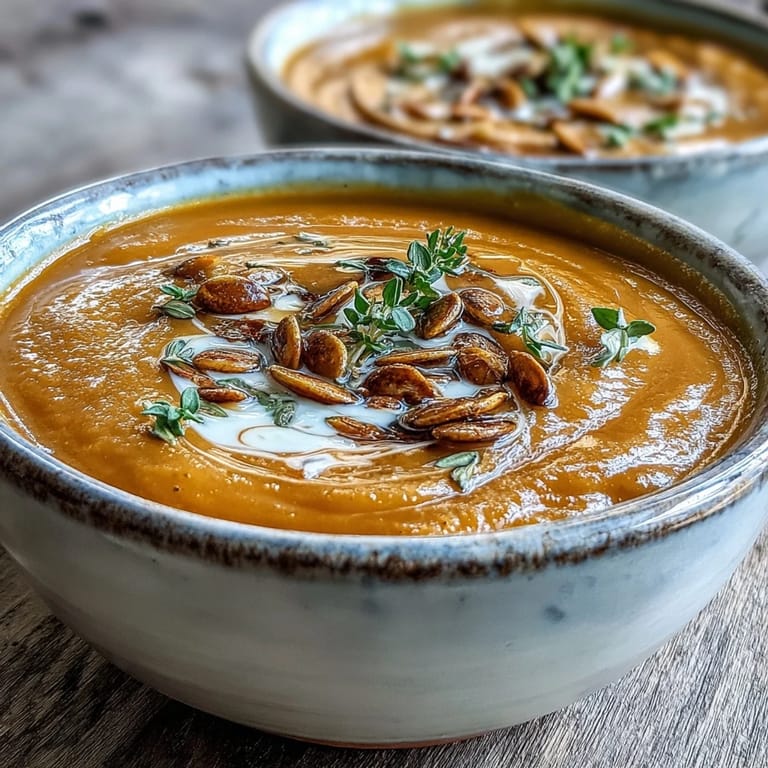
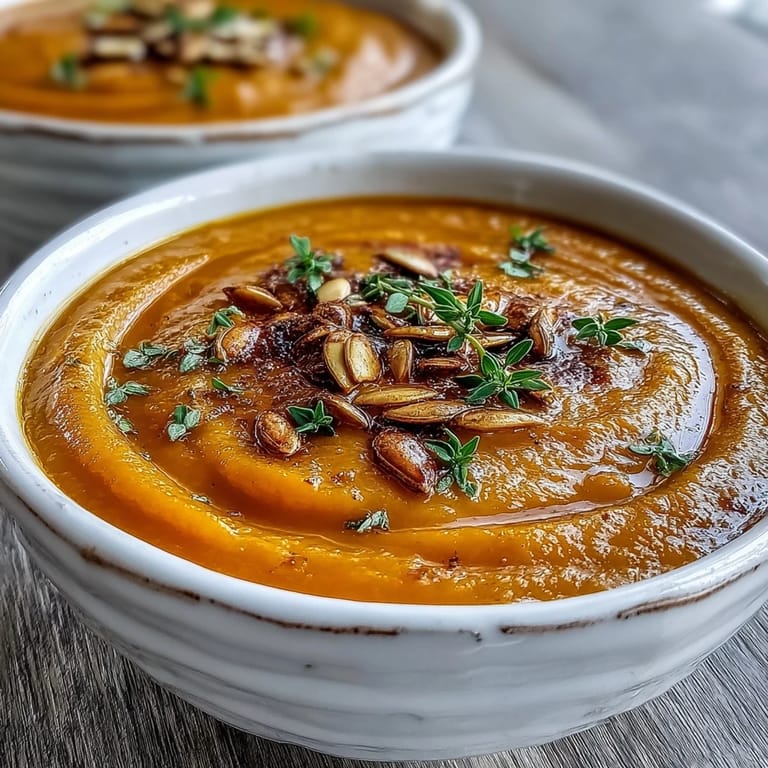
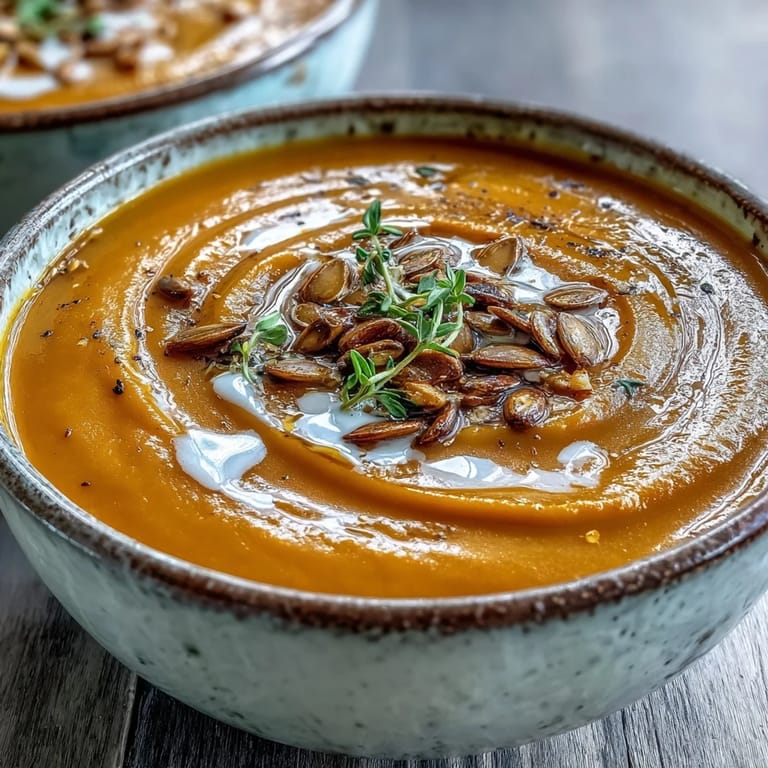
- Toasted pumpkin seeds, extra maple syrup, and fresh thyme for garnish: These are optional but turn a simple bowl into something you'll actually photograph.
Tired of Takeout? 🥡
Get 10 meals you can make faster than delivery arrives. Seriously.
One email. No spam. Unsubscribe anytime.
Instructions
- Fire up the oven and prep your squash:
- Preheat to 200°C (400°F) and get your butternut squash cubed—this is the only slightly tedious part, but it goes quickly once you find your rhythm. Spread the pieces on a baking sheet, drizzle with a tablespoon of olive oil, season generously with salt and pepper, toss everything together so each piece glistens, and slide it into the oven.
- Let the squash work its magic:
- Roast for 30 to 35 minutes, stirring halfway through so the edges caramelize evenly and turn golden brown. You'll know it's ready when a fork slides through without resistance and the kitchen smells unreal.
- Build the aromatic base:
- While the squash finishes roasting, heat the remaining tablespoon of olive oil in a large pot over medium heat. Add your chopped onion and let it sit undisturbed for a minute before stirring, which helps it soften and sweeten; cook for about 4 to 5 minutes until it turns translucent and soft.
- Bring in the garlic:
- Add your minced garlic and cook for just 1 minute, stirring constantly so it perfumes the oil without browning or turning bitter.
- Combine and simmer:
- Add the roasted squash to the pot along with the vegetable broth, water, maple syrup, nutmeg, and cinnamon. Stir everything together so the spices distribute evenly, then bring it to a boil before lowering the heat to a gentle simmer for 10 minutes so all the flavors get acquainted.
- Blend until velvet-smooth:
- Using an immersion blender, purée the soup directly in the pot with slow, steady strokes until you reach your desired silkiness—some people like it completely smooth, others prefer a few soft chunks. If using a regular blender, work in batches and be careful with the heat, then return everything to the pot.
- Finish with creaminess:
- Stir in your coconut milk or heavy cream and let it warm through without boiling. Taste and adjust the salt and pepper—this is important because seasoning at the end lets you fine-tune what you're actually eating.
- Serve and garnish:
- Ladle into bowls and top with toasted pumpkin seeds, a small drizzle of maple syrup, and a few fresh thyme leaves if you have them on hand.
 Save
Save There was a moment when I served this to my parents without fanfare, and my dad asked if I'd made it professionally or bought it somewhere—that question made the whole hour of prep feel worth it. Sometimes food becomes more than fuel; it becomes proof that you care.
The Roasting Transformation
Roasting changes everything about a vegetable, and butternut squash is proof of that magic. The dry heat brings out sugars that would stay hidden if you just boiled it, creating caramelized edges that add a subtle bitterness that balances the sweetness of the maple syrup. Watch for those golden-brown spots on the cubes—that's when you know the flavor is deepening into something worth tasting.
Spice Balance and Warmth
The nutmeg and cinnamon work together like old friends who finish each other's sentences, but they need restraint or they'll overwhelm the delicate squash flavor. I learned this by overseasoning the first batch and watching it taste like pie filling instead of soup—now I add just enough to make people lean in and wonder what makes this taste so familiar and comforting. If you're ever in doubt, remember that you can always add more spice, but you can't take it back out.
Make It Your Own
This soup is a blank canvas for your preferences and what's in your pantry on any given day. I've made it with different broths, adjusted the sweetness based on the squash itself, and experimented with garnishes from crispy sage to a swirl of sriracha. The bones of the recipe are flexible enough to bend without breaking, which is why I keep coming back to it season after season.
- For extra richness without dairy, stir in a spoonful of tahini or almond butter at the end.
- Add a pinch of cayenne pepper or a small fresh chili for heat that builds on the back of your tongue.
- Make it ahead and freeze it in portions—it keeps for up to three months and tastes even better when you're hungry and it's there waiting.
 Save
Save This soup has become my go-to when I want to feel grounded and remind myself that good food doesn't have to be complicated. It's the kind of recipe you return to again and again, each time tweaking something small until it becomes unmistakably yours.
Recipe Questions & Answers
- → Why roast the squash instead of boiling it?
Roasting caramelizes the natural sugars in the squash, creating a deeper, sweeter flavor profile that you can't achieve through boiling alone. The oven's dry heat concentrates the squash's essence and adds subtle nutty notes.
- → Can I make this ahead of time?
Absolutely. This soup actually tastes better the next day as the flavors continue to meld. Store it in an airtight container in the refrigerator for up to 4 days, or freeze for up to 3 months.
- → What's the difference between using coconut milk versus heavy cream?
Coconut milk keeps it vegan and adds a subtle tropical note, while heavy cream delivers a more traditional dairy richness. Both create equally velvety textures, so choose based on your dietary preferences.
- → How do I adjust the sweetness level?
Start with less maple syrup and taste as you go. Some squashes are naturally sweeter than others, so you may need less sweetener. Remember you can always add more, but you can't take it away.
- → Can I use other winter squashes?
Yes, acorn, kabocha, or delicata squash all work wonderfully. Each brings slightly different flavor notes, but the roasting and blending method remains the same.