 Save
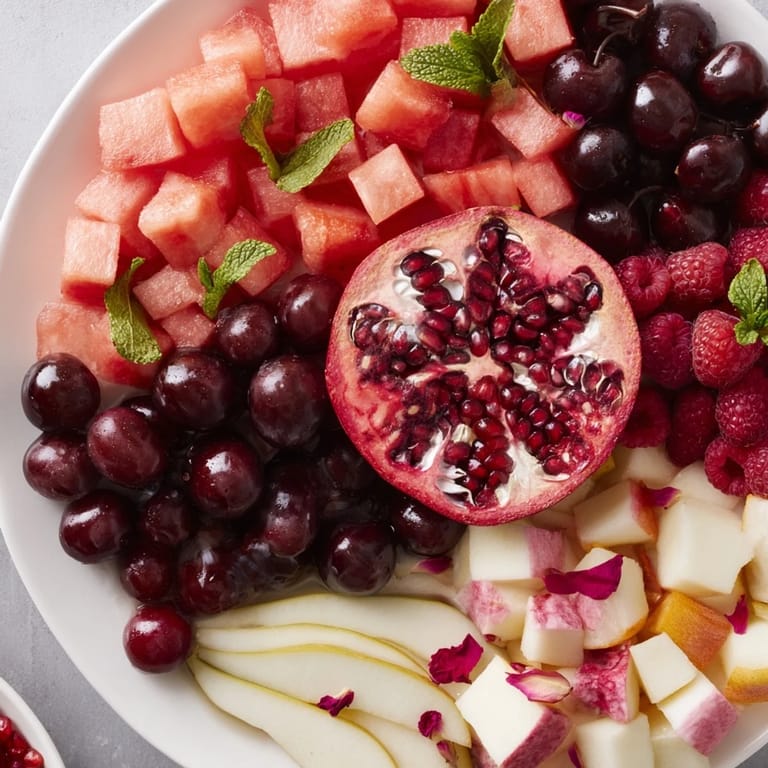
Save The first time I really looked at a pomegranate wasn't in a recipe book—it was at a farmers market in late autumn, when the vendor cut one open and the seeds caught the afternoon light like tiny rubies. I bought it on impulse, then spent an embarrassing amount of time figuring out what to do with it. That moment sparked something: what if instead of hiding the pomegranate in a bowl with other fruits, I made it the whole point? What if I built an entire platter around it, letting the color fade from deep crimson outward like a sunset? This platter became my answer.
I made this for a dinner party on a whim, nervous because I'm usually the person who shows up with store-bought dessert. When I set it down in the center of the table, the room went quiet for a moment—not in judgment, but in actual surprise. Someone asked if I'd studied art, which made me laugh because I'd literally just been thinking about how light looks different through pomegranate seeds. That's when I realized this platter was less about cooking and more about seeing fruit the way you'd see flowers.
Ingredients
- 1 large pomegranate, halved: This is your anchor, your reason for the whole platter, so pick one that feels heavy for its size—that means it's full of juice and seeds.
- 1 cup dark cherries, pitted: These are your deepest note, nearly burgundy if you find the right ones; pit them just before arranging so they don't oxidize.
- 1 cup red grapes: They're forgiving, stay perfect for hours, and fill gaps between the more delicate fruits.
- 1 cup strawberries, hulled: Slice them only when you're ready to arrange, otherwise they'll weep and stain everything around them.
- 1 cup raspberries: Handle these like tiny treasure—they bruise if you look at them wrong, so add them last.
- 1 cup watermelon, cubed: The slight sweetness bridges the gap between red and pink; cut it closer to serving time so it stays crisp.
- 1 cup pink grapefruit segments: These bring a subtle tartness that keeps the platter from feeling one-note sweet.
- 1 cup dragon fruit, cubed: This is pure visual drama—pale pink flesh studded with tiny black seeds, almost otherworldly.
- 1 cup apple slices (pink or blush varieties): Slice them last and have lemon juice standing by if they start to brown before you're ready.
- 1 cup pear slices: Soft and pale, these are your transition fruits that fade the color from pink to nearly white.
- Fresh mint leaves and edible rose petals (optional): If you use them, scatter them in the final moment so they stay vibrant and don't wilt into the fruit.
Tired of Takeout? 🥡
Get 10 meals you can make faster than delivery arrives. Seriously.
One email. No spam. Unsubscribe anytime.
Instructions
- Start with your anchor:
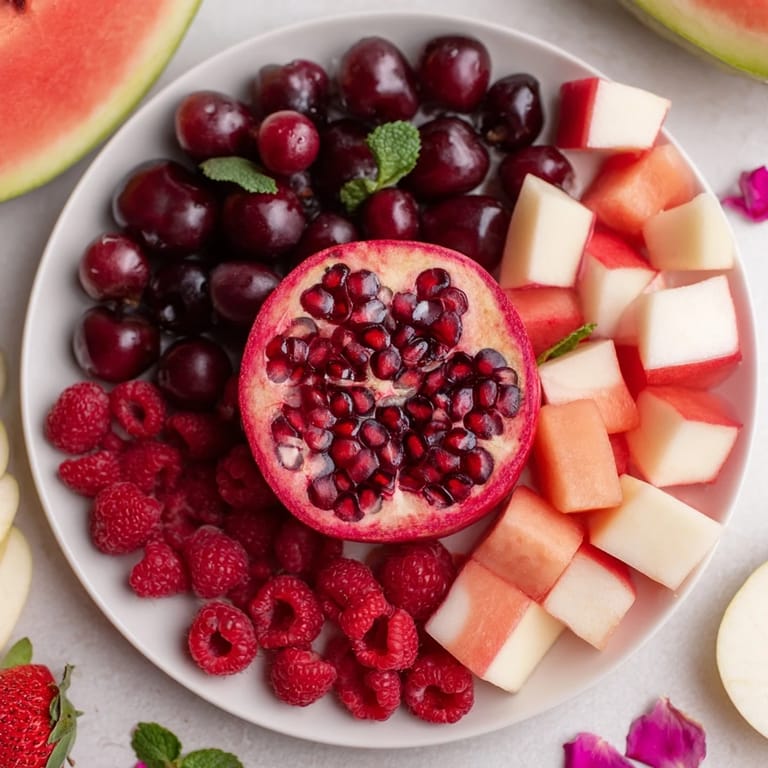
- Set the pomegranate halves, cut side up, right in the center of your platter—this is the heart of everything. I usually prop them slightly so the seeds catch the light.
- Build the deepest ring:
- Arrange your dark cherries, red grapes, and strawberries in a loose crescent around the pomegranate, letting them overlap slightly. The arrangement doesn't have to be perfect; nature isn't perfectly organized, and that's what makes it feel real.
- Transition to pink:
- Layer the raspberries, watermelon, and grapefruit segments next to the reds, where the colors start to soften. This is where you'll really see the platter come alive.
- Fade to the edges:
- Place your dragon fruit, apple slices, and pears at the outer edges, creating that gradient effect from deep red all the way to pale pink and white. Step back and look—you're essentially painting with fruit.
- Final touches:
- If you're using mint and rose petals, scatter them across the whole platter in the moments before serving. They'll look fresher and more alive than if you add them early.
- Serve or chill:
- This can go straight to the table, or you can cover it loosely and refrigerate for a few hours. Just bring it out fifteen minutes before guests arrive so the fruit isn't ice-cold.
 Save
Save The moment that changed how I think about food wasn't actually during eating—it was watching my neighbor's four-year-old study the platter like it was a museum painting, pointing out each color transition, asking why the pomegranate was the most important. She wasn't thinking about flavors or nutrition; she was just seeing beauty. That's when I understood this platter isn't really a recipe; it's an excuse to make people slow down and look.
The Color Story Behind the Arrangement
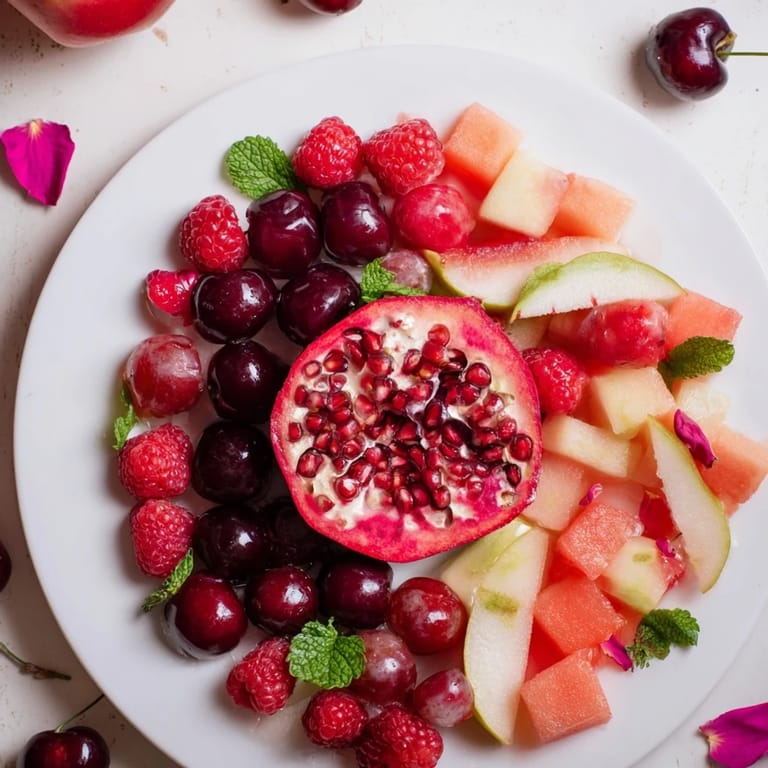
Arranging by color isn't just beautiful—it actually serves a purpose. Each fruit has different ripeness indicators and flavor profiles that match its position in the spectrum. The deepest reds are usually the most intense and sweet; as you move outward, you get lighter flavors and more delicate textures. It's like the platter is telling a story through taste, not just through sight.
Timing and Seasonality
This platter works year-round because you can swap fruits based on what's actually in season where you are. Winter might mean pomegranate and pear heavy; summer might lean on berries and melon. I've learned that fruits taste better when they're supposed to be in season anyway, so fighting that is just making extra work for yourself. The platter stays the same concept—color gradient, pomegranate center—but the specific fruits change with the months.
Why This Works as a Showstopper
There's something about a platter that feels more generous and special than individual plates. It invites people to gather, to choose, to have a conversation while they're eating. I've found that a beautiful presentation doesn't just make food taste better—it actually changes how people experience the meal, slowing them down, making them more present.
- Set the platter down and let people admire it before diving in—that moment matters.
- If you're nervous about color running, arrange fruits so the juiciest ones (berries, watermelon) are positioned away from the pale fruits.
- A squeeze of lime juice on apples and pears about fifteen minutes before serving keeps them crisp and bright without being noticeable.
 Save
Save This platter taught me that sometimes the most memorable dishes are the ones that make people stop and look before they taste. That's its real power.
Recipe Questions & Answers
- → How should the fruits be arranged for the best visual effect?
Arrange the fruits in overlapping layers starting with deep red fruits near the pomegranate, followed by pink and pale pink/white fruits outward, creating a smooth color gradient across the platter.
- → Can seasonal fruits be substituted in this arrangement?
Yes, you can replace fruits like cherries or raspberries with seasonal alternatives such as red currants, pomegranate seeds, lychees, or peaches while maintaining the color transition effect.
- → What garnishes complement this fruit platter?
Fresh mint leaves and edible rose petals add a decorative touch and enhance the aroma without overpowering the fruit flavors.
- → How can browning of apple and pear slices be prevented?
Lightly drizzle lime juice or another citrus juice over the apple and pear slices to slow oxidation and keep them looking fresh.
- → Is this platter suitable for guests with common dietary restrictions?
Yes, this fruit arrangement is vegan, gluten-free, and free from common allergens if garnishes are chosen carefully.