 Save
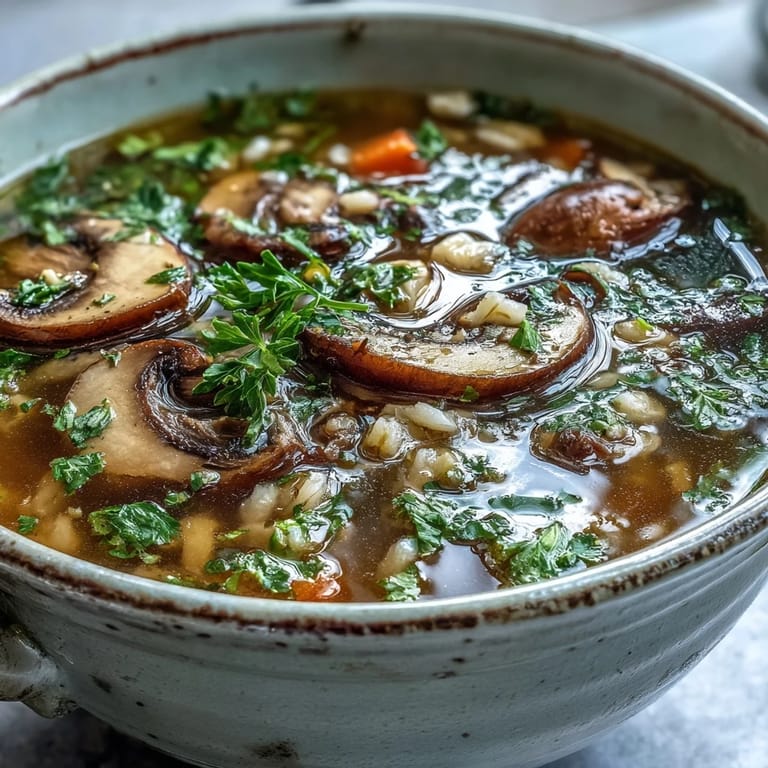
Save My grandmother kept a mason jar of dried shiitake mushrooms in her pantry, tucked behind the flour and sugar, and I never understood why until one gray afternoon when she simmered them into broth right before my eyes. The kitchen filled with this deep, almost meaty aroma that seemed impossible from something so small and wrinkled. That's when I learned that mushroom barley soup wasn't just comfort food—it was alchemy, the kind of magic that happens when you let simple ingredients become something layered and profound.
I made this for a friend during her first winter in the city, when she was homesick and overwhelmed. She sat at my kitchen counter while I chopped vegetables, and by the time we ladled the soup into bowls, she was telling me stories and smiling again. That's when I realized this isn't just a recipe—it's a way to say 'you're going to be okay' without actually saying it.
Ingredients
- Dried shiitake mushrooms (1 oz): These are the soul of the soup—they're concentrated umami that transforms water into something deeply satisfying, so don't skip them or substitute with regular dried mushrooms.
- White mushrooms (8 oz, sliced): Fresh mushrooms add body and earthiness, and slicing them thin lets them release their juices faster into the broth.
- Pearl barley (3/4 cup, rinsed): Rinsing removes the starch coating and prevents gumminess; the barley adds a gentle chew and natural thickening as it cooks.
- Olive oil (2 tbsp): Just enough to soften the vegetables without making the soup greasy, letting the mushroom flavors shine.
- Onion, carrots, celery (1 medium, 2 medium, 2 stalks): This is your flavor foundation—the longer you sauté them first, the sweeter and deeper they become.
- Garlic (3 cloves, minced): A full minute of cooking mellows the bite and releases its sweetness into the oil.
- Vegetable broth (8 cups): Low-sodium is essential here because the mushroom soaking liquid adds its own salt and depth, and you're building layers.
- Bay leaves and dried herbs (2 bay leaves, 1 tsp thyme, 1 tsp parsley): These quiet seasonings tie everything together without announcing themselves—they're the backbone of that classic deli flavor.
- Fresh parsley for garnish: A bright finish that wakes up your palate after all those earthy, long-cooked flavors.
Tired of Takeout? 🥡
Get 10 meals you can make faster than delivery arrives. Seriously.
One email. No spam. Unsubscribe anytime.
Instructions
- Awaken the shiitakes:
- Pour boiling water over dried mushrooms and let them steep for 20 minutes—you're not just softening them, you're extracting the essence that makes this soup taste like it came from a restaurant. Strain the liquid carefully through cheesecloth to catch every bit of flavor while leaving grit behind, then slice the mushrooms into bite-sized pieces.
- Build your flavor base:
- Heat olive oil in your pot and add the onion, carrots, and celery together—this 5-minute sauté is where the sweetness develops and the vegetables begin to break down slightly, creating a foundation. When you add minced garlic, you're only cooking it for about a minute, just until fragrant, because you want it to remain vibrant and fresh.
- Bring in the mushrooms:
- Add both your fresh and reconstituted shiitake mushrooms to the pan and let them sit for about 5 minutes—watch as they release their dark, glossy liquid into the oil. This is the moment the soup stops being just vegetables and becomes something rich and intentional.
- Marry everything together:
- Pour in the reserved mushroom soaking liquid and the vegetable broth, then stir in the rinsed barley, bay leaves, and dried herbs. This is your last chance to taste and adjust salt and pepper before the long cook.
- The gentle simmer:
- Bring to a boil, then lower the heat to a gentle bubble and cover the pot—50 to 60 minutes is when the barley becomes tender but not mushy, and the flavors knit together into something unified. Stir occasionally so nothing sticks to the bottom, and the stirring itself helps thicken the broth naturally as the barley releases its starches.
- Final touches:
- Fish out those bay leaves, taste one more time, and trust your instincts on seasoning—this is your soup now. Ladle into bowls and finish with fresh green parsley if you have it, adding a color contrast and brightness that your eye and palate will appreciate.
 Save
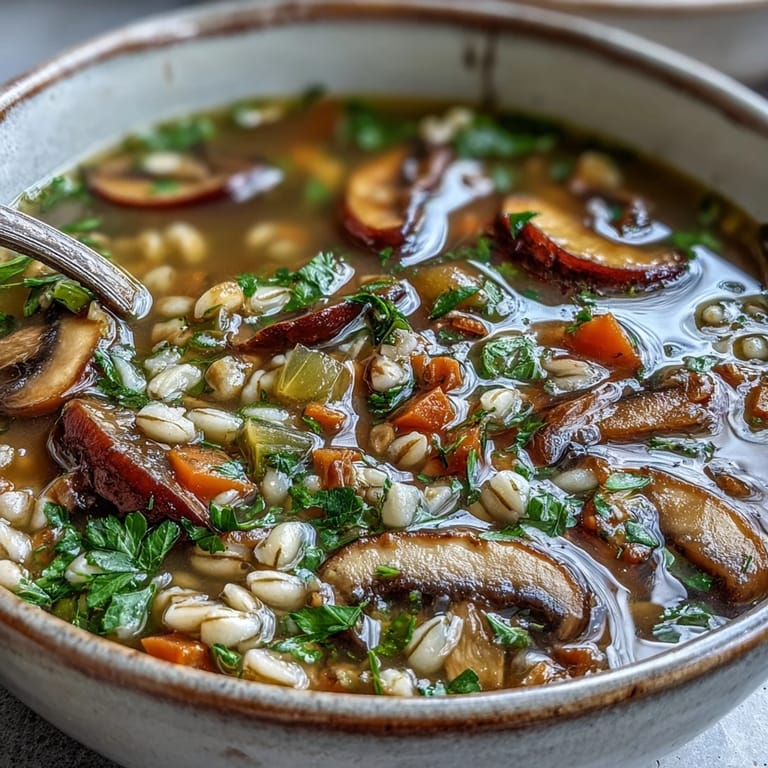
Save There's something about mushroom barley soup that makes time feel different in the kitchen. You're not rushing—you're waiting, stirring, tasting, adjusting, and somewhere in that hour of gentle heat and steam, you stop thinking about what else you should be doing and just exist in the warmth of it.
The Mushroom Soaking Liquid is Everything
This liquid is where dried shiitakes deposit all their concentrated flavor—it's the reason your soup tastes intentional and complex instead of flat. I learned this the hard way by once discarding it and making a second batch just to prove it to myself. The difference was night and day, and now I never skip this step or rush it.
Why This Soup Improves With Time
Mushroom barley soup is one of those rare dishes that actually tastes better the next day, after the barley has absorbed more broth and the flavors have melded completely. The consistency will thicken as it sits in the refrigerator—don't panic, just thin it with a splash of broth or water when you reheat. This makes it ideal for cooking ahead or bringing to work in a thermos, and it freezes beautifully for up to three months.
Variations and Serving Suggestions
While this soup is perfect as-is, I've learned that small additions transform it without changing its soul. A handful of diced potatoes or parsnips added with the vegetables creates a heartier version that fills you up faster, and if you're not vegetarian, swapping in chicken broth gives it a different kind of richness. The classic pairing is thick-sliced rye bread, but I've also served it alongside roasted root vegetables or a simple green salad when I wanted something more substantial.
- For extra heartiness, add 1 cup of diced potatoes or parsnips right when you add the barley.
- Serve with dense, dark rye bread or pumpernickel for that authentic deli experience.
- Leftover soup freezes beautifully for up to three months in airtight containers.
 Save
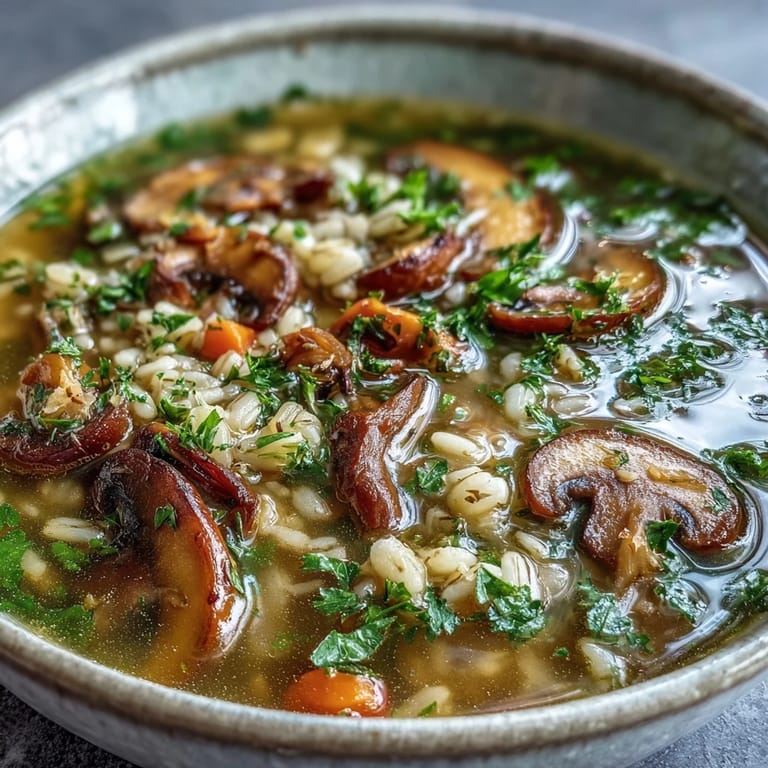
Save This soup has taught me that the best comfort food doesn't require complicated techniques or exotic ingredients—it just requires time, attention, and the willingness to let things simmer. Make it once and it becomes yours forever.
Recipe Questions & Answers
- → Can I make this soup ahead of time?
Absolutely. This soup actually tastes better the next day as flavors meld together. Store in the refrigerator for up to 4 days. The barley will continue absorbing liquid, so add more broth or water when reheating to reach desired consistency.
- → Is barley gluten-free?
No, pearl barley contains gluten. For a gluten-free version, substitute with quinoa, brown rice, or buckwheat. Adjust cooking time accordingly as these grains may cook faster than barley.
- → Why strain the mushroom soaking liquid?
Dried shiitakes often contain grit or sediment from harvesting. Straining through a fine-mesh sieve or cheesecloth removes this debris while preserving all the rich, earthy flavor that enhances the broth's depth.
- → Can I use other mushroom varieties?
Certainly. Try dried porcini for extra intensity, or use cremini, portobello, or oyster mushrooms in place of white mushrooms. Each variety adds its unique character to the finished bowl.
- → How do I store leftovers?
Cool completely and refrigerate in an airtight container for up to 4 days. Freeze for up to 3 months. Thaw overnight in the refrigerator before reheating, adding extra liquid as needed since barley thickens considerably when chilled.