 Save
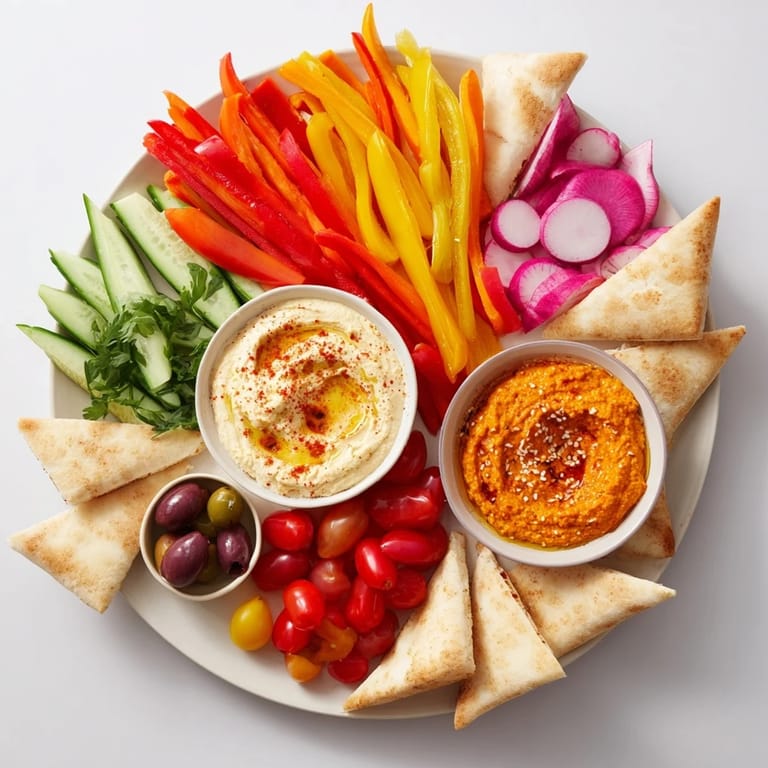
Save Last summer, I was tasked with bringing something impressive to a friend's garden party, and I found myself flipping through a cookbook about Moroccan street food when a photograph stopped me cold—a magnificent tent-like arrangement of vegetables and dips that looked like it belonged in a bazaar. The colors were so vivid I could almost taste the spices through the page. I decided right then that I'd recreate it, and the moment I saw my guests' faces light up when they walked into the garden, I knew I'd made the right choice.
What I love most about making this is watching people approach the platter with hesitation—there are so many colors and unfamiliar dips—and then watching that hesitation melt into delight. A young girl at the party told me the tent reminded her of camping trips, and suddenly everyone was creating stories about what the vegetables meant to them. Food that makes people talk and dream together feels like real cooking.
Ingredients
- Cucumber: Slice it lengthwise so each piece has that satisfying crunch and holds the dip without breaking—thin rounds can get waterlogged.
- Red and yellow bell peppers: Cut into strips wide enough to be substantial, not delicate; these are meant to be substantial vehicles for dip.
- Carrots: Peeled sticks add natural sweetness that balances the spice in the dips.
- Cherry tomatoes: Halved so they nestle into the arrangement and release their juice when bitten.
- Red onion: Thin slices add a sharp note that wakes up your palate between bites of rich dips.
- Radishes: Sliced thin, they bring peppery brightness and a crackling texture.
- Pita or msemen: Warm them just enough to make them pliable but still sturdy for dipping.
- Hummus, muhammara, and baba ganoush: If you're making these from scratch, all the better, but store-bought versions work beautifully here—no one's judging.
- Olives, cilantro, sesame seeds, cumin, and paprika: These aren't just garnish; they're flavor insurance and visual proof that you know what you're doing.
Tired of Takeout? 🥡
Get 10 meals you can make faster than delivery arrives. Seriously.
One email. No spam. Unsubscribe anytime.
Instructions
- Prep Your Canvas:
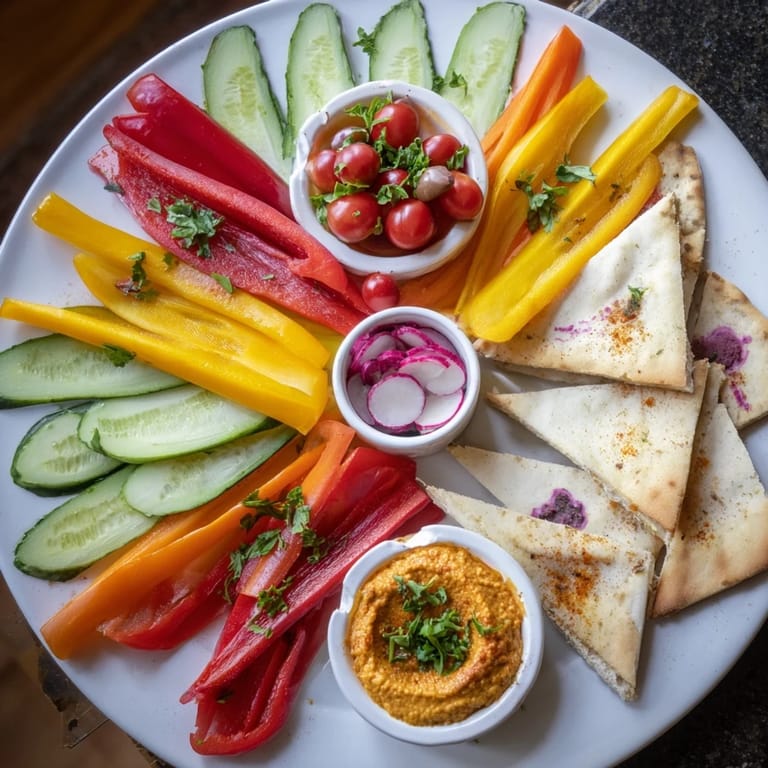
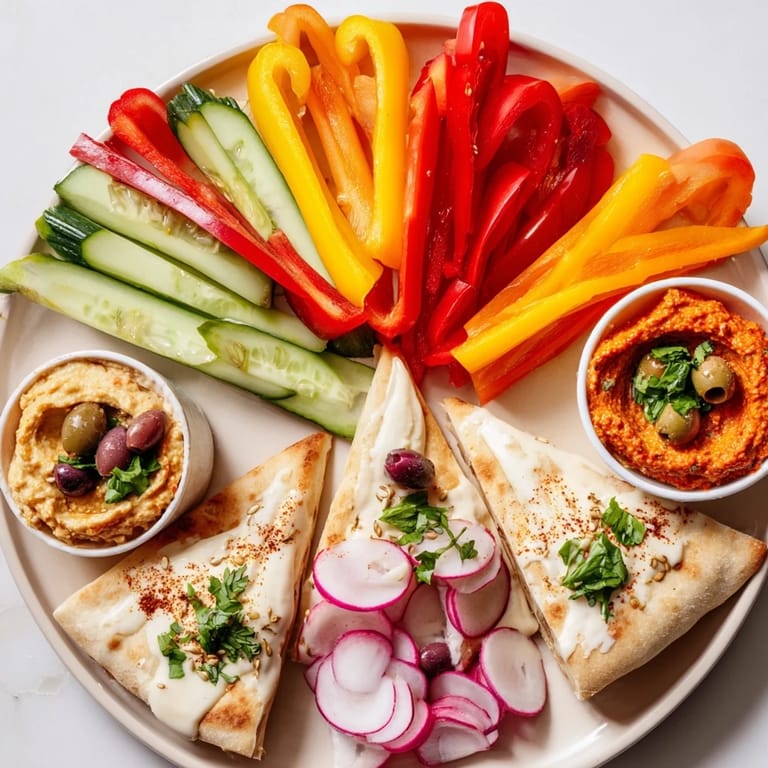
- Arrange all vegetables on your largest platter in pointed, triangular groupings that echo a tent's canopy. Start with the longest vegetables—carrots and peppers—pointing upward like poles holding up fabric, then fill in around them with circles of tomatoes and onion slices. Alternate colors deliberately; the visual rhythm matters as much as the taste.
- Warm and Cut the Bread:
- Heat your pita or msemen in a dry skillet or oven for just 2-3 minutes until they're warm and pliable but not dry. Cut them into triangles and fan them out at the base of your vegetable tent like a gathered skirt. The warmth brings out the toasted grain flavors.
- Compose the Dips:
- Spoon hummus, muhammara, and baba ganoush into small bowls and nestle them at the center base of your arrangement, the focal point where everything converges. Sprinkle each with cumin, paprika, and toasted sesame seeds—this is where the spice magic happens and where your guests' eyes will land.
- Add the Final Flourish:
- Scatter olives across the arrangement like jewels and finish with a generous sprinkle of fresh cilantro or parsley. Step back and look at it from your guests' perspective before serving.
- Serve and Watch:
- Bring it to the table immediately while everything is at its peak temperature and visual clarity. Let guests dip, mix, and compose their own flavor combinations.
 Save
Save I'll never forget the moment when my friend's eight-year-old nephew asked if he could eat the "tent" because it was too pretty to destroy, then immediately dug both hands in without waiting for an answer. That's when I understood that the best recipes are the ones people want to touch and taste and remember, not just look at from a distance.
Building a Better Tent
The architecture of this platter is half the fun. Think of your vegetables as a structured landscape rather than a random collection. The pointed, upward-reaching arrangement isn't just decorative—it actually makes it easier for guests to grab pieces and the dips feel like a destination rather than an afterthought. The tent metaphor isn't just whimsy; it's geometry that works.
When You Want to Improvise
This recipe is forgiving and actually improves with personal touches. Fresh snap peas, blanched green beans, or thinly sliced fennel all work beautifully in the tent structure. If you want to add protein, roasted chickpeas scattered throughout add crunch and substance, or little cubes of marinated feta bring tangy richness. The key is respecting the color palette—cooler tones of purple, white, and green, warmer tones of orange, red, and gold. When you honor those relationships, even substitutions feel intentional.
A Recipe That Feeds More Than Hunger
What surprised me most about making this platter repeatedly is how it creates a different kind of gathering. People slow down. They make choices. They share tastes. The tent becomes a reason to huddle together rather than grab and scatter. Serve it with Moroccan mint tea if you want to extend that moment, or a crisp white wine if you're leaning into something lighter.
- Make the dips the day before if you're short on time—they only taste better as flavors meld.
- Use a platter with a subtle pattern or dark color so the vegetables pop rather than fade into white space.
- If you're nervous about presentation, remember that imperfection reads as homemade and intentional, never wrong.
 Save
Save This platter is my answer to the question of how to make people feel welcome and celebrated without exhausting yourself in the kitchen. The Moroccan tent has become my secret weapon for gatherings that feel effortless and memorable.
Recipe Questions & Answers
- → What breads work best for the Moroccan tent platter?
Pita breads or Moroccan msemen cut into triangles are ideal, warmed lightly for softness and easy dipping.
- → Which spices enhance the dips in this platter?
Cumin, smoked paprika, and toasted sesame seeds add depth and warmth to the hummus, muhammara, and baba ganoush dips.
- → Can I customize the vegetables used in the platter?
Yes, fresh vegetables like snap peas or blanched green beans can be swapped in to complement the existing colorful array.
- → How should the platter be arranged for the best presentation?
Arrange vegetables in pointed, triangular clusters to mimic a tent canopy, fanning out flatbread triangles at the base and placing dips centrally.
- → Are there options for vegan or allergen-friendly versions?
Use dairy-free dips and ensure selected breads are vegan. Note that sesame and gluten allergens are present in some components.