 Save
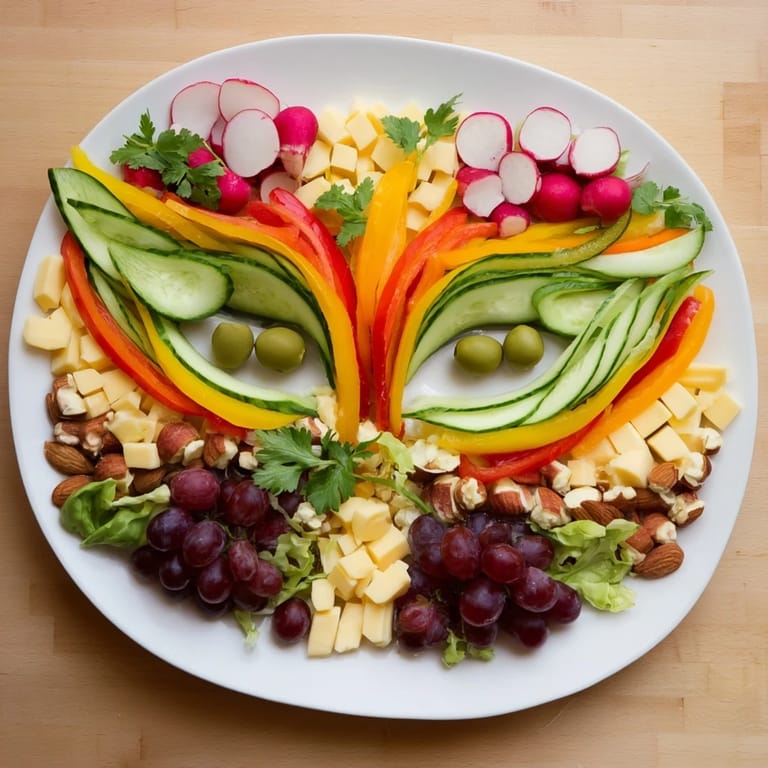
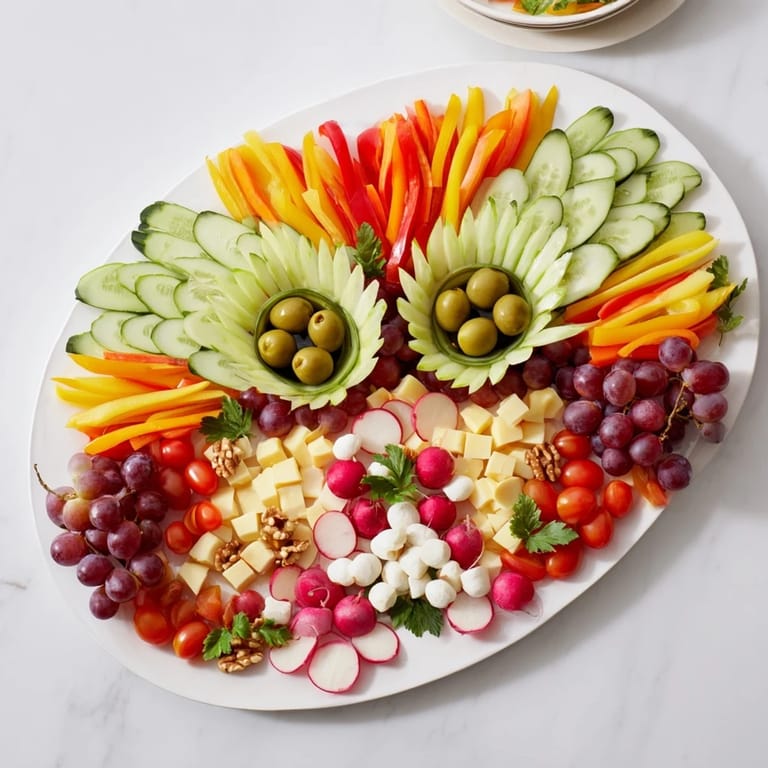
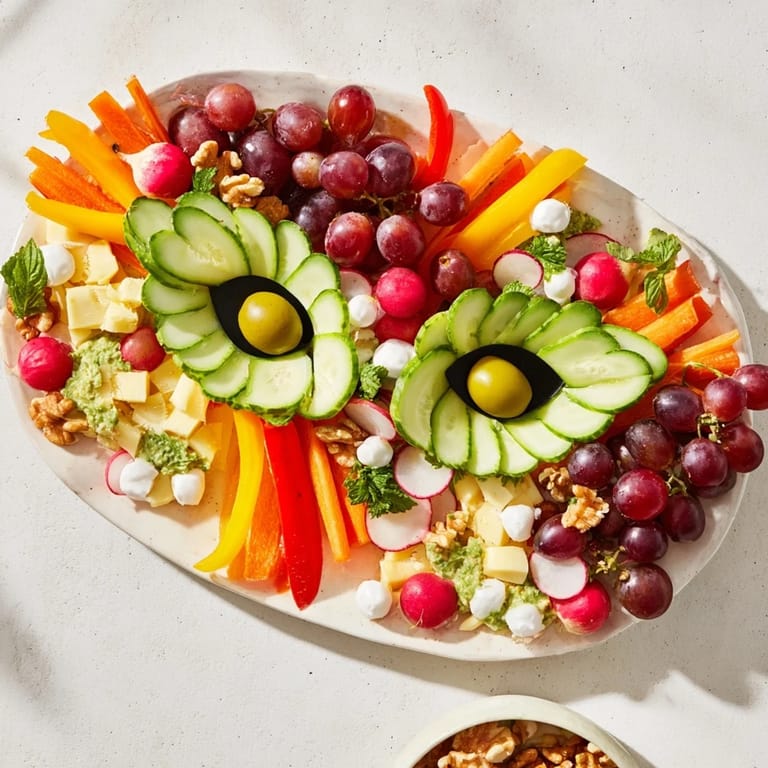
Save I still remember the New Year's Eve when my sister challenged me to create something so stunning that guests wouldn't want to eat it—yet couldn't resist. I spent the afternoon arranging vegetables and cheeses on a board, and somewhere between placing the olives and fanning out the peppers, I realized I was painting with food. The Masquerade Mask wasn't just a platter; it was theater on a table, and everyone at that party felt like they'd stepped into something magical the moment they saw it.
What I didn't expect that New Year's Eve was how the mask became a centerpiece that brought people together. Someone would reach for a radish, another would grab a grape, and suddenly strangers were comparing bites and laughing about which part of the mask they were 'eating away.' Food has a way of doing that when you present it with intention.
Ingredients
- Large olives or cheese cubes: These become the eyes of your mask and anchor the entire composition. I learned to pit my own olives rather than buying pre-pitted ones—they hold their shape better and taste fresher. If you go the cheese route, firm varieties like cheddar keep their shape on a warm table.
- Cucumber slices: The delicate foundation that catches light beautifully. Slice them thin and pat dry so they don't weep moisture onto your board—this keeps everything looking crisp and prevents a soggy base.
- Bell pepper strips: Use a mix of red, yellow, and orange for maximum visual impact. The variety of colors is what makes this sing, so don't skimp on the spectrum.
- Cherry tomatoes and radishes: These add jewel-like pops of color. Halving the tomatoes lets light play across their surfaces, and radishes bring a peppery crunch that surprises people.
- Baby carrots and grapes: The grapes especially—whether red or green—add sweetness and visual whimsy. They're what make people smile when they first see the board.
- Assorted cheeses and mozzarella balls: These provide richness and texture. The mix of cubes and balls creates visual interest and keeps people reaching back for more.
- Nuts and dried fruits: These fill gaps and add layers of flavor. I've found that toasting nuts very lightly beforehand makes them taste warmer and more intentional.
- Fresh herbs and edible flowers: The finishing touch that whispers luxury. Even simple parsley or dill transforms this from nice to memorable.
Tired of Takeout? 🥡
Get 10 meals you can make faster than delivery arrives. Seriously.
One email. No spam. Unsubscribe anytime.
Instructions
- Set your stage:
- Choose your board—something oval or rectangular works best for the mask silhouette. I love using a dark wood board because it makes the colors pop. Imagine you're looking at a blank canvas, and you're about to paint symmetry and celebration.
- Create the eyes:
- Place your two olives or cheese cubes near the center top, spaced apart just as if they were watchful eyes peering out at your guests. This is your anchor point; everything else radiates from here. Step back and look—does it feel balanced?
- Build the feathered edges:
- Starting above the eyes, begin fanning out your vegetable slices and pepper strips in wide, symmetrical arcs. Think of a masquerade mask with its ornate, sweeping feathers. The cucumbers and peppers should flow outward and down like plumage. Take your time here—this is where the magic happens. The rhythm of the arrangement is what catches eyes from across the room.
- Nest in the treasures:
- Tuck cheese cubes and mozzarella balls between and among the vegetables. Let them nestle in naturally, peeking through like jewels. This isn't about precision; it's about creating pockets of surprise and texture.
- Fill the spaces with intention:
- Use nuts and dried fruits to complete gaps and add warmth to the composition. A few golden raisins next to a radish, an almond peeking through pepper slices—these details are what make someone say, 'This is the most beautiful thing I've ever seen on a plate.'
- Add the flourishes:
- Arrange crackers along the bottom edge if you're using them, then scatter fresh herbs and edible flowers across the entire mask. These finishing touches feel like you're adding feathers and jewels to an actual masquerade mask.
- Serve and watch:
- Step back. Admire what you've created. Then bring it to the table and watch people lean in, phones coming out, smiles spreading. That moment never gets old.
 Save
Save The beauty of this dish is that it transcended being just food that night—it became a memory that people referenced for months. Someone later told me they'd made their own version, and their grandmother had actually cried seeing it, reminding her of a masquerade ball from her youth. That's when I understood: beautiful presentation isn't vanity; it's kindness.
Choosing Your Ingredients Like an Artist
I approach vegetable selection the same way I choose colors for a painting. Cool tones—cucumber greens, purple radishes—ground the composition. Warm tones—orange peppers, red tomatoes—add energy and draw the eye. The key is buying what's freshest at your market that week rather than forcing a specific color scheme. Seasonal vegetables have a vibrancy that nothing else captures. Trust what looks alive when you're shopping, and your board will come alive too.
The Art of Symmetrical Simplicity
What I've learned is that 'masquerade' is really just a fancy word for 'symmetrical.' Once you understand that principle, the arrangement becomes intuitive. Your eyes naturally want to balance one side against the other. Start with the centerline—the olives or cheese cubes—and let that be your guide. Everything radiates from there. You're not creating chaos; you're creating order that feels festive and grand, which is precisely what a mask is all about.
Beyond the New Year
While this was born as a New Year's celebration platter, I've learned it works magic at any gathering. Birthdays, bridal showers, book club meetings, even just a Friday night when you want to feel fancy—everyone responds to beauty on the table. The mask metaphor means something different to everyone too. Some see celebration. Others see mystery. That openness is part of what makes it special.
- Make it vegan by swapping cheese for marinated tofu cubes or cashew cheese—nobody will miss what isn't there
- Prep everything in advance and chill components separately, then assemble 30 minutes before guests arrive for maximum freshness
- Offer dips on the side—herbed cream cheese, hummus, or a simple yogurt ranch—and watch people discover new flavor combinations
 Save
Save There's something deeply satisfying about feeding people beauty alongside sustenance. The Masquerade Mask does exactly that, turning simple ingredients into celebration.
Recipe Questions & Answers
- → What ingredients create the masquerade mask eye openings?
Green or black olives, or small cubes of firm cheese like cheddar or gouda, are used to form the eye openings at the center top of the platter.
- → Can this platter be adapted for a vegan diet?
Yes, cheese can be omitted and replaced with marinated tofu cubes or more vegetables for a vegan-friendly version.
- → How does the platter mimic a masquerade mask?
Vegetable slices, bell pepper strips, fruits, and cheese are fanned out in symmetrical arcs resembling the ornate, feathered edges of a masquerade mask.
- → What garnishes enhance the visual appeal?
Fresh herbs such as parsley, basil, dill and optional edible flowers add color and a festive touch to the platter.
- → Are there any common allergens in this dish?
The platter contains dairy and nuts and may contain gluten if crackers or breadsticks are included.
- → How long does it take to prepare this platter?
Preparation takes about 20 minutes, with no cooking time required, making it quick and easy to assemble.