 Save
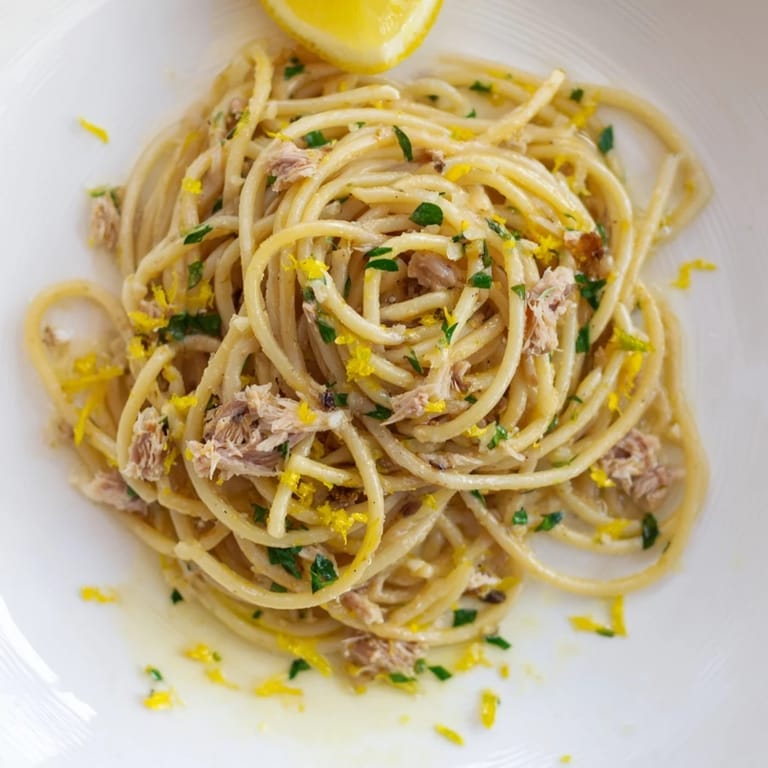
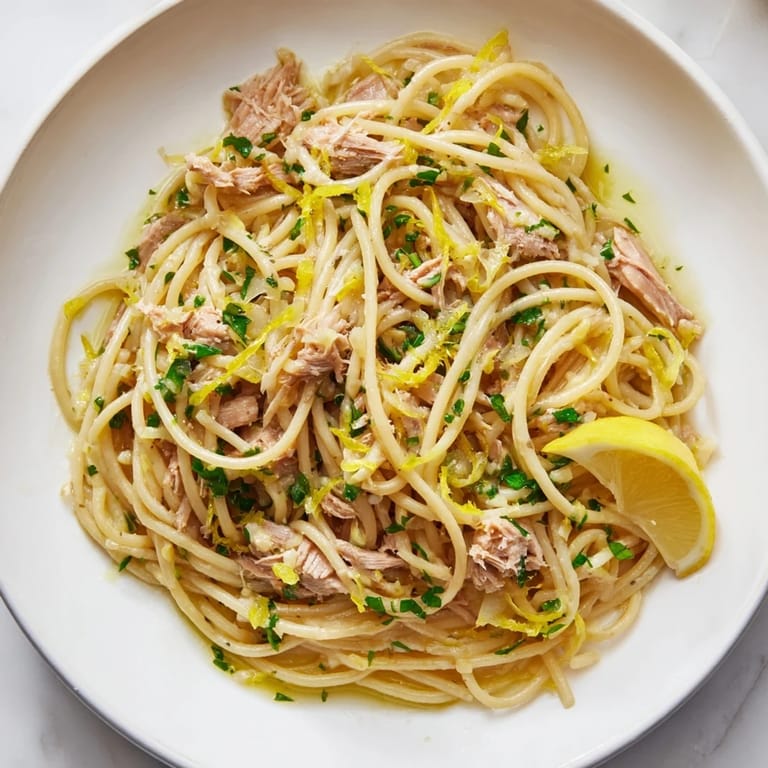
Save I discovered this dish by accident on a Tuesday evening when I opened my pantry and found two forgotten cans of tuna staring back at me. My fridge had little more than a lemon and some garlic, so I decided to make something rather than order takeout. Twenty minutes later, I was twirling strands of lemony, garlicky pasta around my fork, amazed at how something so simple could taste like a Mediterranean getaway. That night changed how I think about weeknight cooking.
I made this for a friend who'd just moved into her first apartment and owned exactly three pans. She was nervous about cooking, so I walked her through it step by step. Watching her face light up when she tasted that first bite—when she realized she'd just made something delicious without breaking a sweat—that's when I knew this recipe was special.
Ingredients
- Spaghetti (400g): Use dried spaghetti and cook it to al dente—that tender but still slightly firm texture that holds up to tossing without turning mushy.
- Olive oil (2 tbsp): Good olive oil is the backbone here; it carries the garlic flavor and helps coat the pasta beautifully.
- Garlic cloves (3, finely sliced): Slicing rather than mincing keeps the garlic pieces visible and prevents them from disappearing into the sauce.
- Lemon (1, zested and juiced): Both the zest and juice matter—zest adds brightness while juice brings acidity that ties everything together.
- Canned tuna in olive oil (2 × 160g cans, drained): Buy good tuna; it makes a real difference in flavor and texture, and draining the oil helps you control the final consistency.
- Red pepper flakes (1/2 tsp, optional): A pinch adds warmth without heat if you're sensitive to spice.
- Fresh parsley (1/4 cup, chopped): Fresh herbs are non-negotiable here—they're what separate this from canned soup.
- Pasta cooking water (1/4 cup reserved): This starchy water is liquid gold; it helps the sauce cling to the pasta and brings everything into harmony.
- Salt and freshly ground black pepper: Taste as you go and season at the end when you can see what you're working with.
Tired of Takeout? 🥡
Get 10 meals you can make faster than delivery arrives. Seriously.
One email. No spam. Unsubscribe anytime.
Instructions
- Get the water boiling:
- Fill a large pot with salted water and bring it to a rolling boil while you prep everything else. The salt in the water is your only seasoning for the pasta itself, so don't skip it.
- Cook the pasta:
- Add spaghetti and cook according to package directions until al dente, then drain it in a colander—but before you do, scoop out 1/4 cup of that starchy pasta water and set it aside in a small cup.
- Warm the oil and garlic:
- In a large skillet over medium heat, pour in the olive oil and add your thinly sliced garlic. Let it sizzle gently for about 1–2 minutes until it becomes fragrant and just begins to turn golden, but watch it carefully so it doesn't burn.
- Add the tuna gently:
- Break up the drained tuna with a spoon as you stir it into the pan, keeping the flakes relatively intact so you get nice, tender pieces throughout the dish. Fold in the lemon zest, lemon juice, and red pepper flakes if you're using them.
- Bring it all together:
- Add your drained spaghetti directly to the skillet and toss everything together, using tongs or two wooden spoons to coat the pasta evenly. Pour in the reserved pasta water a little at a time, tossing gently, until the sauce looks light and glossy.
- Finish with parsley:
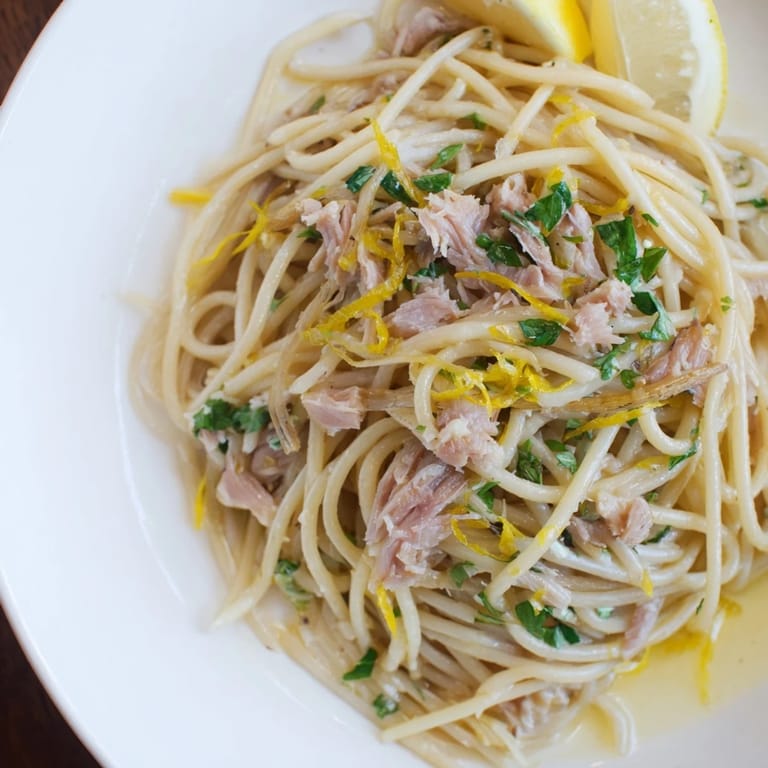
- Stir in the fresh chopped parsley and taste the whole thing, seasoning with salt and pepper until it tastes like sunshine. Divide among plates, top with extra parsley, and serve with lemon wedges on the side.
 Save
Save My grandmother tasted this once and spent the next ten minutes asking where I'd learned to cook Italian food. I didn't tell her it was an accident born from laziness. She just smiled and asked for seconds, which felt like the highest compliment.
Why This Dish Works
There's an old cooking rule that if you can buy an ingredient in its best form—like good tuna in olive oil—you should. This dish respects that principle. Everything here is straightforward: oil, garlic, fish, lemon, pasta. There's nowhere for mediocre ingredients to hide, which is exactly why it works so beautifully. The magic isn't in technique or time; it's in choosing things that are already good and then getting out of their way.
Variations and Additions
Once you've made this basic version, you'll start seeing possibilities everywhere. Some nights I add a handful of halved cherry tomatoes for color and sweetness, or scatter capers across the top for a briny punch. Other times, a few red onion slices thin enough to see through add a subtle bite. The dish is flexible enough to welcome additions but sturdy enough that it's perfect on its own.
The Perfect Pairing
Serve this with a crisp white wine—something like Pinot Grigio or Sauvignon Blanc—and you've elevated a weeknight dinner into something that feels intentional and a little special. A simple green salad with olive oil and red wine vinegar on the side adds freshness without overshadowing the main event. The whole meal comes together in the time it takes to boil water and heat a pan.
- Pair with crusty bread to catch every drop of the lemony oil at the bottom of your bowl.
- A side salad with bitter greens balances the richness of the olive oil and tuna beautifully.
- Finish with a wedge of lemon and a small glass of cold wine, and you've turned Tuesday into something memorable.
 Save
Save This recipe taught me that the best meals don't require complicated planning or obscure ingredients. Sometimes the most satisfying food is what you make when you stop overthinking and just cook what's in front of you. That's the real magic.
Recipe Questions & Answers
- → Can I use fresh tuna instead of canned?
Fresh tuna can be used, but it requires careful cooking to prevent dryness. Flaking canned tuna offers convenience and a tender texture.
- → What pasta type works best with this dish?
Spaghetti is ideal here as it holds the light sauce well, but other long pasta like linguine also works.
- → How can I add more heat to the dish?
Including crushed red pepper flakes elevates the spiciness subtly without overpowering the lemon-garlic flavors.
- → Is there a recommended wine pairing?
A crisp white wine such as Pinot Grigio or Sauvignon Blanc complements the citrus and olive oil notes perfectly.
- → Can I prepare the sauce ahead of time?
The tuna and lemon garlic sauce is best freshly combined with hot pasta for optimal texture and flavor.