 Save
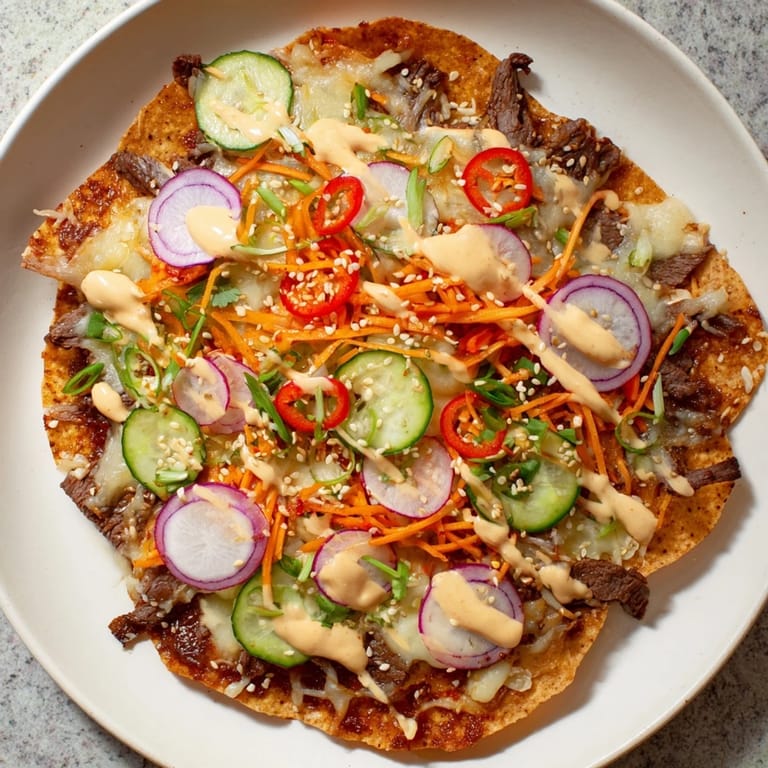
Save I discovered Korean BBQ nachos at a late-night gathering when a friend brought crispy tortilla chips to a Korean dinner party, and someone jokingly suggested we pile gochujang-marinated beef on top instead of the usual toppings. The combination of spicy, umami-rich beef with melty cheese and fresh vegetables was so good that we ate the entire tray before dessert even arrived. Now whenever I want to impress people with something that feels both familiar and unexpectedly bold, I reach for this recipe.
I remember making this for a small group of friends on a Friday evening, and watching their faces when they took that first bite—there was this moment of surprise followed by immediate second and third helpings. The combination of the warm, sticky beef with the cool crunch of fresh cucumber and the sharp tang of kimchi created this perfect back-and-forth on the palate that kept everyone reaching for more.
Ingredients
- Flank steak or sirloin, thinly sliced (300 g): Thin slices cook quickly and absorb the marinade better than thicker cuts; ask your butcher to slice it, or partially freeze the meat for easier cutting at home.
- Gochujang (2 tbsp): This fermented chili paste is the soul of the dish—its deep, spicy umami transforms simple beef into something special.
- Soy sauce, brown sugar, sesame oil, garlic, ginger, rice vinegar (mixed): Together, these create a sweet, salty, spicy, tangy marinade that coats every fiber of the meat.
- Tortilla chips (200 g): Choose chips sturdy enough to hold toppings without crumbling; thicker, less oily chips work better than delicate ones.
- Mozzarella and Korean cheese blend (100 g each): The combination melts evenly and creates those beautiful golden threads that make nachos irresistible.
- Fresh vegetables (red onion, carrot, cucumber, scallions): These add crunch and freshness that cuts through the richness of the cheese and beef.
- Sesame seeds, kimchi, cilantro or shiso leaves: The final garnishes bring brightness, heat, and authenticity to every bite.
Tired of Takeout? 🥡
Get 10 meals you can make faster than delivery arrives. Seriously.
One email. No spam. Unsubscribe anytime.
Instructions
- Mix the Marinade and Start the Beef:
- Combine gochujang, soy sauce, brown sugar, sesame oil, minced garlic, ginger, rice vinegar, and black pepper in a bowl until smooth and fragrant. Add your thinly sliced beef and toss to coat every piece, then let it sit for at least 20 minutes—this is when the flavors start to deepen and the meat begins to tenderize.
- Get the Oven Ready:
- Preheat your oven to 200°C (400°F) while you finish prepping other ingredients; this gives you time to slice vegetables and have everything ready before assembly.
- Sear the Beef Until Golden:
- Heat a large skillet over medium-high heat until it's hot enough that a drop of water sizzles immediately. Working in batches so the beef isn't crowded, sear each piece for 2–3 minutes until the edges are caramelized and browned, then transfer to a plate—the beef doesn't need to be fully cooked through at this stage.
- Layer and Bake:
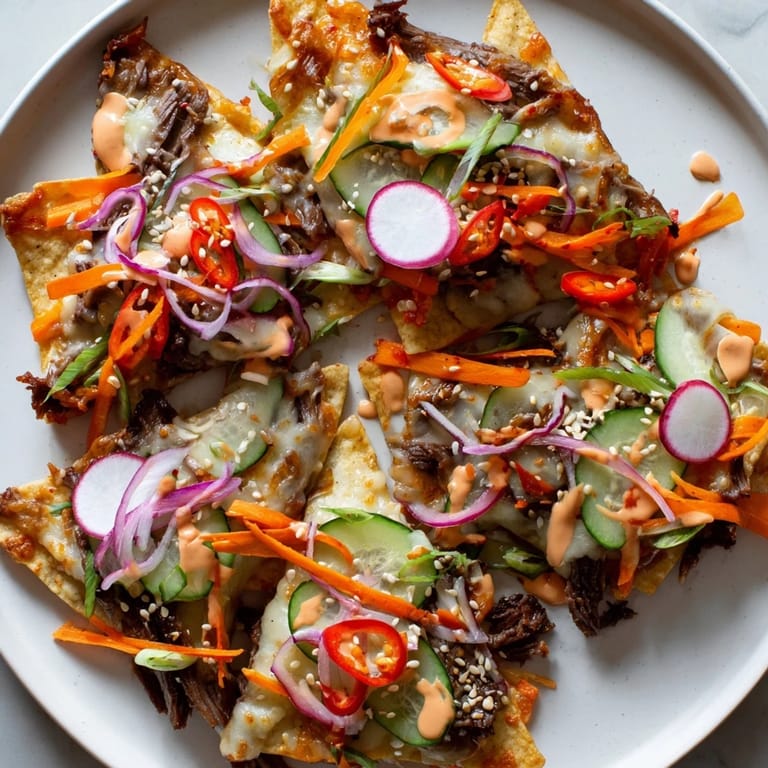
- Line a baking tray with parchment paper, spread tortilla chips in a single layer, sprinkle half the cheese mixture over them, scatter the cooked beef on top, then finish with the remaining cheese. Bake for 6–8 minutes until the cheese is bubbling and just starting to brown at the edges.
- Top with Fresh Vegetables and Herbs:
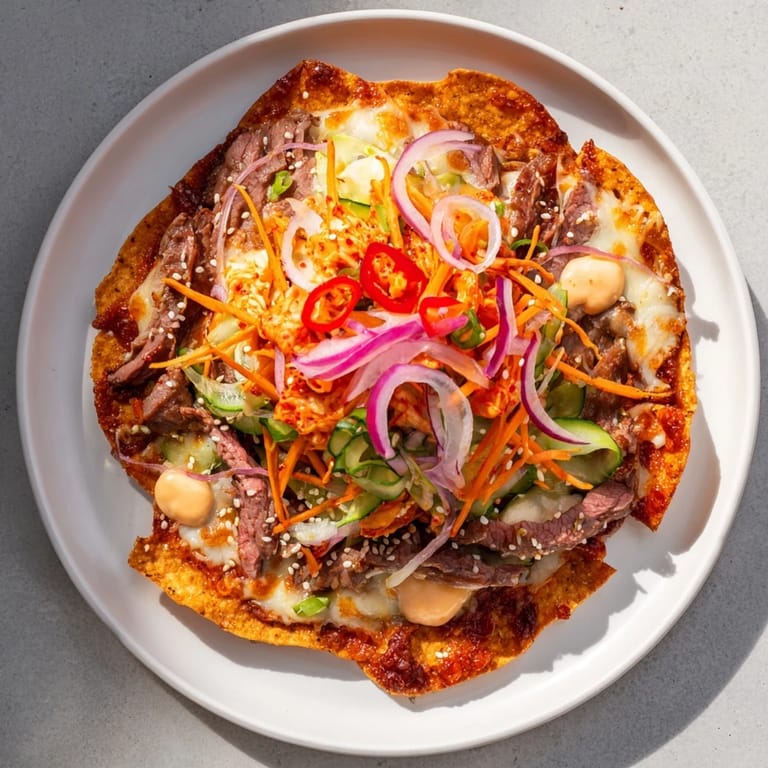
- Remove the tray from the oven and immediately scatter the thinly sliced red onion, julienned carrot, cucumber slices, scallions, and red chili (if using) over the hot nachos, followed by a sprinkle of toasted sesame seeds. The heat from the cheese will soften the vegetables slightly while keeping them crisp.
- Finish with Kimchi and Drizzle:
- Top with chopped kimchi and fresh cilantro or shiso leaves, then drizzle lightly with sriracha mayo or gochujang mayo if you like extra heat and richness. Serve immediately with lime wedges for squeezing over each bite.
 Save
Save There's something deeply satisfying about watching people's eyes light up when they realize that nachos and Korean BBQ belong together. This dish stopped being just food and became a conversation starter—a moment where cultural fusion actually tastes effortless rather than gimmicky.
Building Flavor Layers
The key to this dish working so well is understanding that each component—the spicy umami of the beef, the cool brightness of the vegetables, the salty richness of the cheese, and the funky depth of kimchi—needs space to shine. When you layer them in the right order, they don't compete; they amplify each other. The gochujang marinade does most of the heavy lifting, so don't skimp on it or rush the marinating time.
Customization and Swaps
This recipe is forgiving in the best way—if you don't have flank steak, grilled chicken thighs work beautifully and stay juicier than breast meat. For a vegetarian version, marinated mushrooms or jackfruit absorb the gochujang sauce just as well as beef. I've also added avocado, thinly sliced radish, and pickled jalapeños depending on what I had in the fridge, and every version has been delicious.
Serving and Pairing
Serve these nachos as soon as they come out of the oven, ideally on the tray itself so people can gather around and dig in while everything is still warm and the cheese is at peak meltiness. A crisp lager cuts through the richness beautifully, and if you want to stay true to Korean roots, a chilled glass of soju adds an elegant touch without overwhelming the dish.
- If you're making these for a crowd, prep all your vegetables ahead of time and store them separately so you can assemble quickly.
- The beef can be marinated up to 24 hours in advance, which means most of the work is done before guests arrive.
- Keep a few extra tortilla chips on the side for anyone who wants to load up their own plate—nachos are meant to be a little chaotic and personal.
 Save
Save This recipe feels like the best kind of kitchen experiment—unexpected, a little bold, and somehow exactly what everyone wanted without knowing it. Make it once and it becomes the dish people ask you to bring to gatherings.
Recipe Questions & Answers
- → What cut of beef works best for the marinade?
Thinly sliced flank steak or sirloin tenderly absorbs the gochujang marinade, offering the best texture and flavor balance.
- → Can I use other proteins instead of beef?
Yes, grilled chicken, tofu, marinated mushrooms, or jackfruit are great alternatives for different preferences.
- → How do I achieve the perfect cheese melt?
Baking the layered chips and cheeses in a preheated 200°C (400°F) oven for 6–8 minutes ensures bubbling and golden results.
- → What fresh vegetables complement this dish?
Red onion, julienned carrot, cucumber slices, scallions, and optional red chili add freshness and crunch.
- → Is there a recommended dipping sauce?
Sriracha mayo or gochujang mayo provide a creamy, spicy drizzle that enhances the bold flavors.