 Save
Save I discovered this dish by accident on a Tuesday night when I had too much kimchi in the fridge and a craving for something creamy. My roommate was skeptical when I mentioned combining Korean and Italian flavors in one bowl, but one taste and she was asking for seconds. There's something magical about how the spicy, fermented funk of kimchi transforms into something silky and sophisticated when it meets cream and tomato. Now whenever I make it, I get texts asking when I'm cooking again.
The first time I made this for friends, I was nervous because it sounded weird out loud. But watching their faces when they took that first bite—that moment when surprise turns into genuine enjoyment—that's when I knew I had something special. Now it's become my signature move when people want something different, something that tells a story on the plate.
Ingredients
- Ground pork (300 g): The meat becomes the canvas for everything else, so don't skip browning it properly until it has color and depth—it makes all the difference.
- Napa cabbage kimchi (200 g plus 2 tbsp juice): Use the kind with texture that still has some bite; jarred works beautifully and the juice is liquid gold for this sauce.
- Onion, garrot, celery (the holy trio): Chop them small and get them softening first—this is where the foundation of flavor actually lives.
- Crushed tomatoes (400 g can): Canned is perfect here; fresh tomatoes will make the sauce too thin and watery.
- Heavy cream (120 ml): This is what transforms the ragu from sharp to seductive, but add it at the very end or it can break.
- Soy sauce (1 tbsp): The secret connector that makes both cuisines speak to each other instead of competing.
- Gochugaru (1 tsp): If you skip this, you lose the Korean soul of the dish, but you can adjust it up or down based on your heat tolerance.
- Pasta (350 g rigatoni or penne): The shape matters because you want grooves to catch the sauce, not a smooth surface.
Tired of Takeout? 🥡
Get 10 meals you can make faster than delivery arrives. Seriously.
One email. No spam. Unsubscribe anytime.
Instructions
- Build Your Base:
- Heat the olive oil until it shimmers, then add the onion, carrot, and celery. Let them soften for 5 minutes while you smell them turning sweet—that's when you know they're ready for the garlic.
- Add Fragrance:
- Toss in the minced garlic and let it wake up for just 1 minute so it perfumes the whole pan without turning bitter.
- Brown the Meat:
- Add your ground pork and break it into small pieces as it cooks, stirring occasionally until there's no pink left and it's golden in spots. This takes about 6 to 7 minutes and is worth the patience.
- Introduce the Kimchi:
- Add the chopped kimchi and its juice, and let them soften for 3 to 4 minutes. You'll notice the raw harshness mellowing out as it mixes with the meat and vegetables.
- Simmer the Sauce:
- Pour in the crushed tomatoes, soy sauce, gochugaru, sugar, salt, and pepper. Lower the heat and let it bubble gently uncovered for 15 to 20 minutes, stirring every few minutes so nothing sticks and the flavors marry together.
- Cook Your Pasta:
- While the ragu is simmering, get your pasta water boiling and cook the pasta until it's al dente—it should have a tiny bit of resistance when you bite it. Reserve 100 ml of that starchy water before you drain.
- Finish Creamy:
- Turn the ragu to low heat and pour in the heavy cream and half your reserved pasta water, stirring gently until everything is silky and smooth. Taste it and adjust salt or pepper if you need to.
- Bring It Together:
- Add your drained pasta directly to the ragu and toss everything to coat, adding more pasta water a splash at a time if the sauce feels too thick. It should flow like silk, not cling like glue.
- Plate and Garnish:
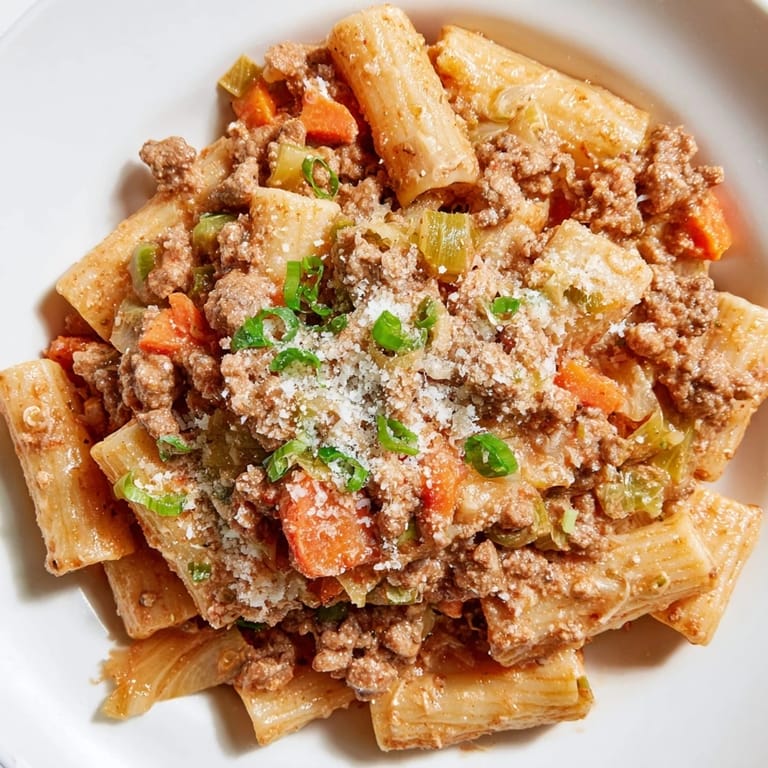
- Serve it hot into bowls and scatter those scallions on top for freshness and color; add Parmesan if you're using it, which adds a finishing brightness.
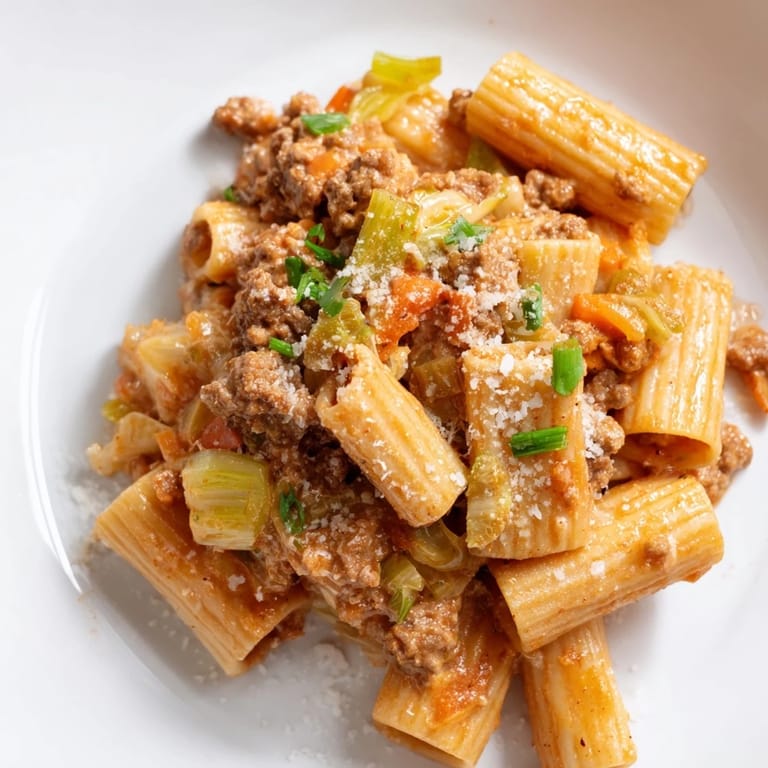 Save
Save There's a moment right after the cream goes in where the whole sauce turns this deep coral color and suddenly smells like something you can't quite name but absolutely want to eat. That's when I know it's going to be good.
Why This Fusion Works
Italian ragu and Korean fermented flavors shouldn't work together in theory, but in practice they're like they've been waiting for each other. The umami from the soy sauce and kimchi amplifies everything the tomato already brings, while the cream smooths out any rough edges. The result is something that feels sophisticated and comforting at the same time, like you've discovered a secret that was hiding in your pantry all along.
Spice Level and Customization
I usually go light on the gochugaru because I like people to taste the story of the sauce, not just heat. But if you're someone who loves living dangerously, you can double it or use a spicier kimchi. The beauty of this dish is that you control the intensity—it bends to your mood, not the other way around.
Storage and Reheating
This dish actually improves the next day as the flavors settle and get to know each other better. Store leftovers in an airtight container in the fridge for up to 3 days, and when you reheat it, add a splash of pasta water or cream so it doesn't seize up. You can even freeze the ragu by itself for up to a month, then thaw and toss with fresh pasta whenever the craving hits.
- Reheat gently on the stovetop with a bit of water rather than blasting it in the microwave to keep the sauce smooth and silky.
- If you're making this ahead, cook the pasta fresh right before serving instead of storing it mixed in the sauce.
- A squeeze of fresh lemon juice right before serving brightens everything up and cuts through the richness beautifully.
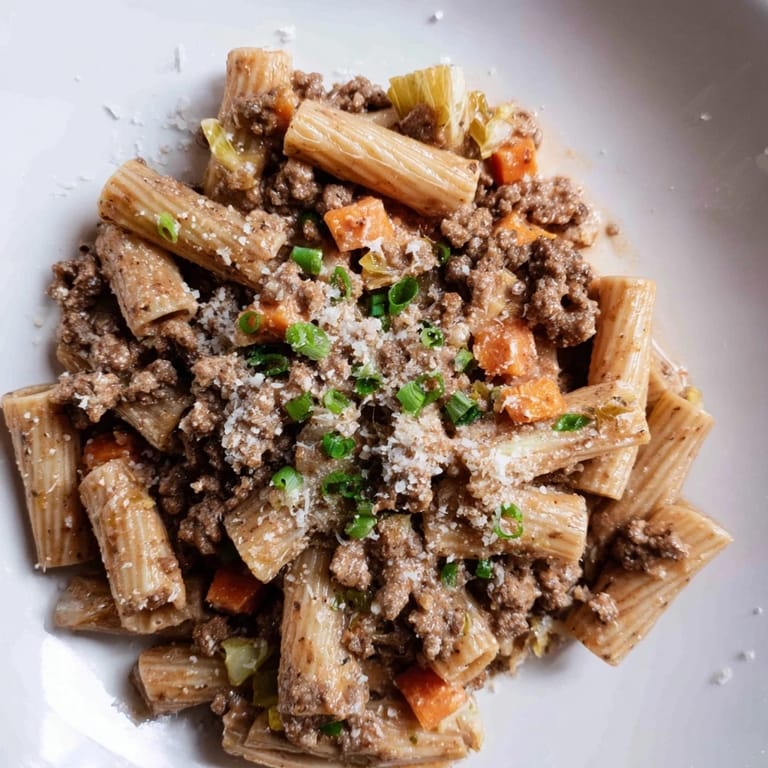 Save
Save This dish has a way of turning an ordinary weeknight into something memorable. Serve it with a glass of something slightly sweet and cold, and watch people understand why you had to make it again.
Recipe Questions & Answers
- → Can I use other meats with this dish?
Yes, ground pork is traditional but beef or a blend works well. Plant-based substitutes can be used for vegetarian variations.
- → How spicy is this pasta?
The spice level can be adjusted by varying gochugaru and kimchi amounts. It offers a comfortable heat balanced by creaminess.
- → What pasta types suit this dish best?
Rigatoni or penne are ideal as they hold the rich sauce well, but other tubular pasta shapes can be used.
- → Is it possible to make this dairy-free?
Absolutely. Replace heavy cream with unsweetened plant-based or coconut cream and omit Parmesan or use vegan alternatives.
- → How do I ensure the sauce has the right consistency?
Simmer the ragu until thickened before adding cream. Use reserved pasta water to loosen sauce for a silky texture when combining with pasta.
- → What wines pair well with this fusion dish?
Try a chilled Lambrusco or a fruity Riesling to complement the spicy and savory tones of the pasta.