 Save
Save There's a particular kind of magic that happens when you walk into a Parisian bistro on a cold evening and order French onion soup—that moment when the aroma hits you before the bowl even arrives. I spent an afternoon in my kitchen years ago trying to recreate that exact feeling, and what started as a casual experiment turned into one of those recipes I keep returning to whenever I need comfort wrapped in melted cheese and golden bread. The magic, I discovered, wasn't in rushing—it was in patience, in letting onions transform slowly into something sweet and deeply caramelized.
I made this soup for my sister during her first week in a new city, when she was feeling homesick and overwhelmed. Watching her face when that first spoonful hit—the way her shoulders relaxed and she just said nothing for a moment—reminded me that food is sometimes the only language we need. We sat at my kitchen table for three hours that night, and the soup stayed warm in its bowls, half-forgotten, because the conversation mattered more.
Ingredients
- Yellow onions (4 large, thinly sliced): The foundation of everything—their natural sweetness becomes the soul of the soup when caramelized properly, so don't skip the time or they'll taste sharp instead of mellow.
- Leeks (2 large, white and light green parts, cleaned and sliced): These add a subtle elegance and depth that regular onions can't match on their own; give them a good rinse between the layers to catch any hidden soil.
- Shallots (3, thinly sliced): They bridge the gap between onion sweetness and garlic complexity, adding a sophisticated whisper to the background.
- Garlic cloves (3, minced): Wait until the other aromatics are soft before adding this, or it'll burn and turn bitter—a lesson I learned the hard way.
- Unsalted butter (3 tablespoons) and olive oil (2 tablespoons): Butter brings richness while olive oil prevents it from burning during the long caramelization; this combo is non-negotiable.
- Beef broth (8 cups, high-quality): This is where you can't cut corners—use something you'd actually drink on its own, as it becomes the entire body of the soup.
- Worcestershire sauce (1 tablespoon) and soy sauce (2 teaspoons): These aren't about making it taste fishy or salty; they're about amplifying umami and making the whole thing taste mysteriously delicious.
- Dry white wine (1/2 cup): It cuts through the richness and adds brightness; use something you'd drink, never a cooking wine.
- Fresh thyme (2 teaspoons, or 1 teaspoon dried) and bay leaf (1): Thyme whispers herbal notes while the bay leaf holds everything together—remove it before serving or it becomes a surprise nobody wants.
- Baguette (1, sliced into 1/2-inch rounds): Day-old bread toasts better than fresh, getting crunchier rather than tough.
- Gruyère cheese (2 cups, grated): It melts into silky ribbons and adds a nutty depth that Swiss cheese can't quite match—if you can't find it, Emmental is a respectable stand-in.
- Parmesan cheese (1/2 cup, grated, optional): This adds a sharp counterpoint to Gruyère's sweetness, but it's truly optional and a matter of preference.
- Salt and black pepper: Taste as you go; the broth and other seasonings already bring saltiness, so season gently.
Tired of Takeout? 🥡
Get 10 meals you can make faster than delivery arrives. Seriously.
One email. No spam. Unsubscribe anytime.
Instructions
- Heat your fat and prepare:
- In a large heavy-bottomed pot or Dutch oven, combine butter and olive oil over medium heat, letting them mingle until fragrant. The butter will foam slightly as it melts—that's exactly what you want.
- Begin the slow caramelize:
- Add your sliced onions, leeks, and shallots all at once, stirring with a wooden spoon to coat everything in the fat. They'll immediately start to release their moisture and look slightly chaotic—this is normal and necessary.
- Stir and wait patiently:
- Keep stirring frequently—every few minutes—as the vegetables soften and gradually deepen in color, about 35 to 40 minutes total. This isn't a step you can rush; the slow transformation is what creates those deep, complex flavors you can't fake with shortcuts.
- Add garlic at the right moment:
- Once the onions are very soft and golden brown, stir in your minced garlic and cook for just 2 minutes, until fragrant. Any longer and it'll burn; any shorter and it won't release its flavor properly.
- Deglaze with wine:
- Pour in the dry white wine and use your spoon to scrape up all those caramelized bits stuck to the bottom of the pot—that's pure flavor you don't want to leave behind. The wine will sizzle and smell incredible.
- Build the broth base:
- Stir in the beef broth, Worcestershire sauce, soy sauce, fresh thyme, and bay leaf, bringing everything to a gentle simmer. Reduce the heat and let it bubble softly, uncovered, for about 30 minutes—this allows flavors to marry and the broth to deepen.
- Season to perfection:
- Taste the soup and add salt and pepper gradually, remembering that the cheese topping will add extra saltiness. Remove the bay leaf once you're done seasoning.
- Toast the bread while soup finishes:
- Preheat your oven broiler and arrange baguette slices on a baking sheet, toasting under the broiler for about 1 to 2 minutes per side until golden and crispy. Watch closely—broilers are moody and can go from golden to burnt in seconds.
- Assemble in bowls:
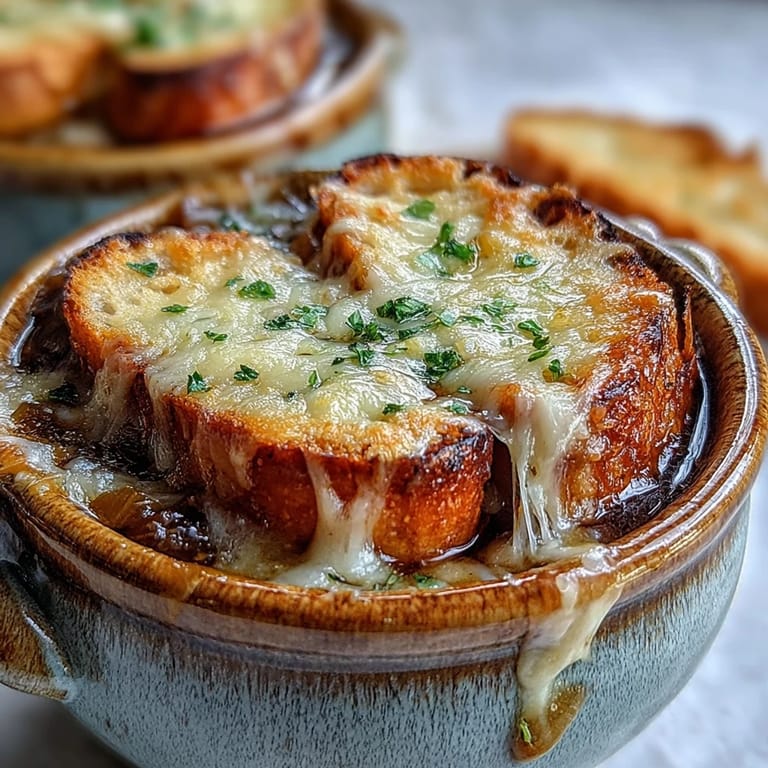
- Ladle hot soup into oven-safe bowls, top each with toasted baguette slices, and pile on a generous handful of grated Gruyère (and Parmesan if you're using it). The cheese should look almost excessive—it will melt down and create that signature stringy-cheesy situation.
- Broil until bubbly and golden:
- Place the bowls under the broiler for 3 to 5 minutes, until the cheese is melted, bubbly, and starting to brown at the edges. The cheese will seal around the bread, creating that iconic French onion soup texture.
- Serve immediately:
- Bring the bowls straight to the table while everything is piping hot—this is a soup that demands immediacy. A light garnish of extra thyme on top looks beautiful and adds a fresh herbal note.
 Save
Save Years later, this soup still shows up on my table whenever someone needs feeding or when autumn light hits the kitchen and suddenly that cozy bistro feeling seems mandatory. It's become shorthand in my circle—when I'm making French onion soup, people know they're welcome, no invitation necessary.
The Art of Caramelization
Caramelizing onions is less about cooking and more about chemistry—you're not just heating them, you're coaxing out their natural sugars and letting them brown slowly through the Maillard reaction. The difference between rushed onions and properly caramelized ones is the difference between a soup that tastes like onions and a soup that tastes like something entirely transformed and luxurious. Pay attention to your heat level; medium is right because high will scorch the exterior before the inside softens, while low takes forever and wastes your energy.
Wine, Umami, and Balance
The wine in this recipe isn't just there for alcohol content—it's a flavor anchor that cuts through the richness and adds brightness that broth alone can't provide. The Worcestershire and soy sauce might seem like unusual additions to French cooking, but they're actually umami boosters that amplify all the savory elements without making the soup taste obviously fishy or weird. Think of them as background singers that make the lead vocalist (the caramelized onions) sound even better without announcing themselves.
Cheese and Bread: The Finale That Matters
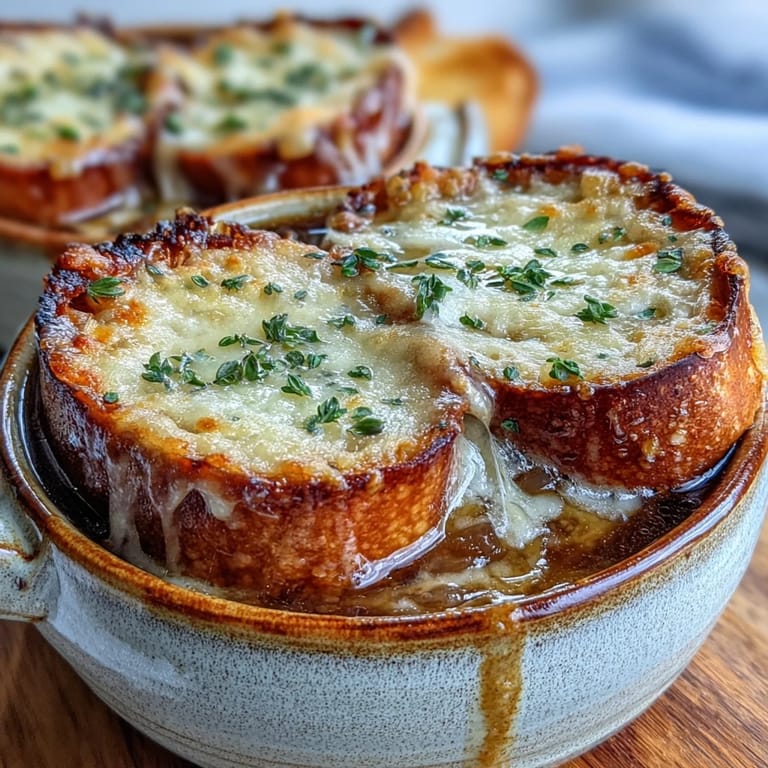
The bread and cheese topping is what makes this soup memorable and worthy of oven-safe bowls—it's not just decoration, it's structural and delicious. The bread soaks up soup from below while crisping from the broiler heat above, creating this textural contrast that's essential to the whole experience. Gruyère specifically melts into something silky and nutty, which is why it's preferred over sharper cheddars or milder mozzarella.
- Day-old baguette slices toast crisper than fresh bread, which can turn tough and chewy.
- Grate your cheese fresh if possible—pre-shredded cheese has anti-caking agents that affect melting texture.
- Don't be shy with the cheese; it's supposed to look almost obscene before broiling, then it becomes perfect.
 Save
Save This soup is an act of love disguised as a recipe, the kind of dish that fills a kitchen with warmth and makes everyone around the table feel noticed. Make it when you have time to let things happen slowly, and serve it when people matter.
Recipe Questions & Answers
- → How do you get the onions properly caramelized?
Cook the onions, leeks, and shallots over medium heat with butter and olive oil, stirring frequently. This process takes 35-40 minutes to achieve deep golden brown color and develop the sweet, savory flavor base that makes this dish exceptional.
- → Can I make this vegetarian?
Absolutely. Substitute high-quality vegetable broth for the beef broth and either omit the Worcestershire sauce or choose a vegetarian-friendly alternative. The result remains deeply satisfying and flavorful.
- → What cheese works best for the topping?
Gruyère is the traditional choice for its excellent melting properties and nutty flavor. Swiss or Emmental make suitable substitutes. Adding Parmesan creates an extra savory dimension, though it's entirely optional.
- → Can this soup be made ahead of time?
The soup base actually improves after resting in the refrigerator for 1-2 days, allowing flavors to meld. Store it separately from the bread and cheese, then reheat gently and add fresh toppings when serving.
- → Why do you use both butter and olive oil?
Butter provides rich flavor while olive oil prevents the butter from burning during the extended caramelization period. This combination ensures the onions cook evenly without scorching.
- → What can I serve alongside this soup?
A crisp green salad with vinaigrette balances the richness perfectly. Crusty bread, a glass of dry white wine, or a light appetizer also complement this substantial soup beautifully.