 Save
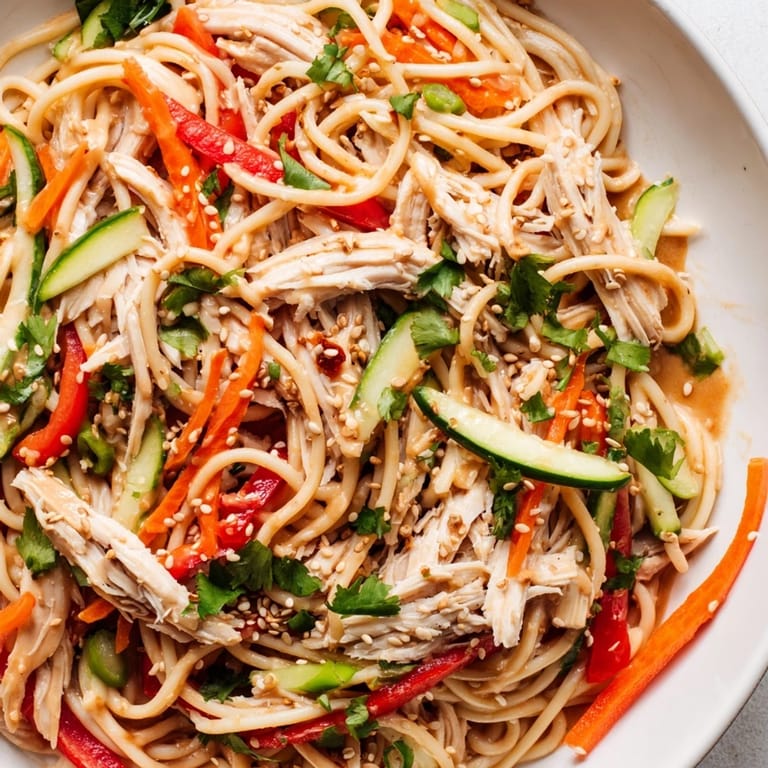
Save One summer afternoon, I was staring into my fridge at a rotisserie chicken and wondering how to turn it into something that wouldn't feel heavy in the heat. My friend texted asking what I was making for lunch, and by the time she arrived, I'd tossed together noodles, vegetables, and a sesame dressing that somehow tasted better than anything I'd planned. That happy accident taught me that the best meals often come from working with what's in front of you.
I made this for a potluck once, nervous it was too simple compared to everyone else's contributions. People came back for thirds, and someone asked for the recipe before dessert was even served. It's the kind of dish that looks humble but somehow manages to be the one everyone remembers.
Ingredients
- Thin egg noodles or rice noodles, 250 g: Egg noodles have a slight richness, while rice noodles are more delicate; both work beautifully, so choose based on what you have or prefer.
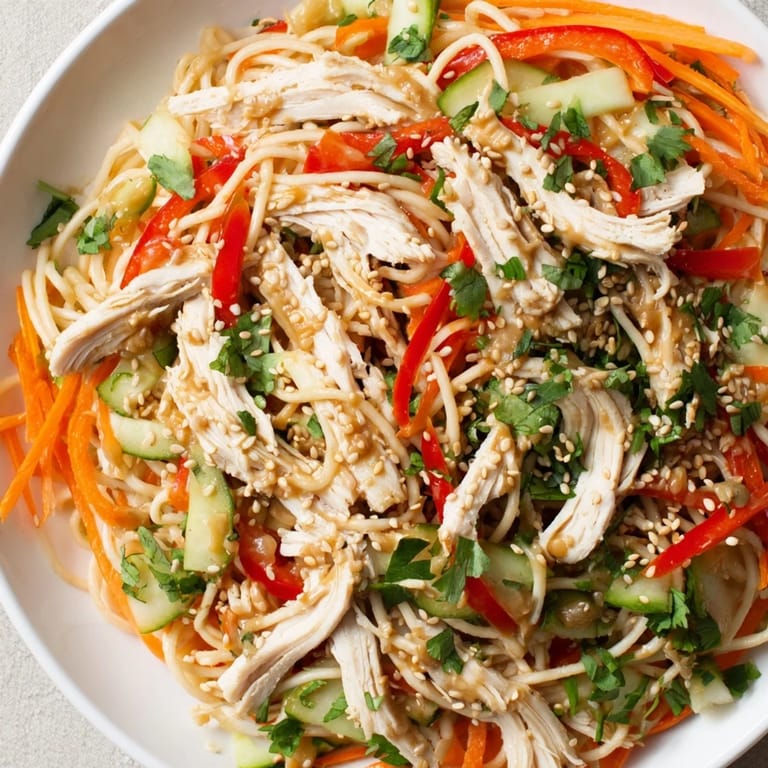
- Cooked chicken breasts, shredded, about 300 g: Shredding it yourself means you control the texture, and warm chicken absorbs the dressing better than cold.
- Medium carrot, julienned: The sweetness of raw carrot balances the salty-savory dressing in the best way.
- Red bell pepper, thinly sliced: Red peppers are sweeter than green ones and add a natural brightness to the bowl.
- Cucumber, deseeded and julienned: Removing the seeds keeps the salad from getting watery as it sits.
- Spring onions, sliced: They add a gentle onion bite that doesn't overpower the other flavors.
- Fresh cilantro, chopped, 2 tbsp: This is optional only if you're one of those people who finds it soapy; otherwise, it's essential.
- Toasted sesame oil, 3 tbsp: Don't skip the toasted kind—regular sesame oil tastes pale and forgettable in comparison.
- Soy sauce, 2 tbsp: The umami backbone of the whole dish.
- Rice vinegar, 2 tbsp: It's gentler and slightly sweet compared to other vinegars.
- Honey or maple syrup, 1 tbsp: Just enough to round out the sharp flavors without making it taste dessert-like.
- Smooth peanut butter or tahini, 1 tbsp: Peanut butter makes it richer; tahini keeps it lighter and more elegant.
- Fresh ginger, grated, 1 tsp: Fresh ginger wakes up every single element on the plate.
- Garlic clove, minced, 1: One clove is enough; more than that and it becomes a garlic salad.
- Chili flakes, 1 tsp optional: Add them if you like heat, skip them if you're serving people who prefer mild flavors.
- Toasted sesame seeds, 2 tbsp: The final garnish that makes people lean in and take another bite.
Tired of Takeout? 🥡
Get 10 meals you can make faster than delivery arrives. Seriously.
One email. No spam. Unsubscribe anytime.
Instructions
- Cook and cool the noodles:
- Bring a pot of water to a boil and cook the noodles exactly according to the package timing—overshooting by even a minute turns them mushy. After draining, rinse them under cold water while tossing gently with your fingers to stop the cooking and separate the strands.
- Assemble your vegetables:
- While the noodles cool, julienne and slice everything; the pieces don't need to be perfect, just relatively consistent in size so nothing overwhelms the others. If you're prepping ahead, store the vegetables in separate bowls with paper towels to catch any excess moisture.
- Combine the base:
- In a large bowl, toss the cooled noodles with the chicken and vegetables, gently but thoroughly so the warmth of the chicken carries some flavor to everything else.
- Make the dressing:
- Whisk the sesame oil, soy sauce, rice vinegar, honey, peanut butter or tahini, ginger, and garlic in a small bowl until smooth and emulsified. The dressing should smell complex and make your mouth water.
- Bring it together:
- Pour the dressing over the salad and toss until every noodle glistens and each vegetable piece catches some of that golden-brown coating. This is where the dish goes from separate ingredients to something whole.
- Finish and serve:
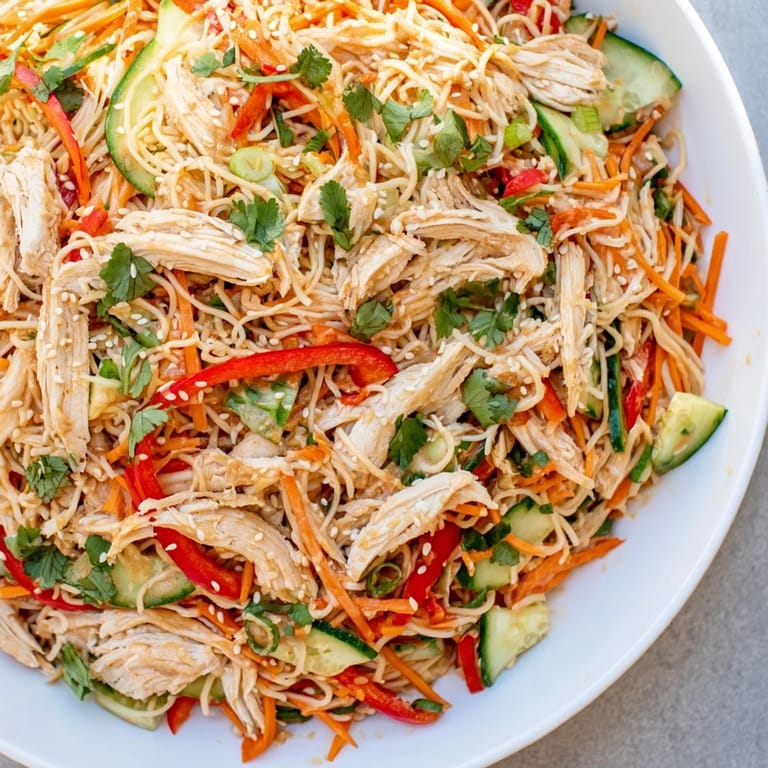
- Transfer to a platter or individual bowls, scatter toasted sesame seeds over the top, and serve immediately or chill for up to two hours. If you're chilling it, add the sesame seeds just before serving so they stay crisp.
 Save
Save I served this at a dinner party where the conversation moved from the living room to the kitchen halfway through the first course because everyone wanted to know what made the dressing taste like that. It became one of those recipes I now get texts about every summer.
Why Sesame Oil Changes Everything
Toasted sesame oil is nothing like the pale, neutral version sitting on some grocery store shelves—it's a golden elixir with a nutty, almost woody depth that makes you understand why it costs more. A small amount goes a long way, which is why three tablespoons can transform a simple pile of vegetables into something that tastes intentional and restaurant-quality. If you've ever wondered why takeout tastes so much better than what you make at home, this is often the answer.
The Case for Shredded Chicken
Shredding chicken by hand (or with two forks) means you're paying attention to its texture and you can catch it at exactly the right point of tenderness. Store-bought shredded chicken often has a strange springy quality, while whole chicken breasts you cook yourself have a meatier bite that stands up beautifully to the bold dressing. It takes maybe five extra minutes, and it changes everything about how the salad feels in your mouth.
Variations That Actually Work
The base formula here is flexible in ways that other salads aren't; the dressing is confident enough to carry almost any vegetable or protein. Swap in grilled shrimp for a seafood version, add shredded tofu if you're vegetarian, or throw in edamame and snap peas for a different kind of crunch and protein boost. The one thing I don't recommend changing is the dressing—that's the heart of the whole dish, and it knows what it's doing.
- Rotisserie chicken from the grocery store works perfectly and cuts your active cooking time in half.
- Rice noodles make it naturally gluten-free; just use tamari instead of regular soy sauce.
- If you're doubling the recipe, make extra dressing—it disappears faster than you'd expect.
 Save
Save This salad has quietly become the thing I make when I want to feel like I'm taking care of myself and everyone around me at the same time. It's light without being sad, impressive without being fussy.
Recipe Questions & Answers
- → What type of noodles work best?
Thin egg noodles or rice noodles work well, providing a light texture that absorbs the dressing nicely.
- → Can I make the dish ahead of time?
Yes, chilling it for up to 2 hours enhances the flavors and makes it perfect for preparing in advance.
- → How can I add extra crunch?
Adding edamame or snap peas boosts protein and adds a delightful crunch to the salad.
- → Is there a vegetarian alternative?
Shredded tofu can be used instead of chicken for a plant-based option.
- → What allergens should I be aware of?
This dish contains soy, sesame, peanut (if peanut butter is used), and wheat (if egg noodles are included).