 Save
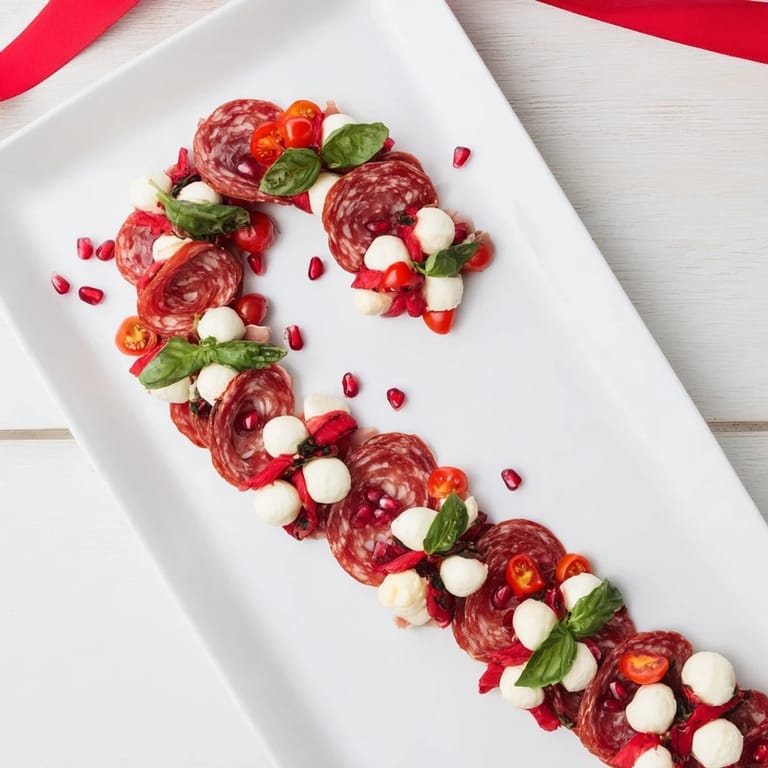
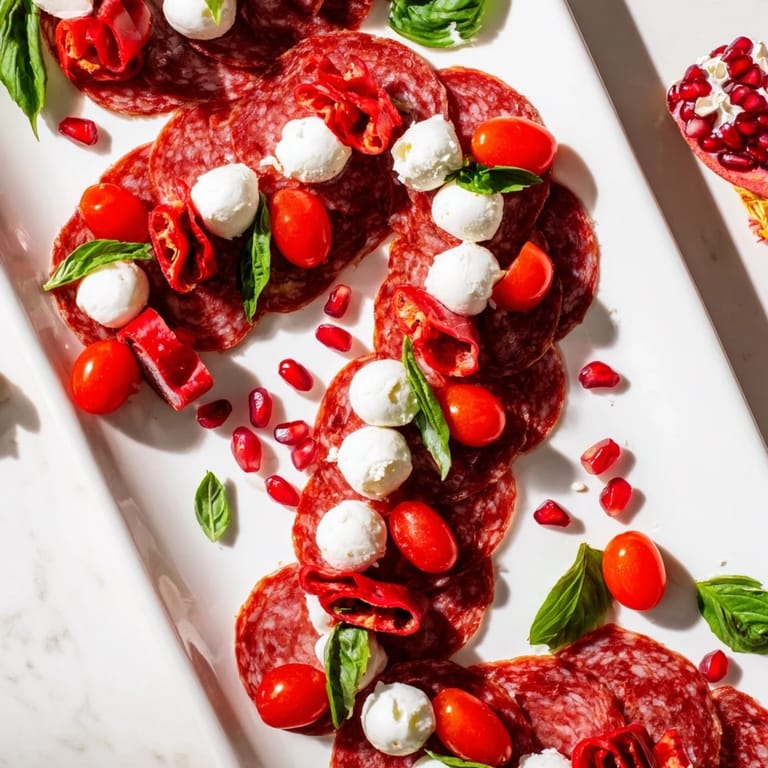
Save I'll never forget the year I decided to transform our holiday spread into something that would make people gasp the moment they walked in. My sister had hosted the same buffet-style appetizers for years, and while they were delicious, they blended into the background. That's when I sketched out this candy cane charcuterie board on a napkin during Thanksgiving prep—a bold, curved arrangement of crimson salami and ivory mozzarella that would actually stop people in their tracks. The first time I assembled it, watching guests photograph it before eating felt like I'd cracked some secret code of entertaining.
I brought this board to my office party last December, and it stayed on the table for exactly forty minutes before disappearing entirely. Watching colleagues who usually grabbed a cracker and left actually linger, building little combinations of cheese and meat and jam, reminded me that presentation matters just as much as taste. One coworker even asked if I'd catered it, which is the highest compliment a homemade platter can receive.
Ingredients
- Mozzarella cheese, 200 g (sliced or bocconcini): Fresh mozzarella provides that creamy, mild contrast to the salty meats. If you can find bocconcini, they're easier to arrange and look more intentional on the board.
- Goat cheese, 100 g (optional, sliced or crumbled): The tangy bite cuts through richness and adds a sophisticated second white element. It's optional, but it transforms the board from simple to special.
- Dry-cured salami, 200 g (sliced): This is your bold red anchor. Choose a quality salami with visible fat marbling—it's what makes the color pop and adds actual flavor, not just salt.
- Prosciutto, 100 g (optional, rolled): Delicate, salty, and elegant. Roll it loosely so it catches light and adds dimension to your curve.
- Cherry tomatoes, 100 g (halved): These bridge the gap between the deep red of cured meat and the brightness of fresh vegetables. Halving them shows off their interior and keeps them from rolling.
- Red bell pepper, 1 (sliced into strips): Raw strips add crisp texture and that glossy holiday red. Cut them the night before if it helps your timeline.
- Pomegranate seeds, 50 g (for garnish): These jewel-like seeds scatter across the board and catch light. Use them as your final flourish to elevate everything.
- Grapes, 100 g (green or red): Pick one color for visual clarity. Green grapes look fresh; red grapes echo the candy cane theme.
- Fresh basil or rosemary sprigs (for garnish): This is your non-negotiable detail. Herbs add an aroma and suggest fresh intention, not just grabbed ingredients.
- Assorted crackers or gluten-free crackers, 150 g: Choose 2-3 varieties for visual and textural interest. Include both sturdy and delicate options.
- Baguette, 1 small (sliced, optional): Toasted baguette slices feel more refined than crackers alone, though crackers alone are perfectly fine.
- Whole-grain mustard or honey, 1 small bowl: Mustard adds sophistication; honey adds sweetness. Use what speaks to your crowd.
- Cranberry chutney or fig jam, 1 small bowl: This is the secret weapon. Both add sweetness and a subtle tartness that makes people want another bite.
Tired of Takeout? 🥡
Get 10 meals you can make faster than delivery arrives. Seriously.
One email. No spam. Unsubscribe anytime.
Instructions
- Set your stage:
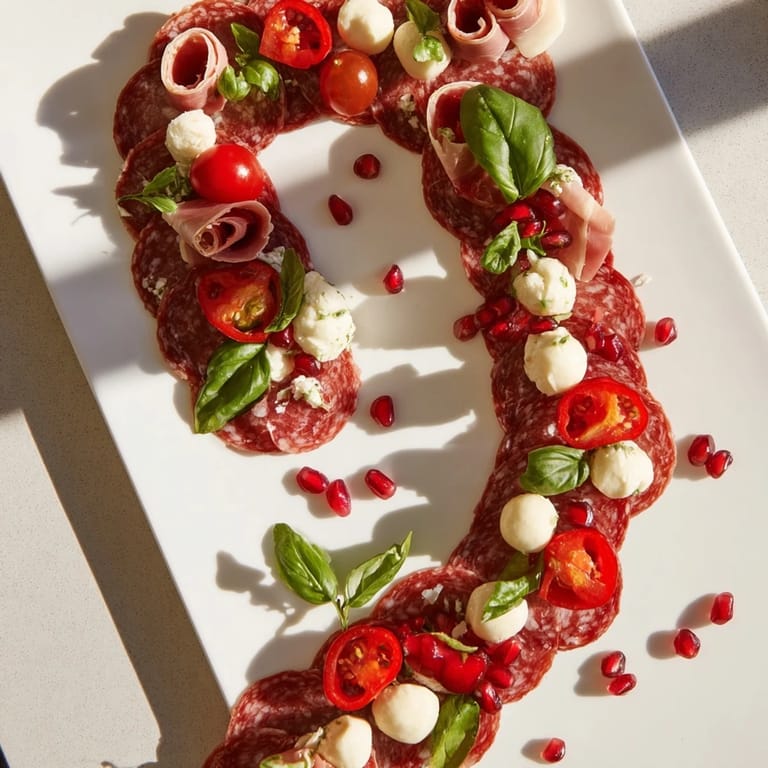
- Find your board—rectangular or oval works best because the candy cane shape needs room to curve. If you don't have a board, a large platter or even a wooden cutting board works perfectly. Stand back and imagine the S-curve running from one corner diagonally across to the opposite side. This visualization takes thirty seconds but saves mistakes.
- Create the red and white curve:
- Start at one corner and begin overlapping salami slices in a confident curve. Don't overthink the overlap—aim for about half of each slice showing. The goal is a bold stripe of deep red about two inches wide. Now run a parallel line of mozzarella slices next to the salami, slightly offset. Step back. This is already looking striking, and you're just getting started.
- Deepen the pattern:
- Double back along your curve with a second layer. Add the goat cheese (crumbled or sliced) to deepen the white sections, and tuck rolled prosciutto into any gaps. The texture variation is what makes this feel intentional rather than random.
- Bring in the color:
- Arrange cherry tomato halves along the inner edge of the salami curve—these act as a visual bridge between the cured meat and what's coming next. Add your red bell pepper strips nearby in a loose fan. The red elements should feel connected, like you're painting with one color family.
- Add freshness and sparkle:
- Scatter grapes around the board in small clusters—not covering everything, but creating pockets of color. Sprinkle pomegranate seeds wherever you see a gap or want extra shine. These seeds are your last-minute magic, so save some for a final pass at the end.
- Frame with crackers:
- Arrange crackers and baguette slices around the perimeter or in a separate area of the board. This creates a clear boundary and makes it obvious what you eat with what.
- Position your condiments:
- Set small bowls of mustard and chutney on the board itself or just to the side. Having them directly on the board saves counter space and makes them feel part of the design.
- Finish with herbs:
- Tuck fresh basil or rosemary sprigs into gaps, over the curve, and near the edges. These herbs should look like intentional garnish, not filler. Let a few sprigs drape slightly for a relaxed, gathered-by-hand feeling. Step back one final time. If you see bare spots, add more herbs or a few more pomegranate seeds. Serve immediately—the longer it sits, the more the cheese sweats and the more the crackers soften.
 Save
Save I made this board for a small office holiday party where half the attendees were vegetarian, and I was nervous. But seeing the vegetarian team members just add more goat cheese, grapes, and tomatoes to their portions—and honestly eat more than anyone else—taught me that a well-made charcuterie board isn't about the meat at all. It's about giving people permission to build something beautiful on their own plate. That realization changed how I think about appetizer boards entirely.
Building Your Personal Candy Cane
The real trick to this board is understanding that you're not following a rigid recipe—you're setting a stage. The candy cane is just a framework. What matters is choosing ingredients you genuinely love and that represent your own entertaining style. If you hate goat cheese, skip it and add more mozzarella. If your crowd goes wild for a specific salami, use that instead of dry-cured. If you have gorgeous Castelvetrano olives in your pantry, scatter them across the board. The structure stays the same; the soul comes from your choices.
Timing and Prep Strategy
One of the unexpected joys of this board is that there's genuinely nothing to cook and almost nothing you need to prep in real time. The entire assembly takes about fifteen to twenty minutes if you move with intention. But here's the move: do all your prep work in the morning. Slice cheeses, halve tomatoes, arrange herbs in damp paper towels, and store everything in separate containers. When guests arrive, you'll spend maybe five minutes arranging everything, and you'll be in the room with people instead of in the kitchen stressing over angles.
Pairing and Serving
A charcuterie board this striking deserves thoughtful pairings. A crisp white wine—think Sauvignon Blanc or a dry Riesling—cuts through the richness of cheese and cured meat. Sparkling wine works beautifully if your crowd leans festive. Even a non-alcoholic sparkling cider feels elevated next to this board. Leave enough counter space around the board for glasses so people can actually enjoy both at once.
- Small plates or napkins stationed nearby prevent people from hovering directly over your beautiful creation with their hands
- Set out small forks or toothpicks so people don't feel awkward about picking up cheese or reaching into the middle of the arrangement
- Replenish empty spots as the evening goes on—a board that looks cared for throughout the event makes a better impression than one that looks picked over
 Save
Save This board has become the dish I make when I want to feel like a real host without the stress of cooking. It's the recipe I recommend to anyone who's nervous about entertaining because it proves that thoughtfulness and arrangement matter just as much as culinary skill.
Recipe Questions & Answers
- → How do you achieve the candy cane zigzag shape?
Arrange alternating slices of salami and mozzarella in a curving S-shape across a large serving board, starting at one corner and moving toward the center before curving back out.
- → Can I make this suitable for vegetarians?
Yes, omit the meats and add extra cheeses like mozzarella, goat cheese, white cheddar, or Havarti, as well as roasted peppers and marinated artichokes for flavor and texture.
- → What are good accompaniments for this spread?
Include assorted crackers or gluten-free options, fresh grapes, pomegranate seeds, cherry tomatoes, red pepper strips, and dips such as whole-grain mustard and cranberry chutney.
- → How long does preparation take?
The entire setup takes around 20 minutes, with no cooking required, making it a quick and easy option for gatherings.
- → Are there any allergen considerations?
This spread contains dairy and meats, and may include gluten if non-gluten-free crackers or baguette slices are used. Substitute with gluten-free options if needed.
- → What beverages pair well with this board?
A crisp white wine or sparkling beverage complements the flavors and adds a festive touch to the presentation.