 Save
Save The smell of browning beef fat and caramelized onions was the first thing that hit me when I walked into my neighbors kitchen on a Sunday years ago. She was making pot roast in an old speckled Dutch oven, the lid rattling softly as steam escaped. I didnt grow up eating pot roast, but watching her pull apart that tender meat with just a fork made me want to learn. Now its the meal I make when I need my house to smell like home.
I made this for my parents the first winter I had my own place, trying to prove I could actually cook something impressive. My dad, who never says much about food, went back for seconds and then asked if there was enough for him to take home. That was all the validation I needed. The leftovers didnt make it past breakfast the next day.
Ingredients
- Beef chuck roast or blade roast: Look for good marbling, those white streaks of fat are what keep the meat juicy during the long braise and create flavor you cant fake.
- Kosher salt and black pepper: Season generously before searing, the crust you build here is the foundation of the whole dish.
- All-purpose flour: A light dusting helps the sear get dark and golden, and later it adds body to the gravy without making it gluey.
- Olive oil and unsalted butter: The combo gives you a higher smoke point from the oil and a nutty richness from the butter as it browns.
- Yellow onion: Thick wedges hold their shape and turn sweet and soft, almost melting into the sauce by the end.
- Garlic: Smashing the cloves releases their oil quickly, and they become mellow and jammy as they simmer.
- Carrots and celery: Cut them big so they dont fall apart, they should be tender but still have some bite when you serve them.
- Baby potatoes: Waxy varieties hold together better than russets and soak up the braising liquid like little sponges.
- Tomato paste: Cooking it until it darkens a shade brings out a deep, almost caramelized sweetness that balances the wine.
- Dry red wine: Use something youd actually drink, it doesnt have to be expensive but it shouldnt taste like vinegar either.
- Beef broth: Low sodium gives you control over the salt level, and homemade stock makes this taste like it came from a French bistro.
- Worcestershire sauce: Just a splash adds umami and a hint of tang that ties everything together.
- Fresh rosemary and thyme: The woody herbs perfume the whole pot, and you can fish out the stems easily at the end.
- Bay leaves: They add a subtle background note, almost floral, that youd miss if it wasnt there.
- Cornstarch slurry: This is your insurance policy if the gravy turns out thinner than you want, stir it in slowly so you dont overdo it.
- Fresh parsley: A handful of chopped parsley at the end makes the whole plate look alive and adds a fresh contrast to the rich sauce.
Tired of Takeout? 🥡
Get 10 meals you can make faster than delivery arrives. Seriously.
One email. No spam. Unsubscribe anytime.
Instructions
- Preheat and prep the beef:
- Set your oven to 300°F if youre using it, though stovetop low and slow works just as well. Pat the roast completely dry with paper towels, any moisture will steam instead of sear, and season every side with salt and pepper before dusting lightly with flour.
- Sear the roast:
- Heat the oil and butter in your heaviest pot until shimmering, then lay the roast in gently and let it sit undisturbed for four to five minutes per side until a deep brown crust forms. Dont skip the edges, tip the roast on its sides and get color everywhere before moving it to a plate.
- Cook the aromatics:
- Lower the heat a notch and add the onion wedges, stirring occasionally until theyre golden and starting to soften. Toss in the smashed garlic and let it sizzle for less than a minute, just until you can smell it.
- Toast the tomato paste:
- Stir in the tomato paste and let it cook against the hot pot for a minute or two, it should darken and smell almost sweet. This step makes a huge difference in the final depth of flavor.
- Deglaze with wine:
- Pour in the red wine and use a wooden spoon to scrape up all the brown bits stuck to the bottom, thats pure flavor. Let it bubble and reduce slightly for two to three minutes.
- Add broth and herbs:
- Stir in the beef broth and Worcestershire sauce, then drop in the rosemary, thyme, and bay leaves. Nestle the roast back into the pot so the liquid comes about halfway up the meat.
- Start the braise:
- Bring everything to a gentle simmer, then cover tightly with a lid and either lower the heat to the barest bubble or slide it into the oven. Let it cook undisturbed for an hour and a half.
- Add the vegetables:
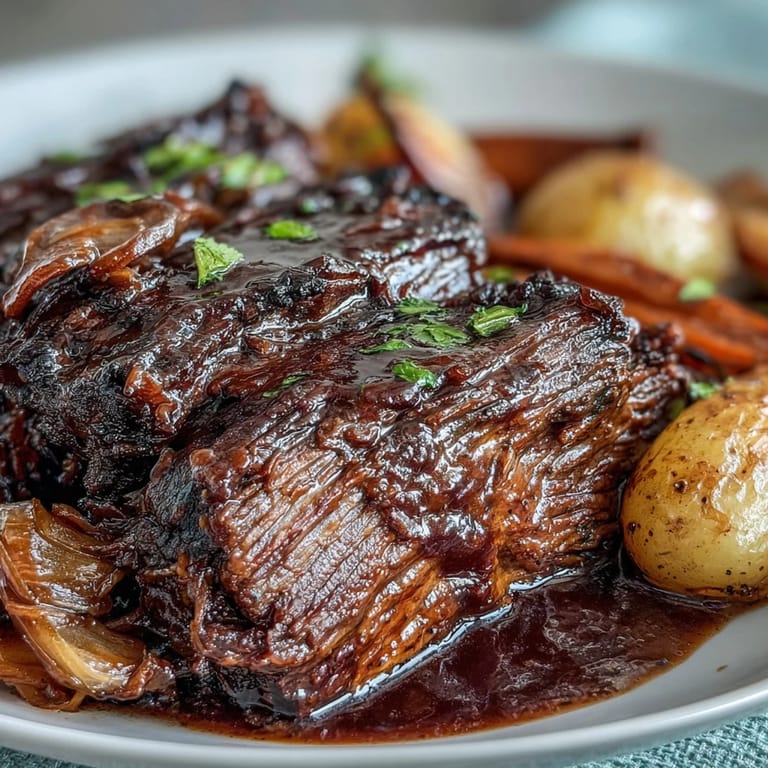
- Flip the roast over carefully, then tuck the carrots, celery, and potatoes around and under it so theyre mostly submerged. Cover again and continue cooking for another hour and a half to two hours until the beef shreds easily with a fork.
- Rest and strain:
- Transfer the roast and vegetables to a serving platter and tent with foil to keep warm. Skim the fat off the surface of the liquid with a spoon or ladle.
- Thicken the gravy:
- If you want a thicker sauce, bring the liquid to a simmer and whisk in the cornstarch slurry, cooking for two to three minutes until it coats the back of a spoon. Taste and adjust seasoning, then fish out the herb stems and bay leaves.
- Shred and serve:
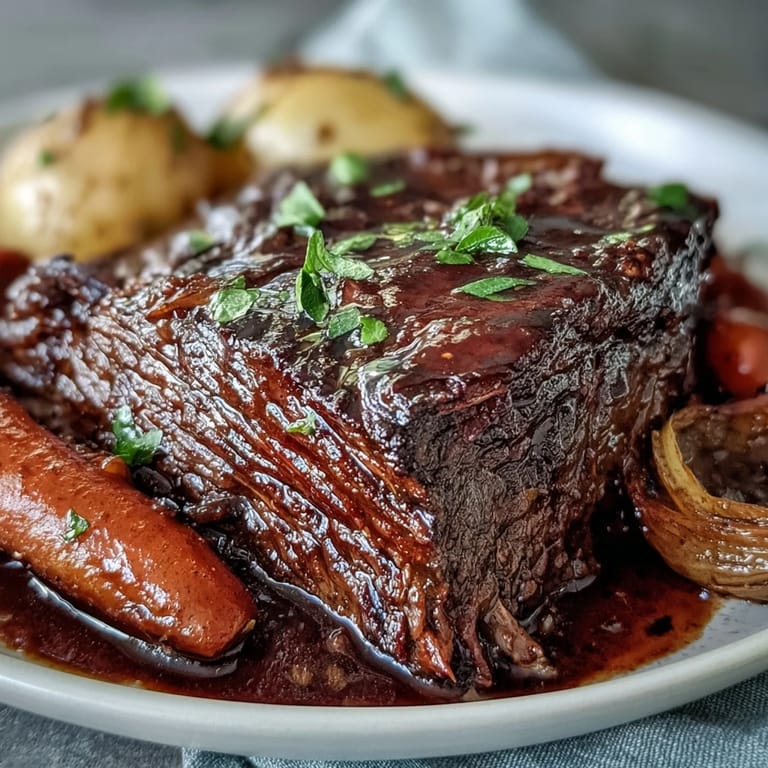
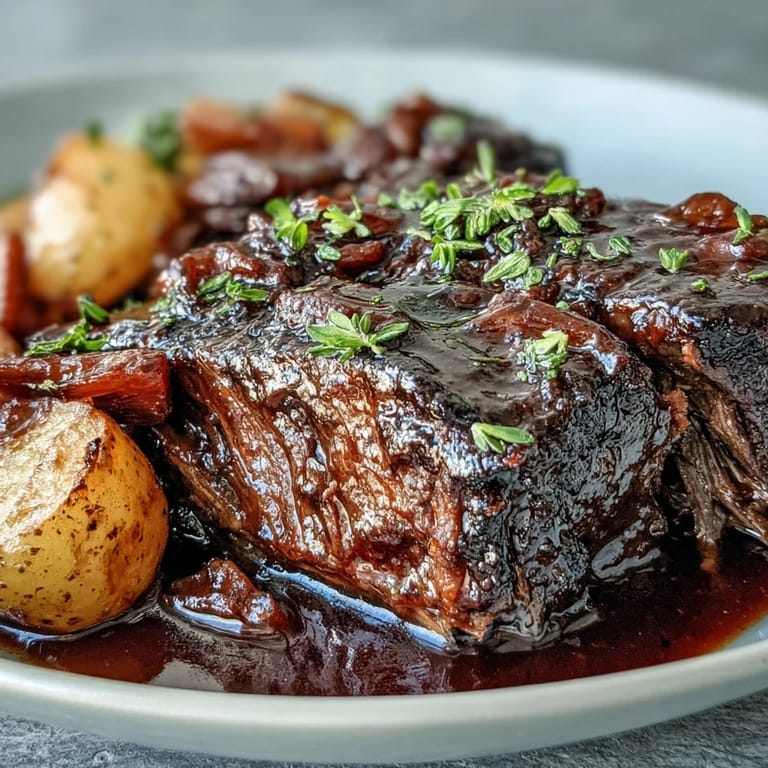
- Pull the beef into big chunks or slice it against the grain, then return it to the pot or arrange it over the vegetables and spoon the hot gravy over everything. Scatter fresh parsley on top if you have it and serve with something to soak up the sauce.
 Save
Save One rainy evening, I served this to friends who showed up soaked and grumpy from a canceled outdoor plan. By the time we were halfway through dinner, the conversation had shifted from complaints to laughter, and someone said it tasted like a hug. I think about that every time I make it now, how the right meal can shift the mood of an entire night.
Choosing Your Cut
Chuck roast is the classic choice because it has enough fat running through it to stay moist during the long cook, and it shreds beautifully at the end. Blade roast works just as well and sometimes comes a little cheaper. Avoid lean cuts like sirloin, they dry out and get stringy no matter how long you braise them.
Slow Cooker Adjustments
If youre using a slow cooker, still sear the meat and cook the aromatics on the stovetop first, then transfer everything to the insert. Set it on low for eight to ten hours or high for five to six, and add the vegetables halfway through if you want them to hold their shape instead of turning to mush. The flavor wont be quite as concentrated as oven braising, but its a solid trade off for convenience.
Storing and Reheating
Pot roast tastes even better the next day after the flavors have had time to marry, and the fat solidifies on top so you can lift it off easily before reheating. Store the beef and vegetables in the gravy in an airtight container in the fridge for up to four days, or freeze it for up to three months and thaw overnight before gently reheating on the stovetop.
- Reheat low and slow to keep the meat from drying out, adding a splash of broth if the gravy has thickened too much.
- Leftover pot roast makes incredible sandwiches on crusty rolls with a smear of horseradish or mustard.
- You can also shred it and use it in tacos, over rice, or stirred into a quick ragu for pasta.
 Save
Save This is the kind of meal that makes your kitchen smell like someone who knows what theyre doing lives there. Serve it to people you want to keep around.
Recipe Questions & Answers
- → What cut of beef works best for pot roast?
Chuck roast or blade roast are ideal choices due to their marbling and connective tissue, which break down during slow cooking to create tender, flavorful meat. Look for cuts with good fat distribution throughout.
- → Can I make this in a slow cooker instead?
Yes, after searing the meat and sautéing the aromatics, transfer everything to a slow cooker. Cook on low for 8-10 hours or high for 5-6 hours. Add vegetables halfway through cooking if you prefer them firmer.
- → How do I know when the pot roast is done?
The beef should be fork-tender and easily pull apart when tested. Internal temperature should reach around 190-200°F for maximum tenderness. The vegetables should be soft but still hold their shape.
- → Can I substitute the red wine?
Absolutely. Use additional beef broth for a non-alcoholic version, or try balsamic vinegar mixed with broth for depth. The wine adds richness, but the dish remains delicious without it.
- → How should I store and reheat leftovers?
Store in an airtight container in the refrigerator for up to 4 days. Reheat gently on the stovetop or in the oven at 300°F, adding a splash of broth if needed. The flavors often improve after a day as they meld together.
- → Why is searing the meat important?
Searing creates a caramelized crust that adds deep, complex flavors through the Maillard reaction. This browning step is essential for developing the rich taste that makes pot roast so satisfying.