 Save
Save My grandmother used to make this soup on cold afternoons, the kind where you could hear the wind rattling the kitchen windows and smell the mint hitting hot butter from across the room. She'd spend hours letting everything simmer together, and I remember watching the broth turn this beautiful golden color as the turmeric did its quiet work. That's when I realized soup wasn't just about filling a bowl—it was about patience and layers of flavor building on each other. This Persian-inspired beef barley soup is my way of recreating that feeling, that moment when someone hands you a steaming bowl and you know they've put real thought into it.
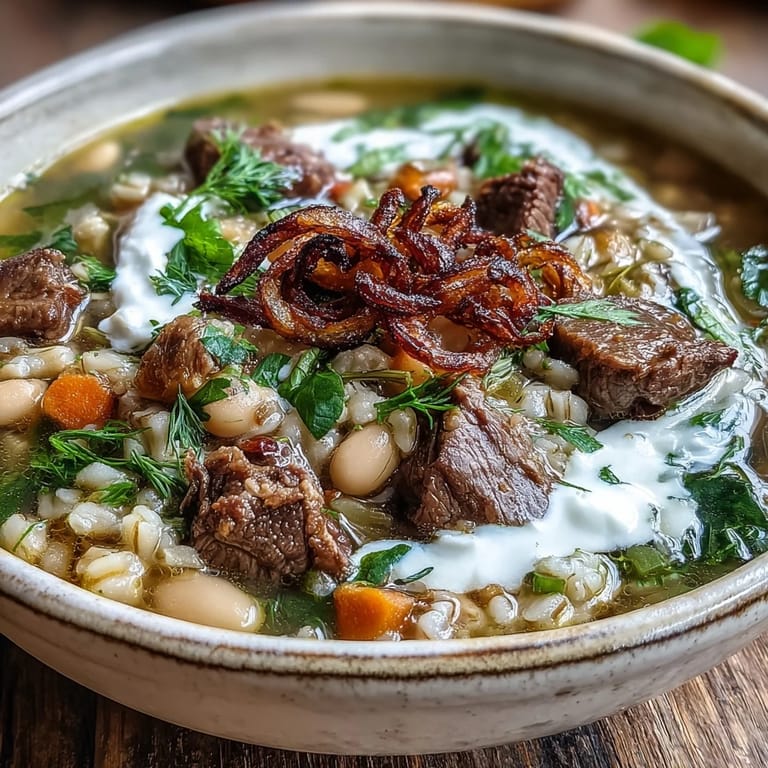
I made this for my partner on a night when everything felt rushed and chaotic, and somehow ladling this into bowls and watching them taste it slowly changed the whole evening. The sour cream swirl on top caught the light, and they asked what was in it because they'd never had anything quite like it. That's when I knew this recipe had something real going for it—it doesn't just taste good, it makes people pause and actually pay attention.
Ingredients
- Beef stew meat (500 g, cut into 2 cm cubes): The size matters because smaller pieces get lost, but larger ones take forever to tender—this sweet spot means they stay intact while still becoming melt-in-your-mouth tender.
- Pearl barley (1/2 cup, rinsed): Rinsing it removes the surface starch and keeps the broth clearer, which I learned after making cloudy soup a few times.
- Dried lentils (1/2 cup, rinsed): They hold their shape beautifully and add earthiness without falling apart.
- Dried white beans (1/2 cup, soaked overnight and drained): Soaking is non-negotiable here—it prevents digestive upset and helps them cook evenly with everything else.
- Large onion (1, finely chopped): The base of everything, and finely chopped means it dissolves into the broth and becomes part of the soul of the soup.
- Carrots (2 medium, diced): They soften gradually and add natural sweetness that balances the herbs and spices.
- Celery (2 stalks, diced): Often overlooked, but it adds a subtle depth that makes people ask what they're tasting.
- Garlic (2 cloves, minced): Minced fine so it distributes evenly and doesn't create aggressive pockets of flavor.
- Fresh parsley, cilantro, dill, and chives (1/2 cup, 1/2 cup, 1/4 cup, 1/4 cup, chopped): These go in near the end so they stay bright and fresh-tasting rather than getting cooked into submission.
- Dried mint (2 tbsp): Half goes into the fried onions and half can be reserved for extra garnish if you're feeling generous.
- Sour cream (200 g): The swirl at the end adds tang and richness, and it cools the soup just enough to eat immediately.
- Olive oil (2 tbsp): Split between browning the meat and sautéing the aromatics.
- Butter (1 tbsp): For the fried onions, because it browns faster and smells incredible.
- Ground turmeric (1 tsp): The signature spice here—it gives everything that warm, golden tone and subtle earthiness.
- Ground black pepper (1/2 tsp): Fresh-cracked if you have it, because pre-ground loses its bite.
- Salt (1 1/2 tsp, plus more to taste): Add it in stages and taste constantly, because you'll need more by the end as the broth concentrates.
- Beef or vegetable stock (2 liters): Quality matters here since it's the foundation—homemade is ideal, but a good store-bought works too.
Tired of Takeout? 🥡
Get 10 meals you can make faster than delivery arrives. Seriously.
One email. No spam. Unsubscribe anytime.
Instructions
- Brown the beef:
- Heat oil over medium-high heat and don't crowd the pot—let the meat sit for a minute before stirring so it gets a proper golden crust on all sides. This takes about 5 minutes and creates flavor depth that carries through the entire soup.
- Build the flavor base:
- Once the beef is out, add the remaining oil and let those onions turn golden and soft, which takes about 6 minutes of patient stirring. When they're glossy and golden, that's when you add the garlic, turmeric, pepper, and salt—cook just until fragrant, about 1 minute, because you don't want the spices to burn.
- Add the vegetables:
- Carrots and celery join next, cooking for 3 minutes just to soften slightly and release their sweetness into the oil.
- Combine everything:
- Return the beef to the pot, add the barley, lentils, beans, and stock, then bring everything to a boil. Once it's boiling, reduce the heat and cover—you want a gentle simmer, not an aggressive boil that breaks down the vegetables too quickly.
- Simmer low and slow:
- Let it go for 1 hour 30 minutes, stirring occasionally so nothing sticks to the bottom and the flavors distribute evenly. You'll know it's ready when the beef is tender and the barley has absorbed a lot of liquid.
- Add the fresh herbs:
- Stir in the parsley, cilantro, dill, and chives and simmer uncovered for just 10 more minutes—this keeps them bright and alive-tasting rather than dull and mushy. Taste the broth and adjust salt and pepper because by now the liquid has concentrated and might need a little more seasoning.
- Make the mint-fried onions:
- In a small skillet, melt butter over medium-low heat and add thinly sliced onion, cooking it slowly until it's deeply golden and crispy, about 10 minutes—patience here means better texture and flavor. In the last minute, stir in the dried mint so it releases its fragrance into the butter.
- Finish and serve:
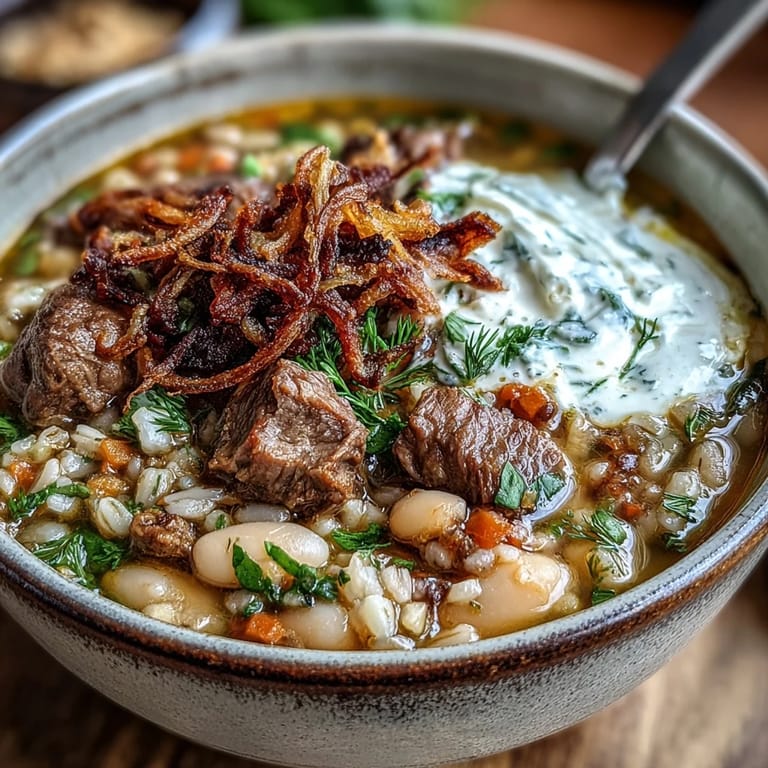
- Ladle the soup into bowls and swirl 1 to 2 tablespoons of sour cream into each one, letting it create those beautiful cream-colored ribbons through the golden broth. Top with the mint-fried onions and serve immediately with crusty bread for dipping.
 Save
Save There's something about handing someone a bowl of this soup that feels like you're sharing something real. My neighbor tried it once and came back asking for the recipe, saying it reminded her of something her mother used to make, and that moment reminded me why cooking matters—it bridges time and memory and culture in ways that simple food shouldn't be able to do.
Why This Soup Becomes Better With Time
Make this soup a day ahead if you can—the flavors deepen and become more integrated once everything has had time to sit together in the fridge. When you reheat it, you'll notice the broth tastes more rounded and complex, like the ingredients have had a chance to really talk to each other overnight. It's one of those rare dishes where patience actually improves the final result.
Making It Your Own
The beauty of this soup is that it's flexible without losing its identity. You can add spinach or beet greens for extra color, or swap the sour cream for kashk if you want something more authentically Persian. The core stays the same—that golden, herb-forward broth with tender beef and chewy barley—so you're never really changing the soul of it, just adding little personal touches.
Serving Suggestions & Storage
Serve this hot with crusty bread or Persian flatbread for soaking up every last bit of broth, and don't skip the mint-fried onions because they're what makes people remember this soup. This keeps beautifully in the fridge for 4 days and actually freezes well too, though add the sour cream and fresh herbs after reheating so they stay bright and fresh.
- If you're freezing it, leave out the sour cream and fresh herbs, then add them when you reheat.
- For a vegetarian version, just omit the beef and use vegetable stock instead—the soup remains hearty and satisfying.
- Always taste before serving because flavors settle differently depending on how long it's been, and you might want a pinch more salt.
 Save
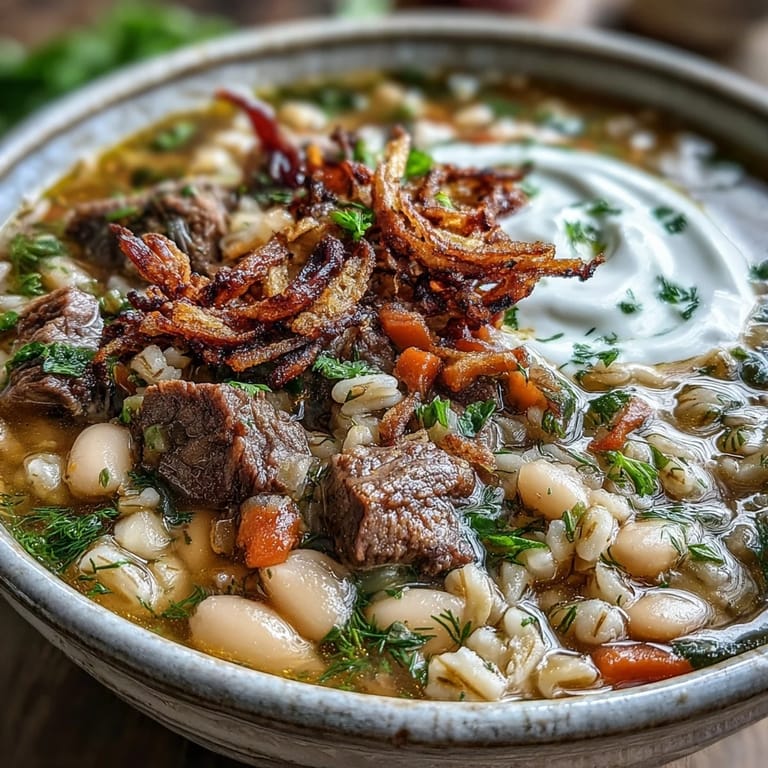
Save This is the kind of soup that fills your kitchen with warmth and makes you feel like you're doing something that matters. Make it for someone you care about, or make it for yourself on a day when you need to slow down—either way, it's worth the time.
Recipe Questions & Answers
- → Can I make this soup vegetarian?
Yes, simply omit the beef and use vegetable stock instead. The combination of barley, lentils, and beans still provides plenty of protein and heartiness.
- → What is kashk and where can I find it?
Kashk is a fermented whey product common in Persian cuisine with a tangy, savory flavor. Look for it in Middle Eastern markets or substitute with sour cream or Greek yogurt for similar creaminess.
- → Do I need to soak the beans overnight?
Yes, soaking dried white beans overnight ensures they cook evenly and become tender during the simmering time. Quick-soak methods work if you're pressed for time.
- → Can I freeze this soup?
The soup freezes well for up to 3 months. Consider adding the fresh herbs and sour cream garnish after reheating for the best texture and flavor.
- → What bread pairs best with this soup?
Crusty bread, Persian flatbread like sangak, or lavash all complement the soup beautifully. Use bread to soak up the flavorful broth with sour cream.
- → How can I adjust the thickness?
For a thicker soup, mash some of the cooked beans against the pot side. For a thinner consistency, add more stock or water during the final simmer.