 Save
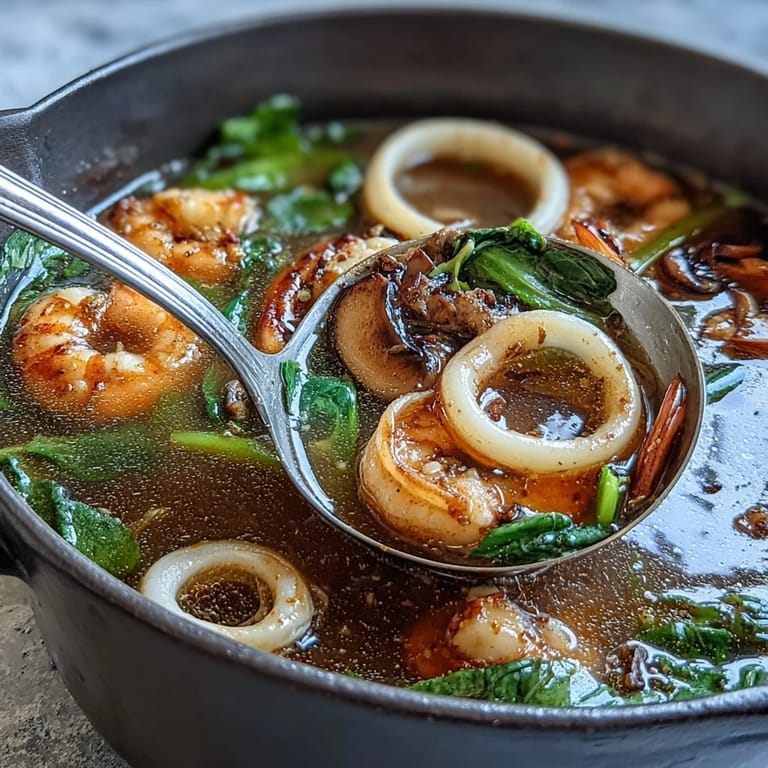
Save My neighbor showed up one winter evening with a portable hotpot burner and a mission to teach me how to cook properly at the table. We crowded around my small dining table, steam rising between us, and I realized this wasn't just cooking—it was conversation in slow motion, each person choosing what went into the broth next. That night changed how I think about meals, turning dinner into something interactive and alive.
I made this for my team after a brutal project deadline, and watching people's faces soften as they fished shrimp and mushrooms from the broth told me more about what they needed than any words could. The act of cooking together at the table felt like a small reset, a moment where we weren't stressed or rushing—we were just present.
Ingredients
- Low-sodium chicken or seafood stock (8 cups): The foundation of everything; using seafood stock makes this taste like you've been fishing in the broth yourself.
- Fresh ginger (3 slices): Always use fresh—dried tastes like a different thing entirely, and you want that bright, slightly spicy warmth that lingers.
- Garlic cloves (3, smashed): Smashing them releases oils you can't get from chopping; it's a small gesture that makes the broth taste fuller.
- Lemongrass (2 stalks, bruised and chopped): Bruising it matters because it breaks the fibers open and lets the fragrance escape into everything.
- Soy sauce (2 tablespoons): Low-sodium here so the broth stays balanced and you control the salt at your own bowl.
- Fish sauce (1 tablespoon): This is the ingredient people get nervous about, but it's the secret that makes the broth taste like the ocean—use it.
- Rice vinegar (1 tablespoon): The tiny bit of acid that makes everything taste brighter and keeps the broth from feeling heavy.
- Fresh red chilies (1–2, sliced): Optional, but the heat mellows beautifully as it simmers, becoming more a warmth than a burn.
- Raw shrimp (8 large, peeled and deveined): Buy them fresh if you can; frozen works, but thawed shrimp cook faster and more evenly.
- White fish fillet (200 g, bite-sized pieces): Cod or snapper both work; they're mild enough not to overpower the broth but flaky enough to feel special.
- Fresh mussels or clams (8, scrubbed): Check them before cooking and discard any that don't close when tapped; they add their own briny depth.
- Squid rings (150 g): Cook these last because they only need 2–3 minutes or they become rubber; timing is everything.
- Napa cabbage (1 cup, chopped): Stays crisp-tender and absorbs the broth's flavor without falling apart.
- Baby bok choy (1 cup, halved): These little bundles are forgiving and look beautiful floating in the pot.
- Shiitake mushrooms (1 cup, sliced): They release an earthy umami that deepens the broth as they cook.
- Enoki mushrooms (1 cup, trimmed): Their delicate, almost noodle-like texture adds something unexpected.
- Carrot (1 medium, thinly sliced): Slice them thin so they cook quickly and don't dominate the other flavors.
- Zucchini (1 small, sliced): A lighter vegetable that cooks fast and keeps things feeling balanced.
- Firm tofu (1 cup, cubed): It's a flavor sponge—it will taste exactly like the broth, which is the point.
- Glass noodles or rice vermicelli (200 g, soaked): Soaking them first means they cook in seconds rather than minutes, which saves you from overcooked tangles.
- Spring onions (2, sliced): Fresh and sharp at the end, they cut through the richness.
- Fresh cilantro: A handful scattered at the very end; it wilts slightly and becomes part of the broth.
- Lime wedges: Essential—squeeze them in and watch the whole thing come alive.
Tired of Takeout? 🥡
Get 10 meals you can make faster than delivery arrives. Seriously.
One email. No spam. Unsubscribe anytime.
Instructions
- Build your aromatic foundation:
- Pour your stock into a large pot and add the ginger, garlic, lemongrass, and chilies. You'll smell the kitchen transform within a minute—that's how you know you're on the right track. Let it come to a boil, then turn it down to a gentle simmer and give it 20 minutes to become something more than the sum of its parts.
- Season the broth:
- While it's simmering, whisk in the soy sauce, fish sauce, and rice vinegar. Taste it—it should smell like the ocean, taste slightly salty and tangy, and make you want to taste it again. If you're unsure, you haven't added enough fish sauce yet.
- Strain and return:
- Carefully pour the broth through a strainer, letting all those solids fall away. You want a clear, fragrant liquid that glows slightly when you hold it up to light; that's the sign you did it right.
- Prepare your platter:
- Arrange all your seafood, vegetables, tofu, and soaked noodles on separate plates or a large wooden board. This is the part where you can slow down and admire what you're about to cook—it's almost like plating before cooking.
- Set up at the table:
- Place your hot pot or wide saucepan on a portable burner or induction cooktop right at the table. Pour in your strained broth and bring it back to a gentle simmer—this is when the cooking becomes a conversation.
- Cook as you go:
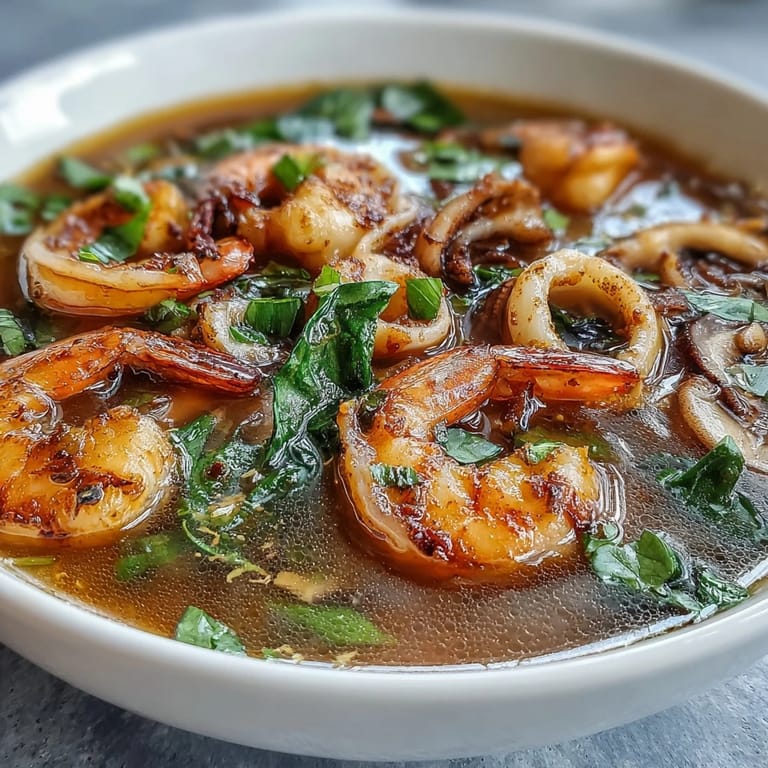
- Let each person add what they want, starting with the things that take longest (shrimp, fish) and finishing with the quick ones (noodles, mushrooms). The seafood will turn opaque in 2–3 minutes; vegetables should be tender-crisp, never mushy.
- Serve and finish:
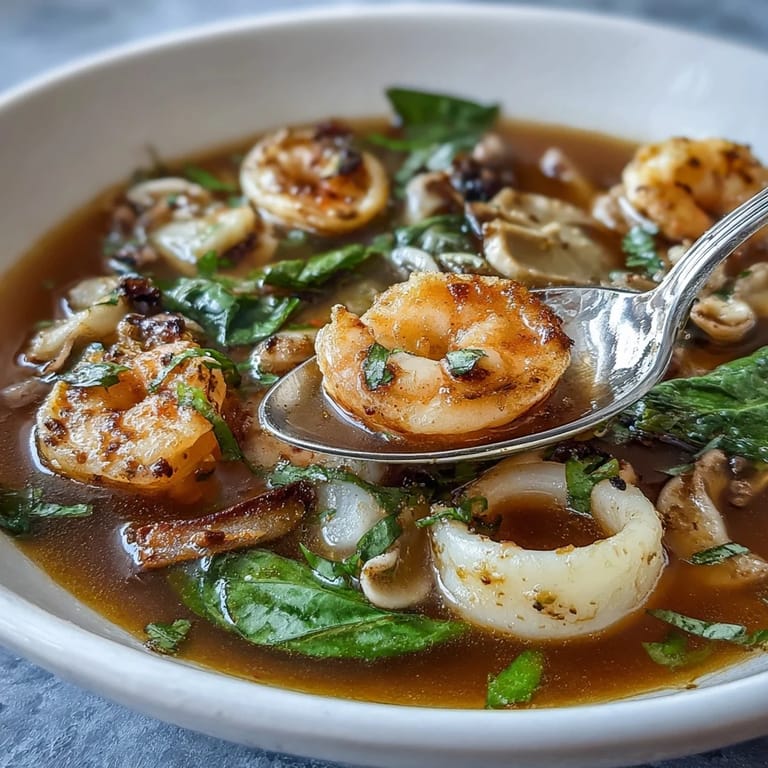
- Ladle broth and cooked ingredients into individual bowls, then scatter spring onions and cilantro over the top. A squeeze of lime is non-negotiable—it's the final note that makes everything sing.
 Save
Save My sister brought her new partner to this meal, and by the end of it, he was leaning across the table asking my mother how to make something, and she was laughing and explaining how her mother taught her. Food that brings people closer isn't fancy—it's just honest and shared.
The Magic of the Broth
The broth is where everything lives. Don't rush it or try to take shortcuts—those 20 minutes of gentle simmering are non-negotiable because that's when the lemongrass, ginger, and garlic stop being ingredients and become a single, coherent voice. I learned this the hard way by trying to speed things up with high heat, and the broth tasted sharp and one-dimensional instead of layered and inviting.
Why Hot Pot Works as Theater
There's something about cooking at the table that changes how people behave. They slow down, they talk, they notice what's happening instead of just consuming what's in front of them. I've learned that the best meals aren't always about the food being perfect—they're about the people being present, and hot pot makes presence almost unavoidable.
Customization and Confidence
This is the kind of recipe that actually gets better when you make it your own. The structure is solid, but the details can shift based on what you find at your market or what your guests prefer. I've added scallops when I had them, swapped in chicken when someone preferred it, and added chili paste when the crowd got rowdy—each version tasted right because it reflected who was cooking and eating.
- Keep a small bowl of extra fish sauce at the table so people can deepen their broth if they want to.
- If you don't have a portable burner, you can simmer everything in the kitchen and bring the pot to the table in a trivet, though it loses some of its interactive magic.
- Make the broth the day before and refrigerate it; the flavors only improve, and you'll have less stress on serving day.
 Save
Save This meal taught me that the best cooking is the kind that doesn't demand perfection from you—it just asks you to show up and pay attention. Everything else follows from there.
Recipe Questions & Answers
- → What type of broth is used for this dish?
The broth is made from low-sodium chicken or seafood stock infused with ginger, garlic, lemongrass, soy sauce, fish sauce, and rice vinegar for a fragrant base.
- → Can different seafood varieties be used?
Yes, scallops or crab can be added or substituted to suit your preferences and enhance the variety.
- → How do you cook the ingredients in the hot pot?
Ingredients are cooked by adding them to the simmering broth at the table, allowing seafood to turn opaque and vegetables to become tender-crisp within minutes.
- → Are there recommended garnishes for this dish?
Fresh spring onions, cilantro, and lime wedges are suggested to brighten the flavors and add fresh notes.
- → What are some suitable side sauces or dips?
Options include soy sauce, chili oil, or sesame-based sauces to complement and enhance the hot pot's flavors.
- → Is the dish suitable for gluten-free diets?
Yes, by using gluten-free soy sauce and appropriate noodles, the dish can be adapted for gluten-free needs.